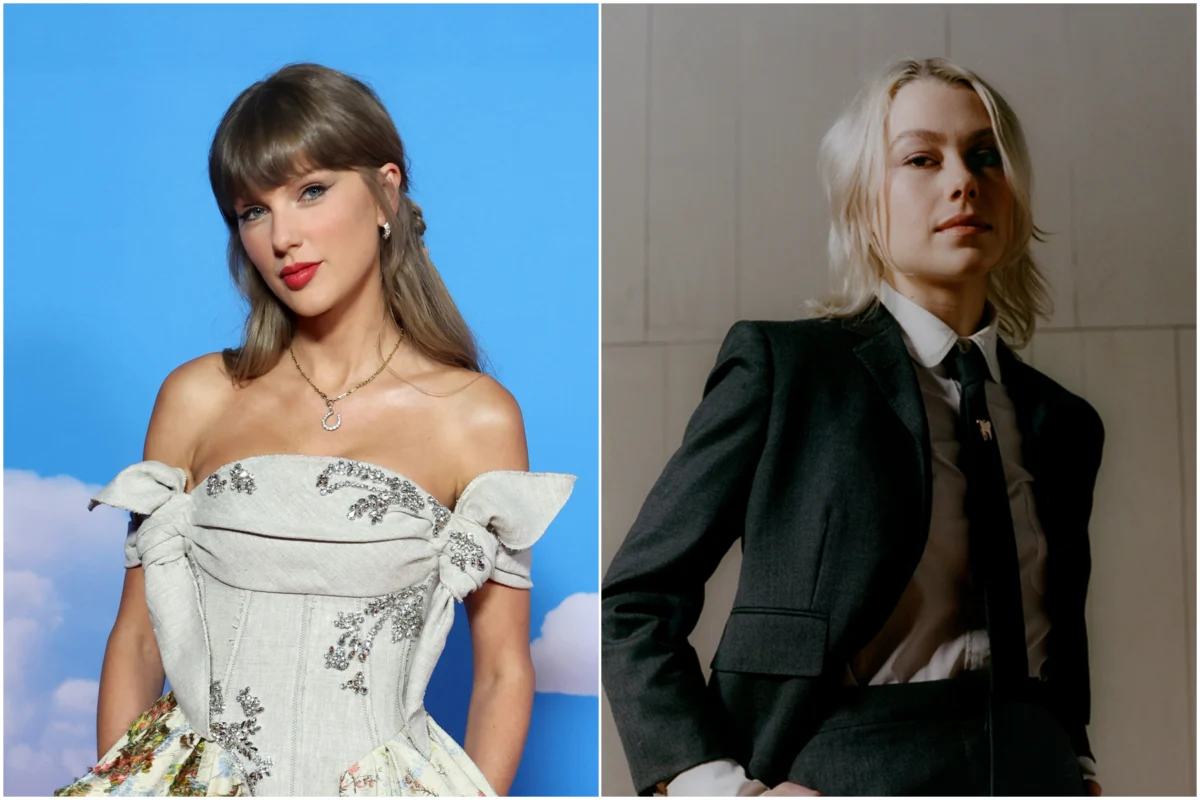
In the interconnected landscape of modern indie-folk and pop, few creative partnerships have resonated as deeply with fans as that of Taylor Swift and Phoebe Bridgers. The bond between these two generational songwriters was once again placed in the spotlight this week, as Swift took to social media to offer a glowing endorsement of Bridgers’ latest studio album, Lost Weekend.
The praise, delivered via Instagram Stories, was more than a routine nod of professional courtesy; it served as a high-profile validation of an artist who has spent the better part of the last decade redefining the boundaries of vulnerable, diaristic songwriting. For Swift—a titan of the music industry who has long championed the art of the lyric—Bridgers’ new project represents a landmark achievement in the exploration of grief and human intimacy.
A Public Salute to Artistic Vulnerability
The endorsement arrived on the occasion of Bridgers’ birthday, a timing that Swift noted with a mix of warmth and admiration. "It’s her birthday but she gave us a gift," Swift wrote to her millions of followers. "Haven’t been able to stop listening. This album is an absolute triumph in every way."
Swift’s commentary went beyond the superficial, digging into the thematic core of Lost Weekend. She specifically highlighted the way in which Bridgers manages to balance raw, painful subject matter with a narrative clarity that invites the listener into her world. "To write about grief with such vulnerability and detail, and to trust the listener with this much honesty," Swift observed, before concluding with a personal sign-off: "Happy bday @phoebebridgers I love you!!"
For industry analysts, this public endorsement is significant. Swift’s "Swiftie" fanbase is known for its hyper-attentive listening habits; by signaling that Lost Weekend is a "must-listen," Swift has essentially funneled a massive, global audience toward Bridgers’ latest work, cementing the album’s status as a critical and commercial contender in the current release cycle.
A Chronology of Collaboration: From ‘Red’ to the Eras Tour
To understand the weight of Swift’s praise, one must look at the timeline of their professional intersection, which has been nothing short of a symbiotic masterclass in cross-genre collaboration.
The seeds of this partnership were arguably sown long before they shared a microphone, but the public-facing collaboration began in earnest in 2021. As part of her massive undertaking to re-record her back catalog, Swift tapped Bridgers for a feature on "Nothing New," a track from the "Vault" of Red (Taylor’s Version).
The song, which deals with the anxieties of aging as a woman in the public eye, felt tailor-made for Bridgers’ signature style of melancholic, deadpan delivery. Reflecting on the recording process during an interview with Billboard at the time, Bridgers described the experience as a "dream." She expressed that the opportunity to work with someone she viewed as a master of the craft was transformative. "I just am so excited to have people take it at face value the day that it comes out, because I got teary recording it," Bridgers said. "I think that she is an incredible businessperson and an incredible writer. What she’s been able to build just from writing adeptly from a young age is insane."
The momentum from "Nothing New" carried into 2023, when Bridgers was invited to serve as a primary opening act for select legs of Swift’s record-breaking Eras Tour. From Nashville to Philadelphia, Bridgers became a fixture of the tour, often joining Swift on stage to perform their duet live. This period solidified their friendship, moving them from the category of "collaborators" to "peers and confidants."
Most recently, the two were spotted attending the wedding of renowned recording engineers Laura Sisk and Oli Jacobs in the U.K., proving that their relationship has transcended the professional sphere and solidified into a genuine personal friendship.

Supporting Data: The Impact of the ‘Swift Effect’
The "Swift Effect" is a well-documented phenomenon in the music industry. When Taylor Swift shares a recommendation, streaming numbers, chart positions, and cultural discourse often follow suit.
Phoebe Bridgers, while already a critical darling with a fervent cult following, exists in a different tier of the industry—the indie-alternative space. However, her trajectory has been undeniably accelerated by her proximity to Swift.
- Streaming Metrics: Following the release of Red (Taylor’s Version), "Nothing New" saw significant traction on platforms like Spotify, introducing a segment of Swift’s massive pop audience to Bridgers’ specific sonic vocabulary.
- The Eras Tour Reach: By appearing on the Eras Tour, Bridgers performed for millions of people across North America. Concert data suggests that opening acts on the Eras Tour experienced a surge in monthly listeners and social media growth, effectively "graduating" from club and theater acts to arena and festival headliners.
- Critical Reception: Bridgers’ previous work, including Punisher, had already established her as a lyrical powerhouse. However, the consistent praise from a peer as influential as Swift serves to "institutionalize" Bridgers’ status as one of the definitive songwriters of her generation.
The Evolution of the Songwriter-as-Artist
The critical reception of Lost Weekend underscores a broader shift in the music industry: the move away from high-production, impersonal pop toward "confessional" songwriting.
Both Swift and Bridgers have been instrumental in this shift. By prioritizing the "honesty" and "detail" that Swift referenced in her post, they have created a template for modern songwriting that prizes authenticity above all else. Lost Weekend is being praised for its refusal to shy away from the darker, less palatable aspects of the human experience—grief, isolation, and the messy, non-linear nature of recovery.
In this context, Swift’s praise serves as a cultural signpost. It tells the listener that this is music to be studied, not just heard. By framing the album as an "absolute triumph," Swift is signaling that the industry is currently in a "songwriter’s renaissance," where the quality of the lyrics is the primary currency.
Implications: A Future of Continued Synergy
What does this friendship mean for the future of music? Firstly, it suggests that we may see more collaborative efforts between the two. Given their mutual respect for the craft of songwriting, the possibility of a future joint project—or further writing sessions—remains a tantalizing prospect for fans.
Secondly, the relationship highlights the importance of mentorship in the modern music business. Swift, having navigated the industry from her teenage years to her current status as a billionaire mogul, has frequently used her platform to elevate younger female artists. By bringing Bridgers into her inner circle, she is effectively reshaping the hierarchy of the industry, making it more collaborative and less competitive.
Finally, the release of Lost Weekend and its reception by an industry leader like Swift serves as a barometer for the current state of pop culture. The public is hungry for vulnerability. As Bridgers continues to navigate her own rise to superstardom, the backing of a powerhouse like Swift provides a level of security and visibility that allows her to take even greater creative risks.
In conclusion, the praise directed toward Lost Weekend is a testament to the enduring power of genuine artistic connection. In an era where social media often feels performative, the candid, heartfelt support shared between Swift and Bridgers stands out as a genuine moment of professional and personal camaraderie. As Bridgers embarks on this new chapter of her career, she does so with the wind at her back, bolstered by the recognition of one of the most successful songwriters in history. For fans of both artists, this is not just a moment of mutual admiration; it is a celebration of the craft of storytelling that continues to define their work.