Nitrogen is the silent architect of life on Earth. As the primary component of our atmosphere, it forms the bedrock of amino acids, proteins, and the very DNA that codes for existence. Yet, despite being omnipresent, this vital element is notoriously elusive; in its atmospheric form, it is chemically inert, locked away from the biological machinery that requires it to grow and replicate.
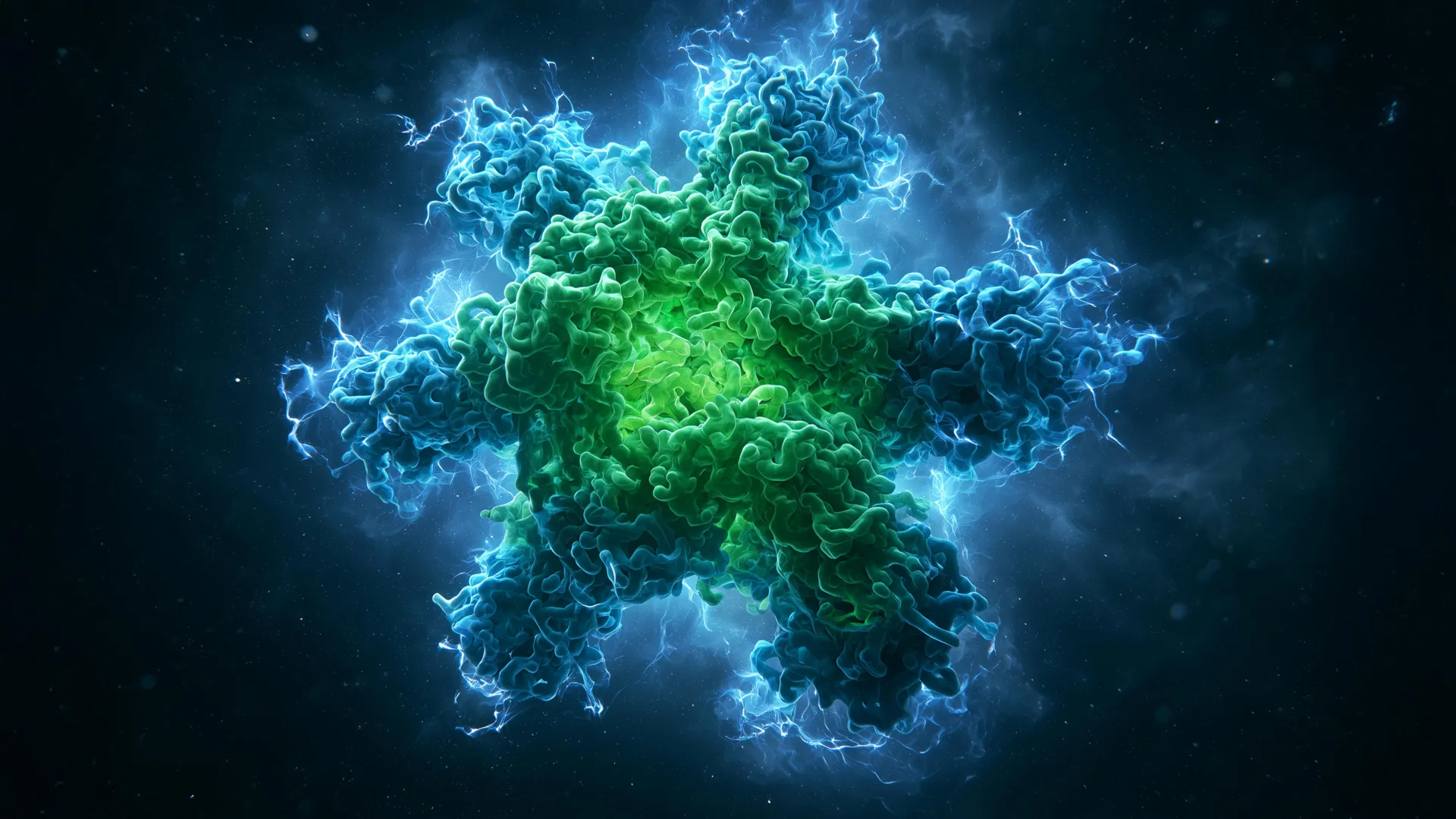
For life to flourish, nitrogen must be "fixed"—converted into a biologically accessible form. This feat is accomplished by a select group of specialized enzymes known as nitrogenases. A groundbreaking new study, published in Nature Communications, has now peered back billions of years into our planet’s history by synthetically reconstructing the ancestral versions of these enzymes. By bridging the gap between modern biochemistry and the primordial soup of early Earth, scientists are not only rewriting the history of evolution but are also crafting a roadmap for sustaining life on other planets.
The Architecture of Life: The Role of Nitrogenases
At the heart of this research is a collaborative effort between Utah State University (USU) and the NASA-funded Metal Utilization and Selection across Eons (MUSE) project at the University of Wisconsin-Madison. The research team, led by USU biochemist Lance Seefeldt and UW-Madison professor Betül Kaçar, sought to answer a fundamental question: How did life transition from its earliest, rudimentary forms to the complex biosphere we recognize today?
"All living organisms need nitrogen to survive and, though it’s all around us, we can’t access it directly," explains Dr. Seefeldt, who has dedicated over three decades to studying the structure and function of nitrogenases. "Enzymes called nitrogenases enable nitrogen fixation, which converts nitrogen to a form plants, animals, humans, and other life forms can access. We are just beginning to understand the extent to which, over the Earth’s four-billion-year history, these nitrogenases have evolved."
Chronology: A Journey Back Through Biological Time
The study of the origins of life has historically been confined to the physical remnants of the past—geological strata, isotopic signatures in ancient rock, and fossilized impressions. However, these methods come with significant limitations. As the Earth has undergone radical transformations over the last four billion years, the environmental conditions that shaped early enzymes have shifted, potentially masking the true signatures of ancient biological activity.
Moving Beyond the Fossil Record
For decades, scientists have operated under the assumption that ancient enzymes left behind the same isotopic signatures that modern enzymes produce today. Seefeldt argues that this assumption is increasingly tenuous. "Our planet was vastly different billions of years ago," he notes. "Until now, science has relied on ancient rock and fossils to study early life. But if we want to know how life truly operated in a pre-oxygen world, we cannot rely on the behaviors of modern, oxygen-dependent organisms."
The Synthetic Resurrection
To circumvent the limitations of the fossil record, the MUSE team employed synthetic biology to "resurrect" the past. By analyzing the genetic blueprints of modern nitrogenases and applying evolutionary algorithms, the researchers worked backward to reconstruct the likely genetic sequences of ancestral nitrogenases. Once these sequences were identified, they were synthesized and introduced into modern microbial hosts to observe how these ancient proteins functioned in a controlled, contemporary environment.
Supporting Data: Characterizing Ancient Performance
The experimental phase of the project required rigorous calibration. USU senior scientist Derek Harris spearheaded the characterization of these resurrected genes. "Our role in the study was to characterize a library of the synthetically reconstructed ancestral nitrogenase genes," Harris explains. "Under controlled lab conditions, we measured the nitrogen isotope fractionation in the cell biomass of the engineered strains."
By measuring how these ancestral enzymes handled nitrogen isotopes—specifically the ratio of stable nitrogen isotopes—the team could determine the efficiency and environmental preferences of the enzymes. This data provides a direct window into the metabolic capabilities of life forms that existed long before the Great Oxidation Event, a period when photosynthetic microbes began pumping oxygen into the atmosphere and fundamentally altered the planet’s chemistry.
Official Responses and Expert Perspectives
The implications of this research extend far beyond the laboratory, touching on fields as diverse as paleontology, climate science, and astrobiology.
The MUSE Mandate
Betül Kaçar, the director of the MUSE project and corresponding author of the study, emphasizes that this work is as much about the future as it is about the past. "The search for life starts here at home, and our home is four billion years old," says Kaçar. "So, we need to understand our own past. We need to understand life before us if we want to understand life ahead of us and life elsewhere."
Bridging the Gap
The collaborative nature of the study highlights the necessity of interdisciplinary approaches. By combining the biochemistry expertise at USU with the astrobiological focus of the MUSE project, the team has established a new methodology: "Evolutionary Biochemistry." This approach allows scientists to treat proteins as historical artifacts that can be reanimated, providing a degree of empirical evidence that was previously thought to be impossible to obtain.
Implications: From Earth’s Past to the Martian Frontier
The potential applications of this research are vast, spanning both terrestrial crises and the challenges of deep-space exploration.
Solving the Global Fertilizer Crisis
On Earth, the ability to manipulate nitrogen fixation is a critical frontier for agriculture. Nitrogen-based fertilizers are the backbone of modern global food production, but their manufacture is energy-intensive and environmentally damaging. Understanding how ancient nitrogenases evolved to be more efficient could provide the key to engineering crops that can fix their own nitrogen, reducing the need for chemical fertilizers and providing a sustainable solution for regions plagued by drought and poverty.
"Understanding nitrogenases, both ancient and modern, is critical to helping us tackle current agricultural challenges in a changing climate," Seefeldt notes. "As we face areas at risk of famine due to drought and lack of access to commercial fertilizers, these insights could be transformative."
The Search for Life in the Universe
Perhaps the most ambitious implication of the study is its utility in the search for extraterrestrial life. NASA’s focus on Mars and icy moons like Europa centers on the detection of biosignatures—chemical indicators of life. If we understand how the nitrogenase enzyme evolved on Earth under low-oxygen conditions, we can better predict what kinds of nitrogen-based signatures we should look for on planets that may still be in their own "early" evolutionary stages.
The study proves that biological machinery is not static; it is a dynamic record of the environment in which it evolved. By deciphering the "code" of nitrogen fixation, we are essentially learning the language of biological evolution. This methodology allows NASA scientists to move from speculative searches to targeted, evidence-based exploration.
Conclusion: The Horizon of Synthetic Evolution
The research led by Seefeldt, Harris, and Kaçar represents a paradigm shift in how we interpret the history of life on Earth. By successfully resurrecting ancient nitrogenases, the team has demonstrated that the deep past is not necessarily unreachable. Through the synthesis of ancient genes, we can now test theories about early metabolic processes with the same rigor we apply to modern biology.
As we look toward the future, the integration of synthetic biology and paleobiology will likely become the standard for exploring the origins of life. We are no longer just passive observers of the fossil record; we are active participants in reconstructing the narrative of our own existence. From the soil of our farms to the dusty, red surface of Mars, the nitrogenase enzyme remains the quintessential link between the inanimate atoms of the universe and the complex, breathing reality of life. The story of nitrogen is the story of us—and now, we have the tools to tell it from the very beginning.