The American housing market in 2026 stands at a historic crossroads. After five years of relentless growth that saw home prices climb by nearly 30%, the dream of homeownership has transitioned from an achievable milestone into a significant financial hurdle for millions. As of June 2026, the median home price in the United States hit an unprecedented record of $409,000. This milestone, however, does not signal a booming, healthy market; rather, it reflects a landscape defined by scarcity, economic anxiety, and a profound mismatch between supply and demand.
While prospective buyers grapple with elevated mortgage rates, rising property taxes, and the lingering shadow of inflation, the market has slowed to a crawl. Homes that once flew off the market in days are now languishing, with average days-on-market ticking upward to 49 days. For many Americans, the math simply no longer pencils out, leading to a surge in the rental population as buying becomes less affordable than renting in every major metropolitan area across the country.
A Chronology of the Crisis: From Pandemic Whiplash to Stagnation
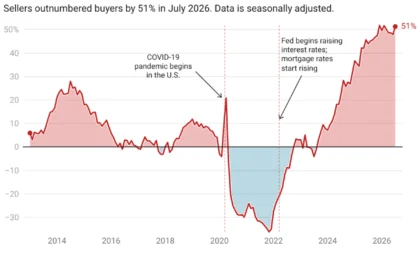
To understand the current state of the housing market, one must look back to the onset of the pandemic. The 2020-2021 period triggered a homebuying frenzy that effectively drained the nation’s housing inventory to historic lows. As record-low mortgage rates incentivized a rush of buyers, the existing supply was decimated.
Following this surge, the Federal Reserve’s pivot toward tightening monetary policy in response to inflation triggered a sharp increase in mortgage rates. This "interest rate shock" effectively locked many would-be sellers into their current homes—a phenomenon known as the "lock-in effect." Homeowners with ultra-low interest rates from the pandemic era were unwilling to trade those favorable terms for today’s higher rates, further constricting the supply of homes for sale.
By 2025 and moving into 2026, the market entered a phase of stagnation. With both buyers sidelined by high costs and sellers unwilling to list, the market slowed. While prices have continued to rise, they have done so at a more tempered pace—roughly 2% year-over-year—as the reality of a "locked" market takes hold.
The Pillars of the Affordability Gap
1. The Chronic Undersupply
The core of the housing crisis is fundamentally a numbers game. Estimates suggest the United States faces a housing shortage ranging from 1.5 million to 7 million units. This deficit is not a recent development; it is the culmination of more than a decade of systemic underbuilding. Following the Great Recession, the construction industry never fully recovered, leaving a persistent gap between the number of new households formed and the number of new homes built.
As Redfin’s Head of Economics Research, Chen Zhao, notes, "The U.S. has been stuck in an unusual cycle since the pandemic. Limited supply has pushed up housing costs, which has kept more buyers and sellers out of the market—putting a lid on new inventory and ultimately nudging costs up further."
2. The Zoning Wall
The inability to scale housing production is largely tied to restrictive, often antiquated, zoning laws. In many American municipalities, zoning codes dating back to the post-WWII era prioritize single-family detached homes, strictly prohibiting the development of duplexes, townhomes, or apartment complexes.
In states like California, where the housing crisis is acute, approximately 96% of residential land is zoned exclusively for single-family homes. This effectively bans the "missing middle" housing that could provide more affordable options for first-time buyers. While local governments are beginning to push back against these restrictions, the progress is slow. High construction costs, coupled with labor shortages, further discourage builders from pursuing smaller, more affordable starter-home projects in favor of larger, higher-margin luxury properties.
3. The Investor Influence
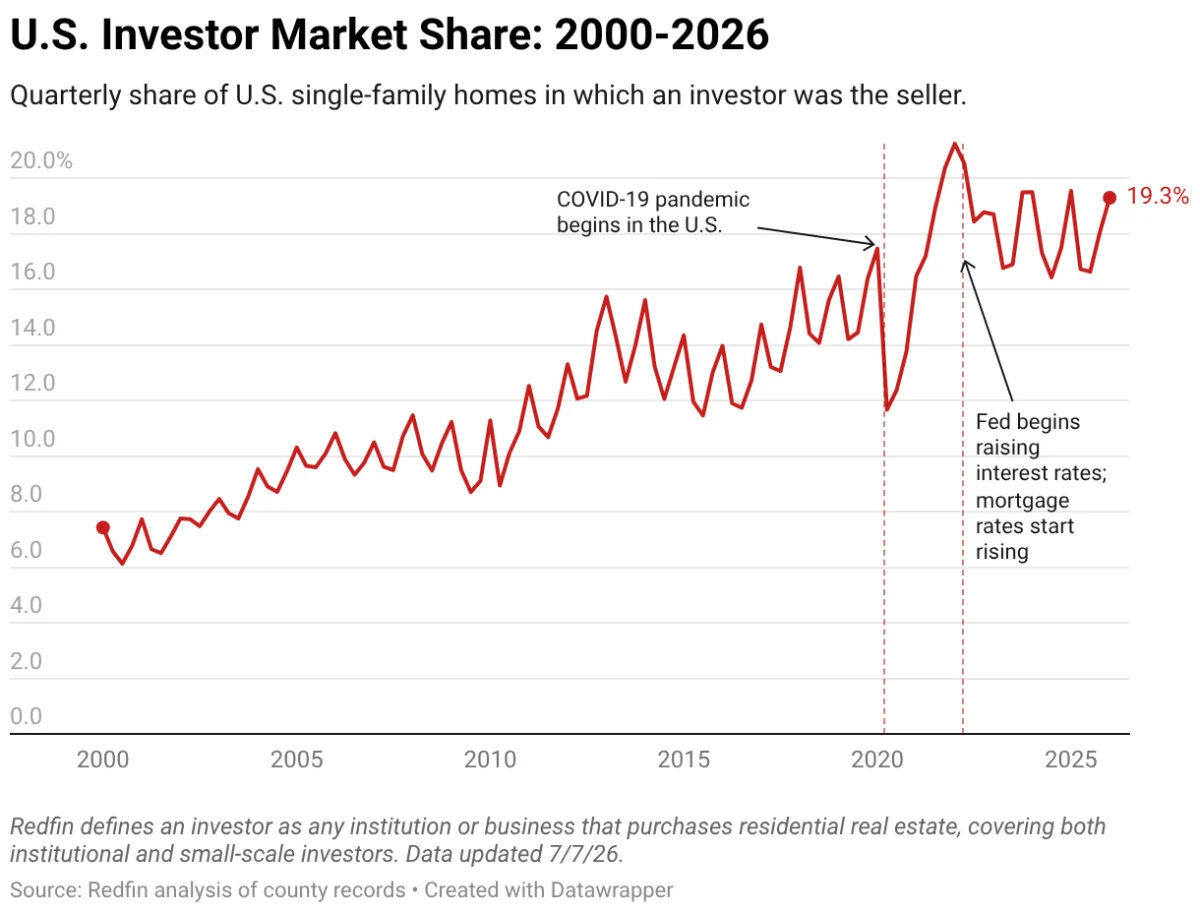
The role of institutional investors in the residential market has been a subject of intense debate. During the peak of the pandemic, investors purchased billions of dollars in real estate, accounting for as much as 21% of total home purchases by 2022. While this share has declined as the market has cooled, the presence of these entities—which often convert single-family homes into long-term rentals—has fundamentally altered the supply landscape.
While there is political momentum to ban institutional investors from the single-family market, economists warn that this could be a double-edged sword. "Limiting investor purchases would actually reduce rental supply and, in turn, put additional pressure on the for-sale market," warns Zhao. Ultimately, the presence of investors is a symptom of a larger, systemic failure to provide enough housing stock for the general population.
Official Responses and Policy Shifts
The federal government’s response to the housing crisis has been a mix of deregulation and targeted intervention. President Trump has championed the removal of regulatory barriers, including environmental assessments, to expedite construction. Furthermore, the administration has proposed utilizing federal land for residential development.
However, these initiatives face significant headwinds. Critics argue that the administration’s restrictive immigration policies will exacerbate the labor shortage in the construction sector, further driving up costs. Additionally, there is a clear divide between federal efforts and the reality of local zoning control. While the "ROAD to Housing Act" and other bipartisan efforts aim to incentivize development, there is no "silver bullet" legislation that can override decades of local, state, and federal stagnation overnight.
Implications: Navigating the New Normal
For those attempting to participate in the 2026 market, the landscape requires a strategic approach.
For Buyers:
- Regional Variance: The market is not a monolith. In the Midwest and Northeast, demand continues to outpace supply, keeping competition high. In contrast, many markets in the South are experiencing price corrections as supply begins to stack up.
- Focus on Affordability: With mortgage rates elevated, buyers must prioritize total monthly cost rather than just the purchase price. Exploring alternative loan products or government-backed first-time buyer programs is essential.
- Patience is a Virtue: Because the market is slow, buyers have more leverage to negotiate contingencies, inspections, and even seller concessions that were unthinkable during the 2021 frenzy.
For Sellers:
- Realistic Pricing: The era of bidding wars is largely over. Sellers must price their homes based on recent, verified sales data rather than "wish-list" pricing.
- Staging and Presentation: Because buyers are more discerning due to high interest rates, a well-presented, move-in-ready home is more likely to capture the limited pool of active buyers.
- Market Intelligence: Sellers should consult with local agents to understand the specific dynamics of their micro-market. In some areas, the "wait and see" approach may result in more inventory hitting the market later, increasing competition for the seller.
Conclusion: A Long Road to Equilibrium
As we look toward the remainder of 2026, a sharp decline in home prices appears unlikely. The most probable path is a slow, grinding stabilization. While the rate of price growth has moderated—offering a glimmer of hope for affordability—the underlying issues of supply constraints and economic volatility remain.
The path to a healthy housing market is clear in theory but difficult in practice: it requires a sustained, multi-year increase in housing starts, a modernization of zoning laws to allow for higher density, and a stable economic environment that encourages both domestic labor and private investment. Until these structural barriers are addressed, the housing market will continue to be defined by its scarcity, leaving both buyers and sellers to navigate a challenging, high-stakes environment. The "new normal" is, for now, a market that prioritizes patience and precision over the rapid, speculative growth of years past.