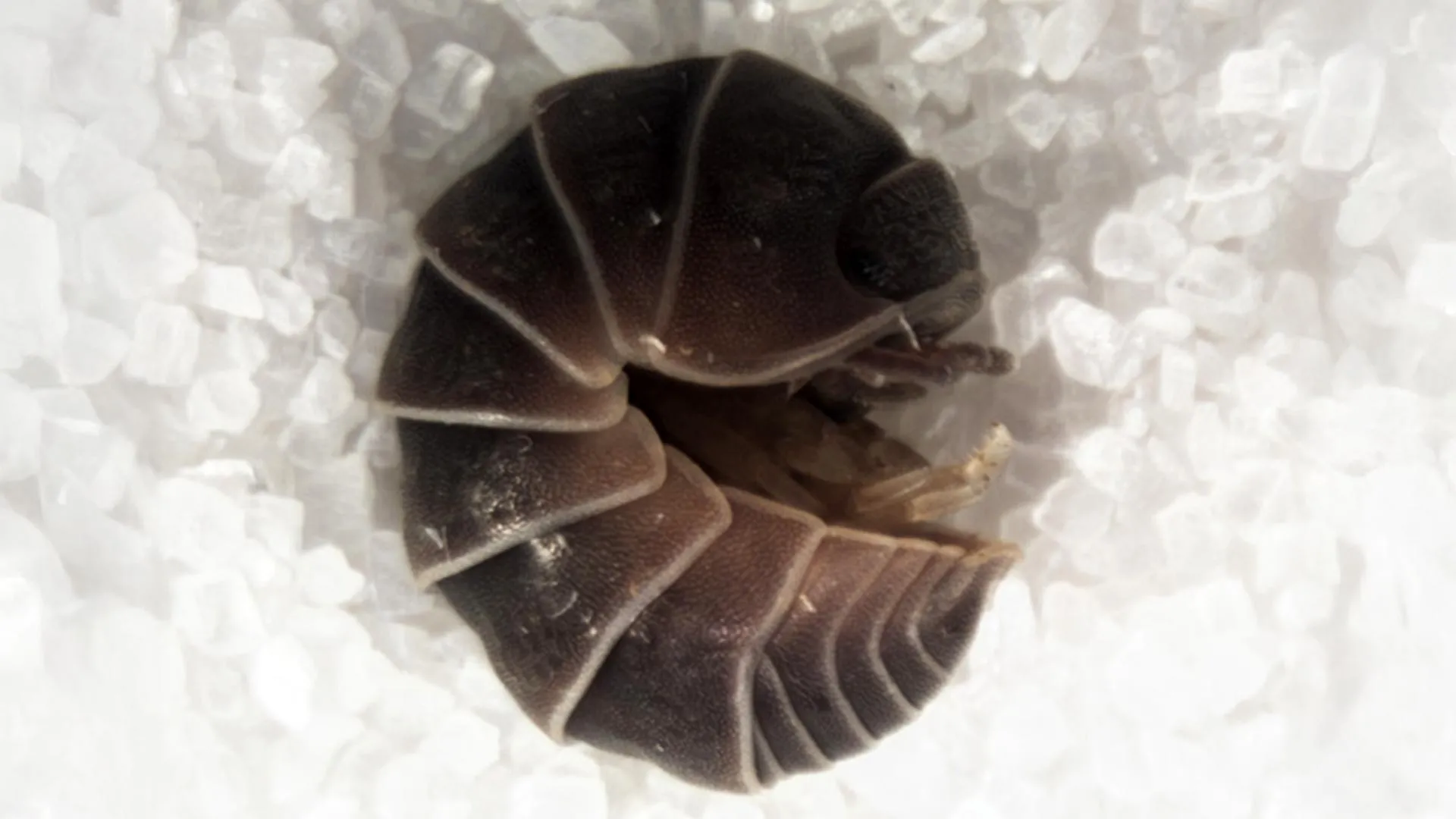
In the quiet, darkened landscape of Israel’s Golan Heights, a bizarre and mesmerizing phenomenon has been playing out beneath the hum of modern streetlights. Thousands of tiny, land-dwelling isopods—relatives of crabs and shrimp commonly known as woodlice or pill bugs—have been observed abandoning their solitary, moisture-seeking lifestyles to engage in massive, synchronized circular marches.
These "death spirals," as researchers have dubbed them, represent a startling discovery in the field of behavioral ecology. A study recently published in the journal Ecology and Evolution reveals that these rhythmic, circular formations are not a product of natural social instinct, but rather a catastrophic unintended consequence of Artificial Light at Night (ALAN). This phenomenon marks the first time such behavior has been documented in this group of crustaceans, signaling a profound disruption of biological instincts caused by human infrastructure.
The Discovery: An Amateur’s Observation Leads to Scientific Breakthrough
The story of the isopod spirals began not in a sterile laboratory, but in the field. Amateur naturalist Eviatar Itzkovich, while surveying the Golan Heights during the summer months, encountered a sight that defied conventional biological wisdom: massive, swirling carpets of isopods moving in unison.
The species in question, Armadillo sordidus, is a cryptic, understudied creature. Typically, these isopods spend their days hidden beneath rocks, leaf litter, and damp soil—micro-habitats that provide the critical humidity required to prevent them from desiccating. Before this observation, A. sordidus was known primarily as a solitary dweller, with recorded sightings limited to southern Syria and the Golan Heights. The study, led by PhD student Idan Sheizaf and supervised by Prof. Ariel Chipman at The Hebrew University of Jerusalem, not only brought this species into the scientific spotlight but also expanded its known geographic range to the Jezreel Valley, highlighting how little we truly understand about the biodiversity inhabiting our own backyards.
Chronology of Investigation: Unraveling the Mystery
Once the phenomenon was reported, the Hebrew University team moved to determine the catalyst behind the swirling masses. The investigation followed a rigorous scientific process to isolate the environmental variables responsible for the behavior.
Phase 1: Testing the Magnetic Hypothesis
Given that the Golan Heights possesses unique geological and magnetic properties, the researchers first hypothesized that the isopods might be reacting to local electromagnetic fields. By placing strong magnets in proximity to the swirling clusters, the team tested whether the animals’ orientation could be disrupted. The results were conclusive: the isopods remained entirely unfazed by the magnetic interference, continuing their circular march without hesitation.
Phase 2: Dissecting the Light Spectrum
The team then turned their attention to light. Initially, they tested ultraviolet (UV) flashlights. While UV light is known to influence the behavior of many nocturnal insects, it failed to trigger the circular formations in A. sordidus, attracting only a handful of individuals.
Phase 3: The "White Light" Catalyst
The breakthrough occurred when researchers introduced standard white LED light. By positioning a lamp to cast a sharp, vertical beam of light onto the ground, the team replicated the exact conditions of a streetlamp. The isopods, sensitive to the contrast between light and dark, reacted immediately. As the beam created a distinct circular boundary on the ground, the isopods gathered at the perimeter, walking along the edge. As more individuals joined, the collective motion became self-sustaining, creating the massive, mesmerizing spirals first observed in the wild.
Supporting Data: Why Geometry Matters
The study suggests that the "death spiral" is an emergent phenomenon driven by the interaction between the geometry of artificial lighting and the isopods’ innate navigation systems.
Most isopods rely on light-dark transitions to orient themselves. In nature, a sharp, circular pool of light is an anomaly that does not exist. When an isopod encounters the edge of a streetlight’s beam, its natural instinct is to follow the boundary. Because the light source is stationary and the beam is perfectly round, the animal is essentially locked into a perpetual loop.
Data collected during the study provided key insights into the composition of these groups:
- Demographics: The majority of the participants were female, many of whom were gravid (carrying eggs). This effectively debunked the theory that these gatherings were related to mating or complex social signaling.
- Scale: Some observed spirals contained upwards of 5,000 individuals, a staggering number for a creature that typically avoids its peers.
- Sustainability: Once a cluster reaches a certain size, the group momentum keeps the spiral moving, effectively trapping the individuals within a cycle they cannot break.
Official Responses and Expert Reflection
The research team, spearheaded by Idan Sheizaf, has expressed both fascination and concern regarding their findings.
"While collective movement is common in the animal kingdom, seeing it in this form in isopods was entirely unexpected," said Sheizaf. "It appears that the geometry of our modern world—specifically the circular pools of light created by streetlights—is interacting with the natural instincts of these creatures to create a mesmerizing, yet potentially harmful, emergent phenomenon."
Prof. Ariel Chipman emphasized that this discovery serves as a cautionary tale. "We often think of light pollution in terms of skyglow or its impact on migratory birds," Chipman noted. "This research forces us to look down at the ground and realize that even the smallest, most overlooked species are being fundamentally altered by the way we illuminate our environment."
Implications: The Ecological Cost of "Death Spirals"
The term "death spiral" is not hyperbolic; the research indicates that these formations carry significant, potentially fatal risks for the species.
Predator Vulnerability
The most immediate threat identified by the researchers was predation. In one documented instance, a centipede was observed feeding on the distracted isopods as they circled. By forcing the isopods to abandon their sheltered, dark habitats and move into the illuminated, exposed areas beneath streetlights, the light creates a "predator trap." The isopods become easy targets, unable to break the cycle of movement to flee or hide.
Energy Expenditure and Reproductive Impact
Isopods, particularly those carrying eggs, require significant energy to navigate their environment and maintain their moisture levels. Being caught in a sustained, high-energy march depletes these vital reserves. Furthermore, the fact that many of these participants are gravid suggests that the behavior is actively removing energy from the reproductive cycle, which could lead to localized population declines.
The "Altered Landscape" Problem
The study highlights a growing concern in conservation biology: the disruption of evolutionary instincts by human-made environmental changes. For millions of years, isopods evolved to navigate based on natural cues—the soft glow of the moon, the dark shade of a rock, the humidity of a crevice. By imposing harsh, artificial geometric boundaries, we have essentially "hacked" the biology of these small creatures.
Future Outlook
The implications of the Hebrew University study extend far beyond the Golan Heights. If A. sordidus can be so dramatically affected by simple LED streetlights, it is highly probable that other ground-dwelling arthropods are suffering similar, undocumented disruptions.
As urban sprawl continues to expand, lighting infrastructure is often installed with little consideration for its impact on ground-level micro-fauna. This research serves as a clarion call for "smart" lighting solutions—such as motion-activated sensors, directional shielding, or the use of light temperatures that are less disruptive to nocturnal biological rhythms.
Ultimately, the plight of the A. sordidus spiral serves as a profound reminder of the interconnectedness of our world. A streetlight, designed for human convenience and safety, creates a ripple effect that reshapes the lives—and deaths—of thousands of tiny, ancient creatures, reminding us that every innovation comes with an ecological cost that we are only just beginning to measure.