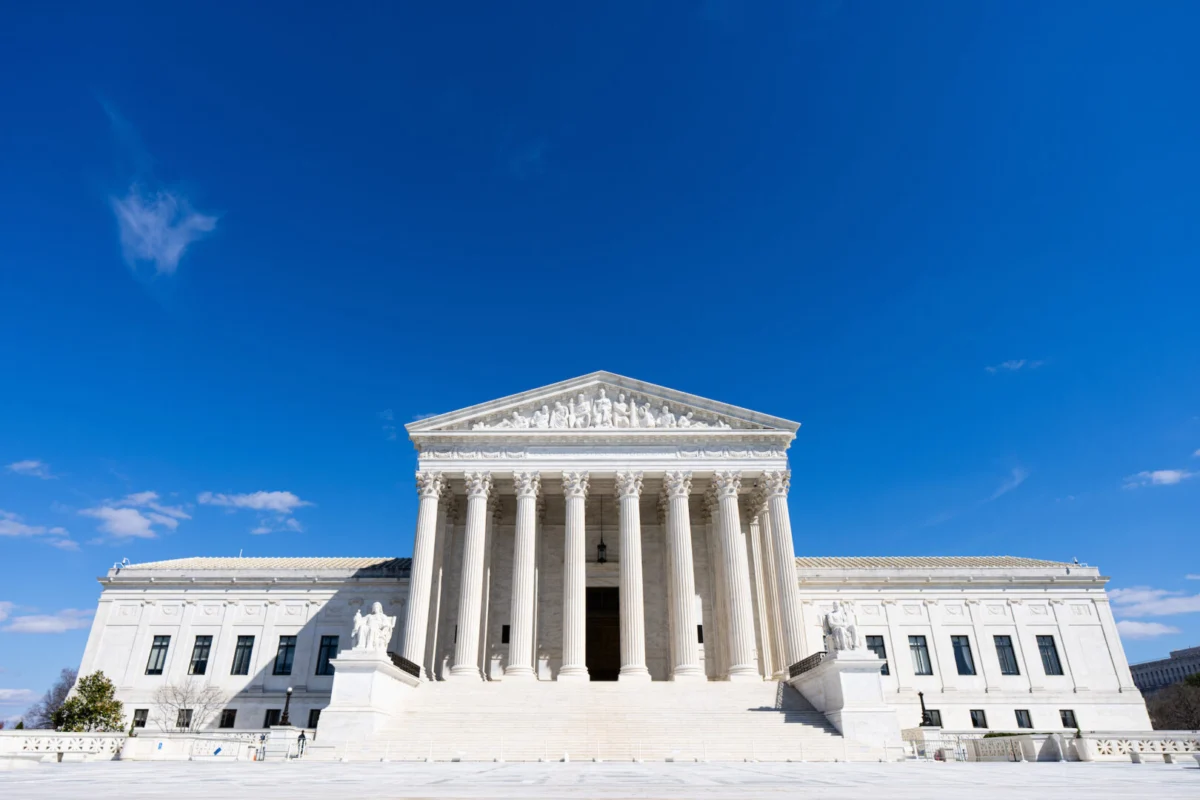
Washington D.C. – The latest term of the Supreme Court has concluded, leaving a deeply divided Congress in an unenviable position: how to respond to a judiciary that, according to many legal experts and political observers, has significantly expanded its own power and influence. The Court’s recent rulings have provoked strong reactions across the political spectrum, yet the legislative branch appears largely paralyzed, unable to muster the bipartisan consensus required to meaningfully challenge or clarify the judiciary’s increasingly assertive role.
The ideological schisms within the Court itself are mirrored by the partisan gridlock in Congress, creating a stalemate that threatens the traditional balance of power. While conservatives expressed dismay over a decision that upheld birthright citizenship against presidential challenge, Democrats were equally outraged by rulings that strengthened executive power over independent agencies and continued to erode voting rights protections. Despite these profound disagreements with the Court’s direction, analysts suggest that immediate legislative action is highly improbable, signaling a deeper malaise within American governance.
The Widening Chasm: Key Rulings and Immediate Reactions
The Supreme Court’s most recent session concluded with a series of decisions that underscored its significant influence over both executive and legislative authority, igniting a fresh wave of debate over judicial activism and inter-branch checks and balances.
One of the most notable rulings saw the Court quash President Donald Trump’s ambitious attempt to unilaterally limit birthright citizenship. Trump, echoing a long-standing conservative talking point, had sought to redefine the scope of the 14th Amendment, arguing that it did not apply to children born in the U.S. to undocumented immigrants. The Court’s decision to uphold the traditional interpretation, rooted in the text and historical understanding of the Amendment, was a significant legal setback for the administration and a point of contention for many conservatives who believe the policy encourages illegal immigration and strains national resources.
Conversely, Democrats and good governance advocates were incensed by a separate ruling that granted the President expanded authority to fire officials at independent agencies, such as the Federal Trade Commission (FTC). This decision was viewed as a dangerous precedent, potentially undermining the independence of crucial regulatory bodies designed to operate free from direct political interference. Critics argued that such a move concentrates excessive power in the executive branch, enabling a president to exert undue influence over regulatory enforcement and policy implementation, thereby politicizing institutions meant to serve the public interest impartially.
Despite the bipartisan nature of these grievances – conservatives feeling thwarted on immigration, liberals on executive overreach and institutional independence – the consensus among political analysts is that Congress is ill-equipped to mount a robust legislative response to either case. The current political climate, characterized by razor-thin majorities and deep ideological divides, renders legislative pushback against the judiciary an increasingly remote possibility.
Casey Burgat, director of the legislative affairs program at the Graduate School of Political Management at George Washington University, articulated this paralysis succinctly. "This is a function of our reality in a very polarized, insecure, small-majority environment where the powers can exist on paper and within the Constitution, but operationalizing those powers is a very different political question," he explained. His assessment highlights the practical limitations imposed by contemporary political dynamics, where theoretical constitutional powers often succumb to the exigencies of partisan brinkmanship and electoral insecurity.
Chronology of Discontent: From Birthright to Ballot Boxes
The Supreme Court’s recent term has served as a potent reminder of its profound influence on American policy and the subsequent frustration felt across the political spectrum. The immediate aftermath of key decisions revealed the deep fissures within the body politic and the challenges inherent in crafting legislative responses.
Immediately following the birthright citizenship decision, President Trump took to Truth Social, urging Congress to act. "Congress should start TODAY to work on ending expensive and unfair to our Country, Birthright Citizenship. They will have my Complete and Total Support!" Trump posted, despite the Court’s clear conclusion that the Constitution’s 14th Amendment itself grants birthright citizenship. This call underscored the executive branch’s desire for legislative intervention, even if such intervention would require a fundamental reinterpretation or amendment of the nation’s founding document.
Speaker Mike Johnson, a constitutional lawyer himself, echoed the sentiment that reversing the birthright citizenship ruling would necessitate a monumental undertaking. Speaking to reporters, Johnson conceded, "It’s one of those things that was intended to serve a noble and important purpose and has been thwarted and overused and abused, and so I’m sure that we’ll continue to look at that. I’m sure that the conclusion from this decision is you have to amend the Constitution to fix that." The prospect of a constitutional amendment, requiring a two-thirds vote in both chambers of Congress and ratification by three-fourths of the states, is a daunting and historically rare endeavor, highlighting the immense difficulty of overriding a Supreme Court interpretation of the Constitution.
Beyond these high-profile cases, other rulings have also contributed to the legislative gridlock. Last week, the Court upheld a state law allowing the counting of late-arriving mail ballots in federal elections. This decision, while seemingly procedural, exacerbated an ongoing and deeply partisan fight within the House of Representatives. The House has been paralyzed in recent weeks by debates over a voter ID bill known as the SAVE America Act. Among its provisions, the Act explicitly seeks to ban the counting of such late ballots, directly conflicting with the spirit of the Court’s ruling and reflecting the broader, contentious debate over election integrity and access. The inability of Congress to even pass legislation on this critical issue, despite significant partisan energy, further illustrates its present state of legislative dysfunction.
Aziz Huq, a professor at the University of Chicago Law School, pointed to the White House’s limited engagement in pushing for legislative remedies. Despite Republicans controlling both the White House and both chambers of Congress at the time, Huq noted, "You could imagine an administration that is capable of nuance and nudging Congress; you could imagine congressional responses. It is a little hard to see how this White House responds by going to Congress and getting new authorities." This observation suggests that even with theoretical political alignment, the current administration has not effectively leveraged its position to guide or pressure Congress into legislative action against the Court’s decisions, leaving the legislative branch to navigate these complex issues largely on its own.
Supporting Data: The Erosion of Voting Rights and Congressional Inertia
While conservatives grapple with specific rulings, Democrats have harbored a deeper, more systemic frustration with the Court, particularly concerning its steady erosion of voting rights protections over the past decade. This frustration has fueled discussions about fundamental reforms to the judicial branch itself, ranging from imposing a binding ethics code on justices to expanding the size of the Court and implementing 18-year term limits.
Senator Cory Booker (D-N.J.), during a livestream event following the FTC firing case, articulated the Democratic Party’s profound exasperation. He called for Congress to address the institution directly, even if it meant confronting the 60-vote threshold of the filibuster in the Senate. "We can do that in a Congress that’s willing to do that, especially if we’re willing to reform the filibuster, which is one of the things in the Senate that’s stopping us from having the kind of democratic reforms that we want to have, because the majority of Republicans will always vote against finance laws, disclosure laws, anti-gerrymandering laws, and the like," Booker stated. His remarks highlight the deep-seated belief among many Democrats that the filibuster acts as a legislative chokehold, preventing the passage of reforms that would otherwise command a simple majority.
The genesis of this Democratic frustration can be traced back more than a decade to the Supreme Court’s landmark 2013 decision in Shelby County v. Holder. This ruling invalidated Section 4(b) of the Voting Rights Act (VRA), effectively gutting the "pre-clearance" provision that required certain states and local governments with histories of racial discrimination to obtain federal approval before changing their voting rules. The Shelby County decision, widely criticized by civil rights advocates, opened the floodgates for states to enact new voting restrictions, which critics argue disproportionately affect minority voters.
Since Shelby County, the justices have issued several further decisions that have systematically limited the VRA’s scope and impact. This year, for instance, the Court curtailed the creation of majority-minority congressional districts, effectively reducing the ability of minority groups to elect their preferred representatives. These decisions collectively paint a picture of a judiciary increasingly skeptical of Congress’s historical efforts to safeguard voting rights, viewing them through a lens that emphasizes states’ rights and minimizes the legacy of systemic discrimination.
Sherrilyn Ifill, former president of the NAACP Legal Defense Fund and a law professor at Howard University, sees a clear throughline from the Court’s dismissive treatment of the 2005 VRA reauthorization in Shelby County to its more recent rulings. She argues that the Court’s majority has displayed a troubling disregard for legislative intent and process. "They won’t even credit congressional votes as having any significance because they ‘know’ why Congress did it," Ifill contended, suggesting a judicial arrogance that presumes to understand congressional motivations better than Congress itself.
Ifill further highlighted a powerful dissent this term from Justice Ketanji Brown Jackson in FS Credit v. Saba Capital, a case where the majority limited investors’ ability to sue when investment funds break certain rules. Justice Jackson, in her dissent, directly admonished the majority for treating Congress with "contempt" when interpreting the law. This internal critique from a justice underscores the growing concern that the Court is not merely interpreting statutes but actively undermining the legislative branch’s authority and intent. "They absolutely don’t believe Congress is a coequal branch of government," Ifill asserted. "They have arrogated power to themselves and sometimes to the president." This stark assessment points to a fundamental imbalance, where the judiciary, in her view, has overstepped its constitutional bounds, concentrating power in its own hands or deferring it excessively to the executive.
Official Responses: Calls for Action Amidst Legislative Inertia
The official responses to the Supreme Court’s assertive term have been marked by frustration and calls for action, yet these calls often crash against the immovable wall of congressional gridlock. While President Trump pushed for legislative action on birthright citizenship, and Speaker Johnson acknowledged the need for a constitutional amendment, the practical pathways for such changes remain blocked.
The Democratic response, articulated by figures like Senator Booker, centers on the need for internal congressional reform – specifically, addressing the filibuster – to enable legislative responses. However, even within the Democratic caucus, there is no unified front on filibuster reform, let alone the more radical proposals of court expansion or term limits. These ideas, while gaining traction among progressives, are viewed with deep skepticism by moderate Democrats and outright opposition by Republicans, rendering them non-starters in the current political environment.
The expert analyses further underscore the official responses’ limitations. Casey Burgat’s observation about "operationalizing powers" in a polarized environment directly speaks to the gap between official statements and actual legislative output. Aziz Huq’s critique of the White House’s "lack of nuance" in engaging Congress implies a strategic failure at the highest executive level to translate presidential desires into legislative mandates.
Perhaps the most damning official response, albeit an indirect one, comes from Justice Ketanji Brown Jackson’s dissent. Her accusation that the majority treats Congress with "contempt" is a powerful internal acknowledgment of the Court’s perceived overreach. It suggests that even from within the judiciary, there is a recognition of the growing tension and the potential for one branch to disrespect the coequal standing of another. This sentiment, amplified by Sherrilyn Ifill’s analysis of the Court "arrogating power to themselves," constitutes a grave warning from legal scholars about the health of American democracy.
Implications: A Stalled Congress and the Shifting Balance of Power
The Supreme Court’s recent term and Congress’s anemic response carry profound implications for the future of American governance. The inability of the legislative branch to effectively check the judiciary, even when bipartisan grievances exist, signals a dangerous shift in the balance of power and a concerning precedent for future inter-branch relations.
Historically, congressional rebuke of the Supreme Court, while rare, has been a powerful mechanism for course correction. The last time Congress directly passed a law in response to a Supreme Court ruling was in 2009, with the passage of the Lilly Ledbetter Fair Pay Act. This law, signed by then-President Barack Obama, effectively overturned the 2007 Supreme Court decision in Ledbetter v. Goodyear Tire & Rubber Co., which had significantly limited the timeframe for filing pay discrimination lawsuits. The passage of the Lilly Ledbetter Act, during a period of Democratic "trifecta" control of the White House and both chambers of Congress, demonstrated that legislative pushback is possible when political will and alignment converge.
Prior to that, one of the highest-profile legislative responses was the Religious Freedom Restoration Act (RFRA) of 1993. This law, which broadly expanded religious exemptions from government requirements, came directly in response to the Court’s 1990 decision in Employment Division v. Smith. In Smith, the justices had narrowed the scope of religious freedom claims under the First Amendment, prompting a bipartisan outcry and swift congressional action to restore broader protections. These examples serve as historical benchmarks, demonstrating that a determined and unified Congress can push back against judicial interpretations.
However, these historical precedents now appear increasingly distant. Even in less high-profile but economically significant areas of American law, Congress has struggled to act. Since 2010, the Supreme Court has issued a series of decisions that have significantly narrowed what can be patented, particularly in areas like software and business methods (e.g., Alice Corp. v. CLS Bank International). These rulings have created uncertainty for innovators and industries, prompting bipartisan groups of lawmakers to repeatedly introduce legislation to clarify and tweak these rules. Yet, for nearly a decade, every single one of these efforts has stalled, unable to garner sufficient consensus to pass both chambers. This consistent failure, even on issues that cross traditional partisan lines and have clear economic ramifications, underscores the depth of congressional paralysis.
The implications are stark:
- Erosion of Checks and Balances: The current dynamic suggests a judiciary increasingly confident in its own authority, facing a legislative branch unable to assert its coequal status. This imbalance can lead to a less accountable judiciary and a diminished role for elected representatives in shaping national policy.
- Policy Stagnation: When Congress cannot respond to judicial rulings, critical policy areas, from immigration to voting rights to economic innovation, remain in a state of flux or are shaped solely by judicial fiat, often without the benefit of legislative debate, compromise, and public input.
- Deepening Polarization: The inability to find common ground, even on issues where both parties express dissatisfaction with the Court, further entrenches partisan divides and fosters a sense of helplessness among the electorate.
- Increased Calls for Radical Reform: As traditional legislative avenues for redress close, calls for more drastic measures, such as court packing or constitutional amendments, will likely intensify, potentially destabilizing the judiciary and the broader constitutional framework.
In conclusion, the Supreme Court’s latest term has laid bare a fundamental challenge to the American system of government. With an assertive judiciary and a fragmented, gridlocked Congress, the traditional mechanisms of checks and balances are under severe strain. The question of how to respond to an increasingly powerful Court remains unanswered, leaving the nation at a critical juncture regarding the future of inter-branch relations and the very nature of democratic governance.