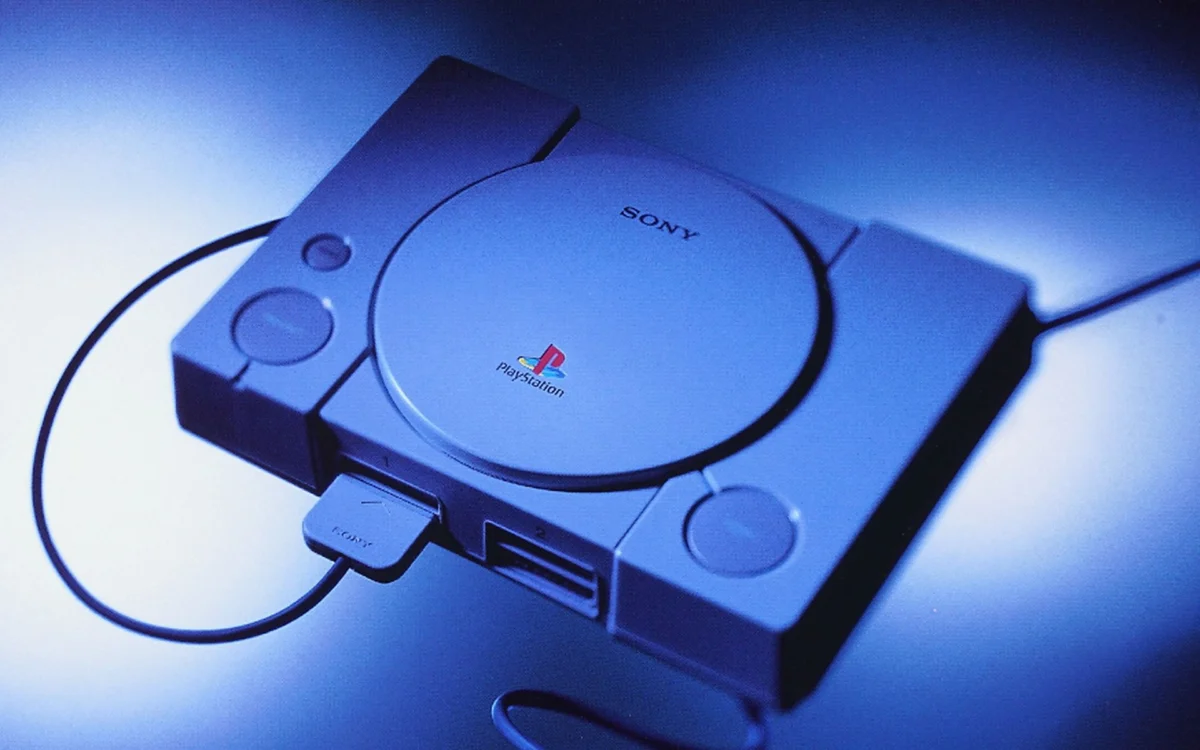
In the annals of gaming history, few moments have signaled a shift in paradigm as decisively as Sony’s recent announcement that it will cease the production of physical PlayStation games. This decision marks a definitive end to a thirty-year relationship between the console giant and the optical disc—a technology that once defined the industry’s leap into the 3D era but has increasingly become an anchor for modern software development.
While the loss of physical media raises profound, legitimate concerns regarding digital ownership, long-term preservation, and the future of consumer rights, it also invites a critical post-mortem on the medium itself. For all the nostalgia surrounding plastic cases and "day one" unboxings, the optical disc was never the ideal vessel for the interactive medium.
A Chronology of the Optical Disc
To understand the current transition, one must look back to the mid-1990s. When Sony entered the home console market with the original PlayStation in 1994, it made a daring bet on the CD-ROM. At the time, competitors like Nintendo were still firmly entrenched in the world of cartridges. The CD-ROM offered massive storage capacity, cheap manufacturing costs, and the ability to include pre-rendered cinematic sequences and high-fidelity audio—features that would eventually define the "cinematic" era of gaming.
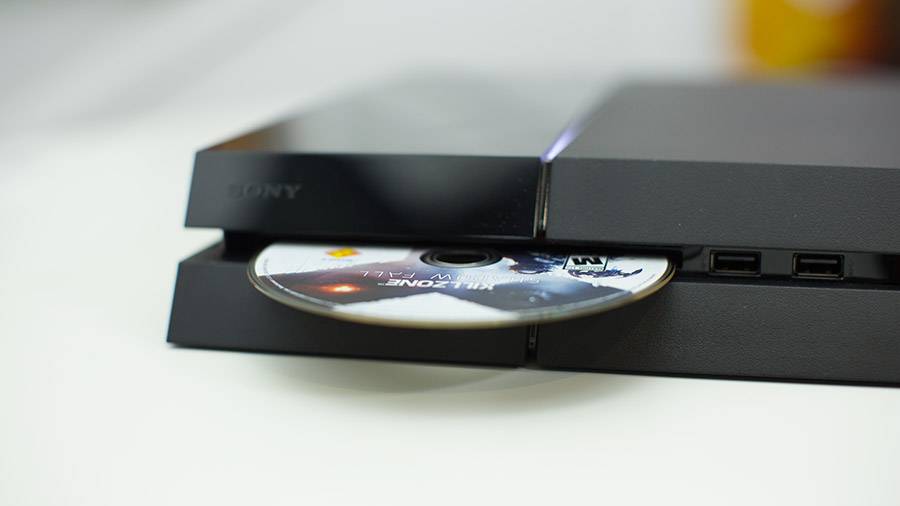
- 1994–2000 (The CD Era): The original PlayStation proved that discs were the gateway to a more mature, expansive gaming experience. However, it also introduced the world to the "laser struggle," with users famously learning to turn their consoles upside down to encourage the struggling motors to read scratched or worn discs.
- 2000–2006 (The DVD Revolution): The PlayStation 2 cemented the disc as the king of home entertainment. By integrating a DVD player, Sony ensured the console was a living room staple. Yet, as games grew in complexity, the slow read speeds of the DVD format became a bottleneck.
- 2006–2026 (The Blu-ray/Installation Era): The launch of the PlayStation 3 introduced Blu-ray technology. While high-capacity, these discs suffered from excruciatingly slow data transfer rates. This necessitated the industry-wide shift toward mandatory "disc-to-hard-drive" installations, effectively rendering the disc a physical key rather than a data repository.
The Technological Mismatch
The core tension between games and optical media stems from their fundamental architecture. Optical discs are essentially "temporal" media—they were designed for linear experiences like movies and music, where a laser tracks along a continuous path to stream data at a steady, predictable rate.
Video games, by contrast, are fundamentally "spatial" and "random-access." They require the system to pull thousands of disparate assets—textures, audio files, scripts, and geometry—simultaneously and instantly. For decades, developers have built elaborate workarounds to hide the latency of the spinning disc. From clever loading screens to hidden "corridor" sequences designed to mask data streaming, the history of game design is littered with constraints forced upon creators by the limitations of the optical drive.
"Discs were never a great fit for the interactive medium," notes industry analyst perspectives on the transition. "They were a necessary evil for distribution, but they were never the best place for a game to live."

Supporting Data: The Decline of Physical Ownership
The shift toward a digital-first ecosystem has been a gradual, data-driven migration rather than an overnight coup. According to market research trends over the past five years:
- Digital Revenue Dominance: By 2025, digital storefront sales accounted for nearly 85% of total console software revenue, a massive jump from the 50/50 split observed in the early 2010s.
- Infrastructure Realities: Modern games now routinely exceed 100GB in size. A single Blu-ray disc—even a dual-layer version—can no longer contain the entirety of a modern AAA title, leading to the "day one patch" culture, where the disc is effectively obsolete the moment it is inserted into the console.
- Consumer Behavior: The rise of subscription services like PlayStation Plus has conditioned a generation of gamers to view software as a service (SaaS) rather than a physical asset.
Implications for Preservation and Ownership
Despite the technical obsolescence of the disc, the industry’s departure from physical media leaves a gaping hole in the conversation regarding digital rights. When a consumer buys a physical disc, they own a tangible artifact. They can lend it, resell it, or play it in twenty years, provided they have a working console.
The digital transition removes these safety nets. When a storefront closes or a publisher pulls a title from a digital library, the consumer is left with nothing. This "disappearance" of culture is a primary concern for historians and archivists. If games are not preserved on physical media, we rely entirely on the benevolence of corporations to keep those servers running.
Furthermore, the secondary market—which has provided millions of players with access to affordable gaming for decades—is effectively erased. Without the ability to trade, sell, or purchase used games, the "cost of entry" for gaming is set exclusively by the platform holder, removing the competitive pressure of the resale market.
The Silicon Future
If the optical disc was the wrong medium, what is the right one? The answer, as many have pointed out, lies in silicon. Cartridges—or, more accurately, high-speed flash storage—are the natural home for gaming. They are silent, durable, and offer the instantaneous read speeds required by modern, open-world software.
Nintendo’s trajectory serves as a case study. After briefly abandoning cartridges during the GameCube era, they returned to silicon-based media for the Switch. The result was a platform that felt cohesive, fast, and better aligned with the instantaneous nature of modern gaming.
Conclusion: A Bittersweet Farewell
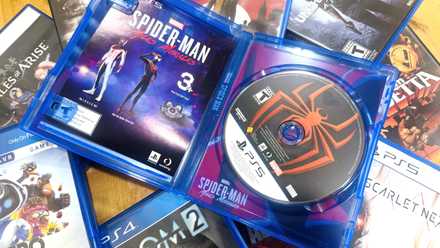
The death of the physical game disc is a complex event. For those of us who grew up with shelves lined with cases, it feels like the loss of a tangible history. There is a distinct, visceral joy in holding a game, reading the manual, and placing it on a shelf. These objects represent a connection to the art that a digital license in a sub-menu simply cannot replicate.
However, we must distinguish between the value of physical ownership and the utility of the medium. The optical disc was a clumsy, fragile, and noisy intermediary. It served its purpose in the era of early 3D gaming, but it has been a relic for years.
As the industry moves toward a fully digital landscape, the fight for physical media must shift its focus. We must stop mourning the disc and start demanding better protections for digital ownership. We need to advocate for decentralized archives, offline modes for single-player titles, and the right to maintain access to the content we purchase.
The discs may be going away, but the need for genuine, unencumbered ownership of our games has never been more urgent. We don’t need the spinning plastic, but we certainly need the rights that it once symbolized.