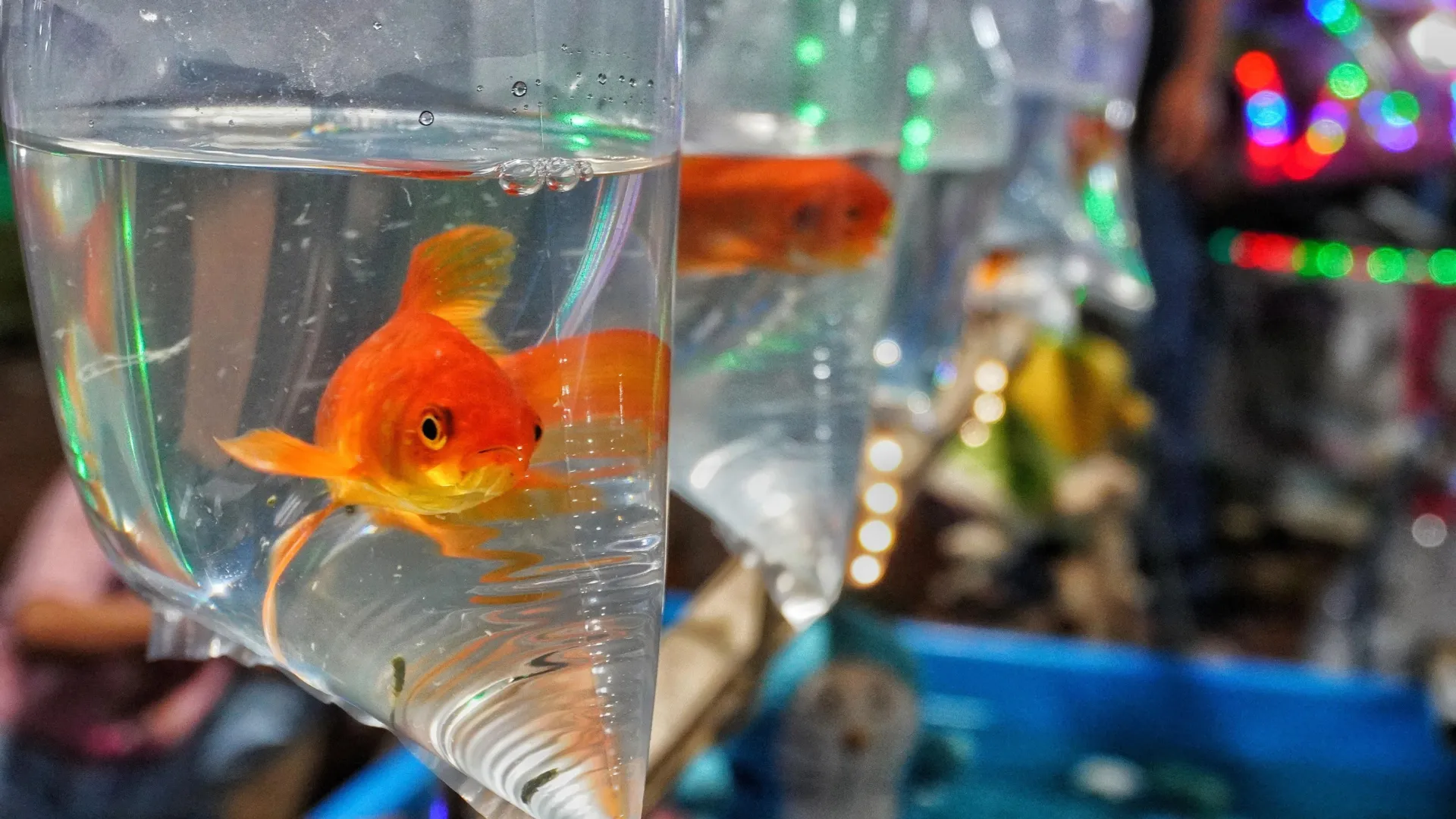
In the living rooms of millions, the goldfish (Carassius auratus) is viewed as the quintessential low-maintenance pet—a shimmering, docile inhabitant of the glass bowl or the suburban garden pond. However, a groundbreaking peer-reviewed study recently published in the Journal of Animal Ecology has stripped away this benign facade. Researchers from The University of Toledo and the University of Missouri have provided some of the most compelling experimental evidence to date that these common household pets are, in fact, an ecological ticking time bomb capable of triggering catastrophic “regime shifts” in freshwater environments.
The study, which utilized large-scale outdoor mesocosms to simulate real-world lake conditions, serves as a sobering warning to pet owners, natural resource managers, and policymakers alike: what begins as an act of “mercy” by releasing a fish into the wild can rapidly devolve into a nightmare of environmental degradation.
The Science of Disruption: Understanding the “Regime Shift”
For years, biologists have suspected that invasive goldfish pose a threat, but documenting the precise mechanism of their destruction has remained a challenge. By employing sophisticated experimental designs—including both additive and substitutive approaches—the research team was able to isolate the specific impact of goldfish from general fish abundance.
The findings are unequivocal: goldfish do not merely inhabit lakes; they fundamentally reconfigure them. The researchers documented what scientists call a "regime shift," a critical threshold where an ecosystem, pushed too far by external stressors, undergoes a rapid and often irreversible transformation.
“A regime shift occurs when an ecosystem crosses a tipping point and reorganizes into a fundamentally different, often degraded, state,” explains Dr. William Hintz, associate professor in UToledo’s Department of Environmental Sciences and lead investigator of the study. “Once an ecosystem reaches this state, the damage is not only profound but exceptionally difficult and expensive to remediate.”
Whether the environment was nutrient-poor (oligotrophic) or nutrient-rich (eutrophic), the presence of goldfish consistently led to a decline in water quality, a reduction in aquatic vegetation, and a collapse in native biodiversity. The goldfish acted as a catalyst for a chain reaction that stripped the lakes of their resilience.
Chronology of a Crisis: From Aquarium to Ecosystem
The trajectory of a “pest-pet” typically follows a predictable, albeit tragic, path. The journey from a domestic tank to a public waterway generally unfolds in three phases:
Phase I: The Introduction
The process begins with the intentional release of unwanted pets or accidental escapes during flooding events. Because goldfish are hardy and adaptable, they survive the transition with remarkable ease. Unlike many tropical aquarium fish that struggle in temperate waters, Carassius auratus can withstand a wide range of temperatures and oxygen levels, allowing them to thrive in nearly any climate where they are introduced.
Phase II: The Establishment
Once in the wild, the goldfish—often perceived as slow-moving and small—undergo a biological metamorphosis. Freed from the constraints of a glass tank, they grow to sizes rarely seen in the home. In their new environment, they become voracious, opportunistic omnivores. They begin to stir up lake sediments, which releases buried nutrients into the water column, fueling harmful algal blooms and clouding the water. This turbidity prevents sunlight from reaching submersed aquatic plants, which are the very foundation of a healthy lake habitat.
Phase III: The Domination
As the goldfish population swells, they begin to compete directly with native fish species for food and breeding grounds. By consuming large quantities of invertebrates and phytoplankton, they starve out native populations. By the time authorities notice the invasion, the ecosystem has already begun its slide toward the “degraded state” identified by the researchers.
Supporting Data: Why Goldfish are Unique Threats
The research team, which included Dr. William Hintz, Hannah Barrett, and Dr. Rick Relyea, took pains to ensure their findings were not merely a result of having "too many fish" in a lake. By comparing ecosystems containing goldfish against those with native fish populations of similar biomass, they uncovered the specific behavioral traits that make goldfish such potent invaders.
The "Sediment Stirring" Effect
Goldfish are benthic foragers. They spend much of their time digging through the substrate at the bottom of a lake. This behavior, known as bioturbation, effectively "resuspends" nutrients—specifically phosphorus and nitrogen—that would otherwise be trapped in the mud. This process turns a clear, healthy lake into a murky, nutrient-saturated mess, often resulting in the death of native plants and the proliferation of filamentous algae.
Consumption and Competition
The study highlighted that the most severe ecological damage was directly tied to the presence of goldfish, rather than general fish density. The goldfish were observed consuming significant amounts of prey that native fish rely upon, creating a “bottom-up” collapse of the food web. When the prey base disappears, native fish species—many of which are specialized feeders—are unable to compete with the generalist, aggressive goldfish.
Official Responses and Expert Insights
The study has sent shockwaves through the wildlife management community. The researchers are now calling for a paradigm shift in how we categorize goldfish.
"It is critically important to inform the public that their pets can become pests that will harm freshwater ecosystems," Dr. Hintz stated during the release of the findings. "The evidence is now clear—releasing a goldfish into the wild might be seen as an act of kindness, but it can turn into a major ecological threat."
Dr. Rick Relyea, professor in the University of Missouri College of Agriculture, Food and Natural Resources and director of Mizzou’s Johnny Morris Institute of Fisheries, Wetlands and Aquatic Systems, emphasized the need for immediate, proactive management.
“If goldfish are released into the wild, they rapidly grow into very large fish that stir up lake sediments, consume large numbers of prey, and compete with native fish,” Dr. Relyea explained. “These aren’t just minor nuisances; they are high-priority invasive species that require early detection and aggressive control efforts before they become fully established.”
Implications: A Call to Action for Pet Owners
The implications of this research are clear: prevention is the only viable long-term strategy. Once an invasive population is established in a large lake system, the cost of eradication—often involving the use of specialized toxins or total lake drainage—is prohibitive for most municipalities.
For the average pet owner, the message is one of personal responsibility. The convenience of simply flushing a fish or releasing it into a nearby pond is a relic of a time when the ecological consequences of such actions were not well understood. Today, that luxury no longer exists.
Responsible Alternatives
The authors of the study urge pet owners to explore ethical alternatives for unwanted fish:
- Return to Vendor: Contact the pet store where the fish was purchased; many stores are willing to accept surrendered animals.
- Rehoming Networks: Utilize local aquarium clubs or social media groups to find other hobbyists who are equipped to take on additional fish.
- Professional Guidance: Contact state wildlife agencies or local university extension offices for advice on safe and legal disposal methods.
- Humane Euthanasia: In cases where rehoming is not possible, consult with a veterinarian regarding humane euthanasia methods, which are far preferable to the slow degradation of a natural ecosystem.
Conclusion: Protecting Our Waters
The study from The University of Toledo and the University of Missouri serves as a powerful reminder that our domestic lives and the natural world are inextricably linked. The goldfish, a symbol of domestic tranquility, has been revealed as a potent disruptor of the very waters that sustain our communities.
As we move forward, the challenge lies in public education. By transforming the public’s perception of the goldfish from a “disposable pet” to an “invasive threat,” policymakers hope to curb the tide of introductions. The health of our freshwater ecosystems depends on the recognition that our individual choices—even those made in the living room—carry consequences that can ripple through the environment for decades. It is time to treat the goldfish with the caution that its invasive nature demands.