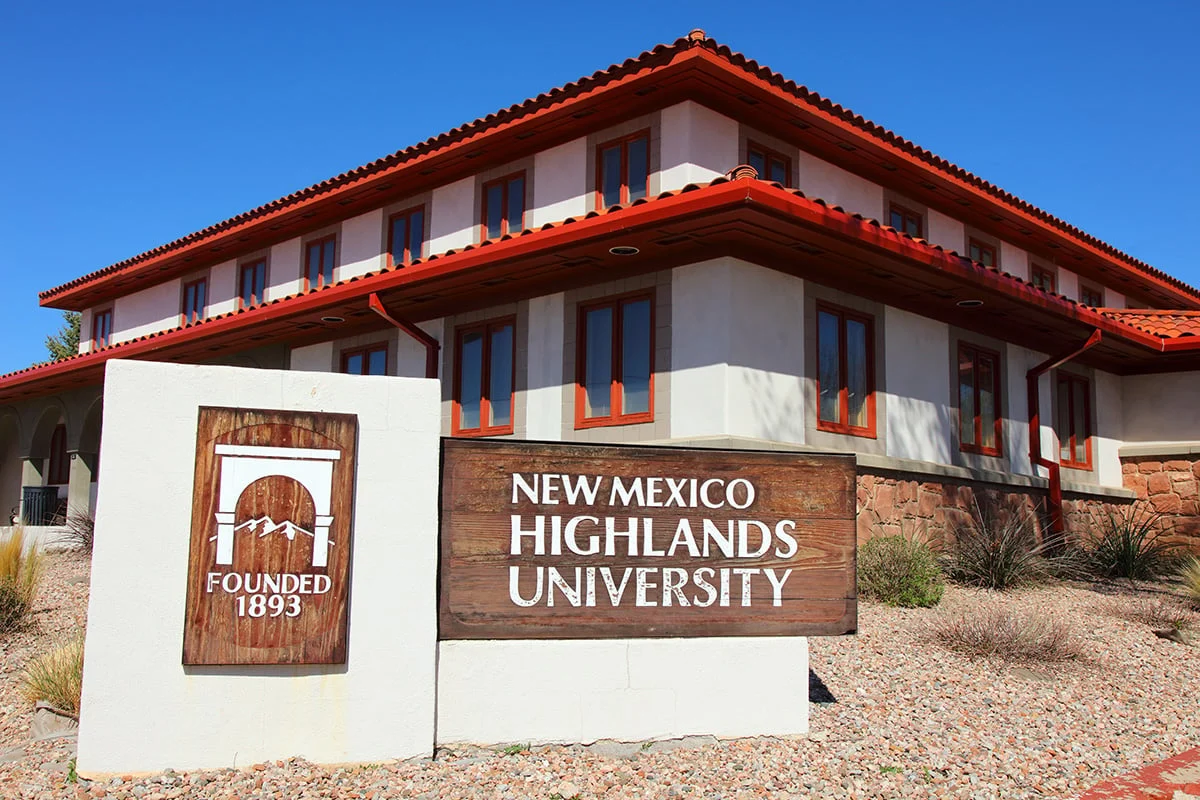
LAS VEGAS, N.M. — The stability of New Mexico Highlands University (NMHU) is under intense scrutiny as state law enforcement officials have formally launched a criminal investigation into the institution. The probe, which centers on serious allegations of fraud and forgery, marks a significant escalation in a period of mounting institutional turmoil that has seen the termination of the university’s president, the exodus of numerous administrators, and a direct clash between the Board of Regents and the institution’s former leadership.
Fourth Judicial District Attorney Thomas A. Clayton announced the investigation on Wednesday, emphasizing the necessity of restoring public trust in the state-funded institution. "When allegations involve potential fraud, forged documents, and the integrity of a public university, the public deserves clear answers backed by evidence," Clayton stated in a press release. The district attorney’s office is coordinating its efforts with the New Mexico Department of Justice and the state attorney general to ensure a comprehensive review of the university’s administrative conduct.
The Scope of the Investigation
While the investigation is expected to be broad, the district attorney has publicly identified two specific, high-stakes allegations currently under the microscope. These include the "Fraudulent Creation and Forgery of the Men’s Head Basketball Coach Employment Contract," dated April 22, 2026, and the alleged falsification of federal Immigration Form I-20 documents.
The I-20 form is a critical document used by international students to prove their legal status and enrollment eligibility. Falsification of such documents carries significant federal implications, potentially jeopardizing the university’s ability to host international students and damaging its reputation with the U.S. Department of Homeland Security.
District Attorney Clayton noted that his office intends to "follow the facts wherever they lead," suggesting that the scope of the inquiry may expand as investigators pore over financial records and internal communications. The criminal investigation will proceed concurrently with a special audit already initiated by the New Mexico state auditor’s office.
A Chronology of Institutional Collapse
The rapid unraveling of the administration at New Mexico Highlands University began in early May 2026, triggering a chain reaction of administrative departures and legal maneuvers.
- Early May 2026: The Board of Regents places then-President Neil Woolf on administrative leave without providing a public explanation. The move shocks the campus community and sets off a cascade of departures, with at least nine administrators and staff members being terminated or placed on leave in the following weeks.
- May 27, 2026: The university submits a formal response to an inquiry from the state auditor regarding the mounting controversy and the sudden leadership vacuum.
- May 28, 2026: Neil Woolf files a lawsuit against the university, alleging that his firing was a retaliatory act. Woolf claims he was ousted because he refused to follow an order from Board of Regents Chair Frank Sanchez to direct $600,000 in state funds for a track facility project to a specific contractor with personal ties to the Chair.
- June 2026: The Board of Regents formally terminates Woolf’s contract.
- July 2026: The Fourth Judicial District Attorney announces a formal criminal investigation, escalating the administrative dispute into a legal matter involving potential felony charges.
Supporting Data and Regulatory Pressure
The crisis at NMHU is not isolated to personnel disputes; it is accompanied by significant fiscal and regulatory challenges. In early June, New Mexico Higher Education Secretary Stephanie Rodriguez issued a directive requiring the university to submit a comprehensive corrective action plan for the 2026 and 2027 fiscal years. This mandate is a clear signal from the state government that the university’s internal financial controls and administrative oversight have been deemed insufficient.
The turmoil is further compounded by the sheer number of personnel changes. Since May 1, the institution has lost a substantial portion of its administrative brain trust. Former employees, some of whom have spoken out on condition of anonymity, have openly accused the Board of Regents of systemic malfeasance, alleging that the board has overstepped its governance role to involve itself in operational decisions, including procurement and hiring.
Official Responses and Contradictory Claims
The narrative surrounding the university is defined by a sharp divide between the Board of Regents and the former president.

In response to Woolf’s lawsuit, the university’s general counsel issued a statement on behalf of the Board of Regents categorically denying the allegations of corruption regarding the track facility. The statement maintains that the board has acted within its mandate and that the decisions regarding staff terminations were made in the best interest of the university’s long-term financial health and operational integrity.
Notably, the list of allegations provided by the university to the state auditor does not explicitly name Neil Woolf as a suspect in the forgery or immigration document cases. This distinction is critical, as it suggests that while the institution is under investigation, the board’s justification for terminating Woolf may be legally distinct from the specific criminal allegations of fraud currently being investigated by the district attorney.
Implications for the University and the State
The situation at New Mexico Highlands University presents a cautionary tale regarding the intersection of academic governance and political oversight.
The Governance Crisis
At the heart of the issue is the role of the Board of Regents. In many public university systems, the board is intended to act as a fiduciary oversight body, ensuring that the president and their administration operate within the law and the mission of the institution. When that relationship breaks down—as it has at NMHU—the result is often paralysis, litigation, and a total loss of confidence from the faculty, students, and the public.
Impact on Students and Faculty
For the students of NMHU, particularly international students concerned about the integrity of their I-20 documents, the uncertainty is profound. The threat of an audit and a criminal investigation could lead to funding freezes, a loss of institutional accreditation, or a decline in the value of degrees issued during this period of instability. Faculty members have expressed deep concern over the university’s direction, with some questioning whether the board is prioritizing political agendas over the academic mission.
Legal and Fiscal Consequences
The involvement of the District Attorney and the state auditor suggests that the financial consequences could be severe. If evidence of "fraudulent creation and forgery" is substantiated, the university could face significant fines, the clawback of state funds, and potential litigation from contractors or former employees. Furthermore, the state’s demand for a "corrective action plan" indicates that the New Mexico Higher Education Department is prepared to take an aggressive stance to ensure the university returns to standard operating procedures.
Conclusion: A Long Road to Recovery
As the investigation proceeds, New Mexico Highlands University faces an uphill battle to restore its credibility. The combination of criminal inquiries and the loss of key leadership has left the institution in a precarious position. For the stakeholders of NMHU—including the students, taxpayers, and the local community of Las Vegas, New Mexico—the coming months will be defined by the findings of the state auditor and the district attorney.
The central question remains: Was the firing of President Neil Woolf a necessary act of administrative cleanup, or was it a tactical move to consolidate power and deflect from deeper, systemic corruption? As investigators "follow the facts," the answers provided will determine not just the future of the individuals involved, but the very survival of New Mexico Highlands University as a reputable academic institution.
The public, as District Attorney Clayton noted, is owed these answers. Until they are provided, the shadows cast over the Felix Martinez Student Services Center will continue to darken, serving as a reminder of the fragility of public trust in the face of alleged administrative malpractice.