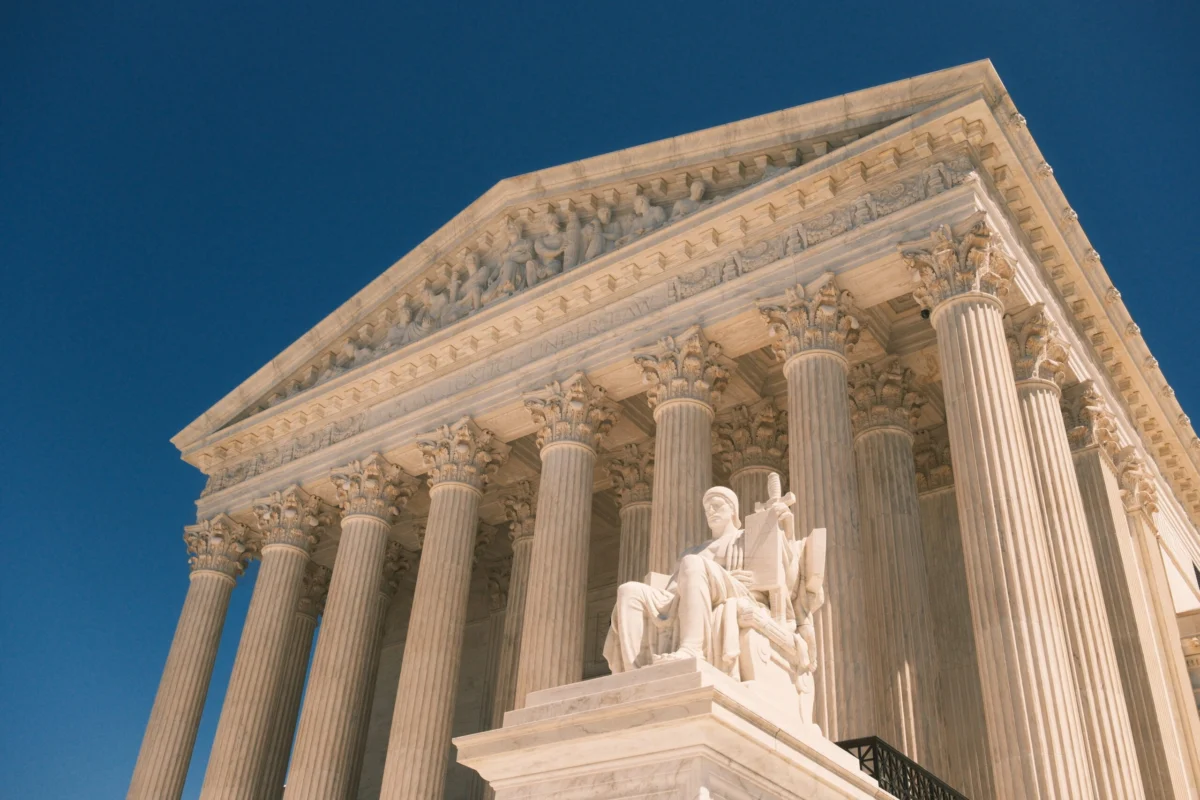
In a decisive move that marks the conclusion of a high-profile legal saga, the U.S. Supreme Court declined on Monday to hear an appeal filed by President Donald Trump. The appeal sought to overturn a 2023 civil court verdict that found the former president liable for the sexual abuse and defamation of writer E. Jean Carroll. By denying certiorari in Trump v. Carroll, the nation’s highest court has effectively solidified a $5 million judgment against the president, shuttering his avenues for judicial relief in this specific litigation.
The order, issued without comment or noted dissent, aligns with the Supreme Court’s standard practice for declining cases. However, the lack of explanation does little to diminish the political and legal significance of the decision, which brings to a close a protracted effort by the Trump legal team to challenge the evidentiary foundations of the initial trial.
The Core Facts: A Verdict Upheld
The litigation centered on a 1996 incident in the dressing room of the Bergdorf Goodman department store in Manhattan. In 2023, a federal jury found President Trump liable for sexually abusing Carroll and for defaming her in 2022 when he publicly denied the allegations, characterizing them as a "hoax" and a "con job." The jury awarded Carroll $5 million in compensatory and punitive damages.
Trump’s appeal was predicated on the argument that the presiding judge, U.S. District Judge Lewis Kaplan, committed reversible error by admitting "highly inflammatory" evidence. Specifically, the defense contested the inclusion of testimony from two other women who had accused Trump of sexual misconduct, as well as the notorious 2005 Access Hollywood tape, in which Trump was recorded making graphic, non-consensual comments about grabbing women.
The U.S. Court of Appeals for the Second Circuit had previously affirmed the verdict in 2024, rejecting the argument that the inclusion of such evidence deprived the defendant of a fair trial. With the Supreme Court’s refusal to intervene, that appellate decision now stands as the final word on the matter.
A Chronology of the Legal Battle
The path to this Supreme Court decision was paved with years of procedural maneuvering, landmark legislation, and fierce public discourse.
- 2019: E. Jean Carroll, a longtime advice columnist for Elle magazine, publicly accused Donald Trump of assaulting her in a Bergdorf Goodman dressing room in the mid-1990s. The accusation was detailed in an excerpt of her book published in New York Magazine.
- 2022: With the enactment of the New York Adult Survivors Act—a legislative measure that created a one-year window for victims of sexual assault to file civil claims regardless of the expiration of the original statute of limitations—Carroll filed her lawsuit against Trump.
- May 2023: A federal jury in Manhattan returns a verdict finding Trump liable for sexual abuse and defamation, awarding Carroll $5 million.
- December 2024: The U.S. Court of Appeals for the Second Circuit affirms the jury’s verdict, rejecting Trump’s claims of judicial bias and evidentiary overreach.
- September 2025: A separate appeals court panel upholds a second judgment against Trump for $83.3 million, stemming from defamatory statements made during his presidency.
- April 2026: The Supreme Court declines to hear the appeal of the initial $5 million verdict, effectively exhausting the legal options for the former president in that specific case.
Supporting Data and Procedural Context
The legal standard for the Supreme Court to grant certiorari is exceptionally high; the Court typically hears only a small fraction of the thousands of petitions it receives annually. For an appeal to be successful, a petitioner must usually demonstrate a "circuit split"—where different federal appeals courts disagree on a point of law—or a profound constitutional question.
In Trump v. Carroll, the defense argued that the "mistreatment of a President" necessitated Supreme Court intervention. Justin D. Smith, acting as counsel for Trump, emphasized in his filings that the trial court’s evidentiary rulings created a prejudicial environment that infringed upon executive protections. The complexity of the case was compounded by the fact that the allegations spanned three decades, necessitating reliance on the New York Adult Survivors Act, which fundamentally changed the landscape for civil litigation in the state.
Despite the legal team’s efforts to characterize the proceedings as "lawfare" and an exercise in political weaponization, the judiciary remained focused on the narrow evidentiary questions. By refusing to hear the case, the Court signaled that it found no constitutional or procedural flaw in the lower courts’ handling of the trial.
Official Responses and Public Statements
The reaction to the Supreme Court’s silence was immediate and starkly divided, mirroring the polarized nature of the cases themselves.
Roberta Kaplan, the lead attorney for E. Jean Carroll, framed the development as a definitive victory for her client and the rule of law. "His multiple efforts to appeal that verdict have all failed, and today’s ruling ends his quest to avoid accountability for his actions," she stated. The conclusion of this appeal signifies that the judgment is no longer subject to judicial stay, potentially clearing the way for collection efforts.
Conversely, President Trump utilized his Truth Social platform to reiterate his long-standing grievance against the American judicial system. "I will continue the fight against this Weaponization and Lawfare Case against me, including the ridiculous claim of Defamation, with all of my power and strength," Trump wrote, signaling that his public stance remains one of total denial and defiance.
Legal observers noted that the appointment of Justin D. Smith—the attorney who represented Trump in this appeal—to the U.S. Court of Appeals for the Eighth Circuit adds a layer of political intrigue. While the Senate has confirmed Smith, his involvement in this specific high-stakes litigation remains a point of contention for critics who question the intersection of political appointments and personal legal representation.
Implications: A Precedent for Future Litigation
The Supreme Court’s refusal to intervene in the $5 million case carries significant implications for both the legal system and the ongoing $83.3 million defamation judgment.
1. The Financial Burden
With the $5 million verdict now final, the judgment is enforceable. The accumulation of interest and the potential for court-ordered asset discovery could force a realization of these damages, which would be a notable departure from the relative immunity high-profile figures often enjoy in civil litigation.
2. The Pending $83.3 Million Appeal
The legal drama is far from over. A separate, much larger judgment of $83.3 million, stemming from defamatory comments Trump made regarding Carroll during his first term, remains in the appellate pipeline. Trump has already petitioned the Supreme Court to review the Second Circuit’s September 2025 affirmation of that verdict. Monday’s decision to reject the $5 million case serves as a potential harbinger for how the Court might view the larger, more complex defamation suit.
3. The Impact on "Lawfare" Narratives
The term "lawfare," which Trump frequently uses to describe the series of civil and criminal cases brought against him, has become a central component of his campaign rhetoric. By repeatedly labeling the courts as biased, the president has successfully maintained a base of support that views legal defeats not as failures of merit, but as proof of a rigged system. The Supreme Court’s refusal to hear the case provides both sides with ammunition: supporters see it as the Court failing to stop a partisan trial, while critics see it as the system functioning precisely as designed—by rejecting meritless appeals.
4. The Future of Executive Immunity
The case also underscores the evolving boundaries of presidential immunity. While the Supreme Court has previously issued landmark rulings regarding immunity for official acts, this case focused on civil liability for actions that the courts determined were outside the scope of presidential duties. By declining this appeal, the Court effectively maintains the distinction between a president’s official conduct and their personal life, limiting the scope of what can be shielded by executive status.
As the legal landscape shifts, the Carroll cases remain the most tangible manifestation of the legal challenges facing the former president. While the Supreme Court has chosen to remain on the sidelines for now, the finality of this $5 million judgment marks a historic moment in the accountability of public figures under American civil law. The focus now shifts to the remaining $83.3 million judgment, which will likely serve as the next definitive test for the judiciary’s stance on presidential defamation.