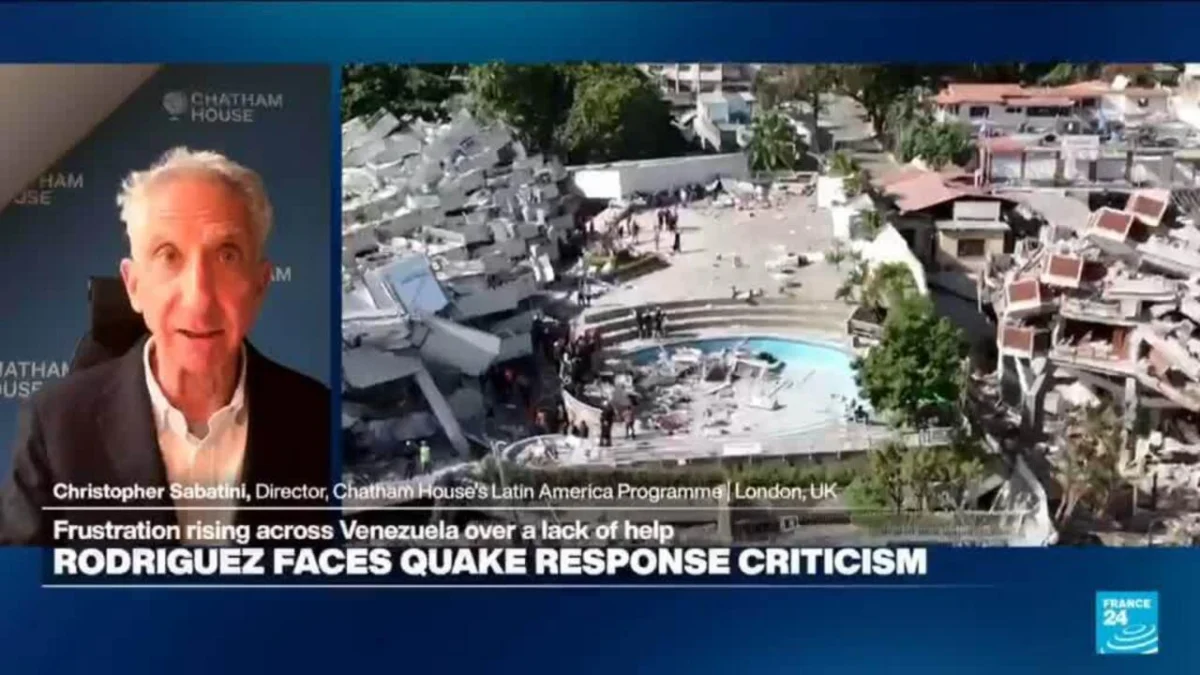
CARACAS – The convergence of an extreme weather event and a long-deteriorating national infrastructure has plunged Venezuela into a state of acute crisis. As the country grapples with the aftermath of recent devastating floods and landslides, analysts, engineers, and displaced citizens are raising a singular, urgent question: to what extent was this catastrophe a result of nature, and to what extent was it a man-made failure of governance?
The scenes playing out across the nation’s interior—collapsed bridges, inundated shanty towns, and entire districts stripped of electricity and potable water—serve as a grim epitaph for years of deferred maintenance and economic stagnation. For many, the "reckoning" mentioned by local observers is no longer a future concern; it is a current reality.
I. The Main Facts: A Convergence of Hazards
The disaster began with an anomalous weather pattern, which saw record-breaking rainfall hit regions already vulnerable due to decades of unchecked urban expansion and environmental degradation. The deluge transformed seasonal streams into lethal torrents, sweeping away informal housing built on unstable hillsides.
However, the primary differentiator between this event and previous climate-related shocks is the state of the country’s "hard" infrastructure. The national power grid, already fragile after years of rolling blackouts and lack of investment, suffered catastrophic failures as transmission lines were severed by mudslides. Communications networks have been effectively neutralized in the most affected provinces, leaving search and rescue teams struggling to coordinate efforts in a vacuum of information.
The catastrophe has not only displaced thousands but has also severed vital supply chains. With major arterial roads—the lifelines of the Venezuelan economy—rendered impassable, the distribution of food, fuel, and medical supplies has ground to a halt.
II. Chronology of the Crisis
The escalation of the crisis followed a rapid, terrifying trajectory:
- June 28, 2026: Meteorological reports indicate an atmospheric river forming over the Caribbean, with early warnings issued for heavy precipitation in the northern coastal ranges.
- June 29, 2026: Initial localized flooding occurs. Early reports suggest that drainage systems in major urban centers, clogged by years of uncollected waste and sediment, failed to mitigate the rising water levels.
- June 30, 2026: The situation reaches a critical tipping point. Major landslides occur in the late evening, burying entire communities. By midnight, power grids in three major states experience a total collapse.
- July 1, 2026: The scale of the destruction becomes clear as daylight reveals leveled infrastructure. The government issues a national emergency decree, mobilizing the military for rescue operations while international aid agencies scramble to assess the damage.
- July 2, 2026 (Present): Focus shifts to the secondary phase of the disaster: the prevention of waterborne disease outbreaks and the long-term task of reconnecting severed communities to the national grid.
III. Supporting Data: The Anatomy of Neglect
To understand the severity of this disaster, one must look at the data underpinning Venezuela’s infrastructural decay. According to independent engineering consortiums, over 65% of the country’s critical infrastructure—bridges, dams, and electrical substations—was built between 1960 and 1990.
- Maintenance Deficit: Estimates suggest that the budget allocated for maintenance has plummeted by over 80% in the last decade due to hyperinflation and the diversion of state funds toward security and political stabilization.
- Urban Vulnerability: Nearly 40% of the population resides in "barrios"—informal settlements often built on slopes prone to soil erosion. The lack of zoning enforcement has exacerbated the risk, as deforestation for housing has removed the natural root systems that once anchored these hillsides.
- Energy Insecurity: Prior to the disaster, the national grid was already operating at less than 40% of its rated capacity. The recent weather events acted as the final stressor on an aging system that had no redundancy protocols in place.
IV. Official Responses: The Government’s Dilemma
The state response has been bifurcated. On one hand, the government has moved to centralize command, deploying the Armed Forces to manage disaster relief and logistics. Officials have publicly attributed the destruction solely to "climate change and imperialist interference," attempting to deflect criticism regarding the state of public works.
"We are facing a challenge of historic proportions," stated the Minister of Interior during a televised address. "The intensity of these rains has exceeded any historical model. Our teams are working tirelessly to restore basic services to the affected population."

However, opposition leaders and civil society organizations are framing the response differently. They argue that the disaster is a direct result of "years of institutional rot." Critics point to the fact that funds intended for drainage maintenance and civil engineering projects were allegedly siphoned off through corruption, leaving the population defenseless against a predictable, if extreme, weather event. The tension between the government’s narrative of a "natural disaster" and the public’s experience of a "governance disaster" is creating a volatile political atmosphere.
V. Socio-Economic Implications
The long-term implications of this disaster are profound.
Economic Contraction
The destruction of transport infrastructure will have an immediate impact on the national GDP. With key logistical routes closed, the movement of petroleum and agricultural products—the country’s primary revenue sources—is severely hampered. This will likely trigger a fresh wave of inflation, further eroding the purchasing power of the average citizen.
The Migration Catalyst
Historically, environmental disasters in Venezuela have acted as a "push factor" for migration. With housing destroyed and local economies devastated, thousands of families may be forced to flee not only the affected regions but the country entirely. This "climate migration" adds a new layer to the already complex Venezuelan diaspora.
The Question of Reconstruction
Rebuilding requires capital and expertise—two things currently in short supply. Without a massive injection of international aid and a transparent reconstruction framework, the risk of "band-aid" fixes is high. Experts warn that unless the root causes of the infrastructure decay are addressed, the next major storm will yield identical, if not worse, results.
VI. Conclusion: A Nation at a Crossroads
The current crisis is a manifestation of a deeper, systemic failure. While the meteorological event was indeed significant, the catastrophe that followed was a choice—the result of prioritizing political survival over the fundamental maintenance of the state.
As the floodwaters recede, the debris will be cleared, but the questions regarding accountability will remain. For Venezuela, this disaster is not merely a tragedy of the elements; it is a harsh light shined upon the cracks in a failing system. The "reckoning" that many now speak of will depend on whether the state can pivot toward a strategy of transparency and professionalized infrastructure management, or whether it will continue to blame the clouds for the failings of the earth.
The path forward is narrow. Rebuilding the bridges, both physical and metaphorical, between the state and its citizens will require more than concrete and steel; it will require a fundamental shift in how the nation values the safety and resilience of its people. Until that shift occurs, the cycle of disaster and decay is likely to remain the defining characteristic of the Venezuelan experience.