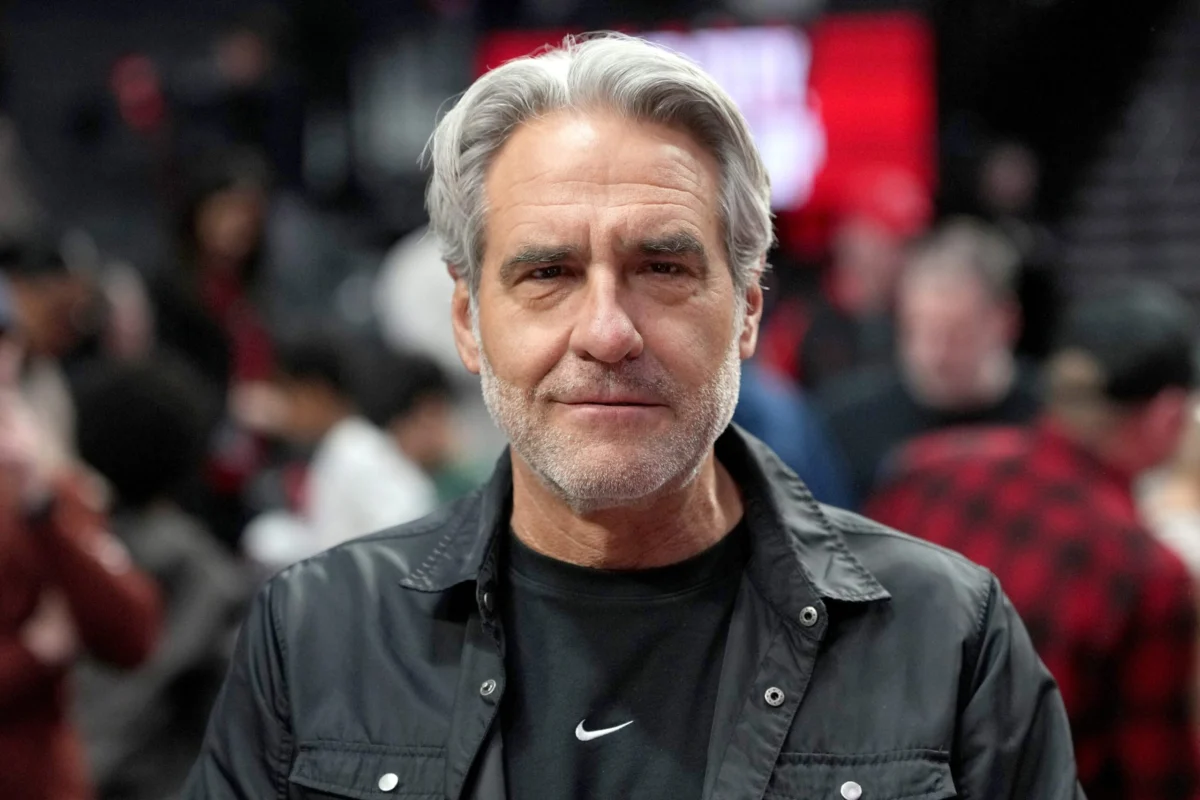
BEAVERTON, Ore. — When the board of directors at Nike Inc. reached into the company’s storied past to bring Elliott Hill out of retirement nearly two years ago, the mandate was clear: stop the bleeding and restore the "Swoosh" to its former glory. Hill, a Nike veteran who climbed the ranks over decades, inherited a brand that had become untethered from its core identity. Today, as Nike navigates a volatile global economy and a shifting retail landscape, the CEO finds himself facing two distinct "report cards."
The first is the quarterly financial statement—the cold, hard data of Wall Street. The second is the "court of public opinion" currently playing out in the world’s largest sporting arenas. As the 2026 World Cup looms across North America, Hill’s "sport offense" strategy is undergoing its most rigorous stress test yet.
Main Facts: A Financial Mixed Bag and the Tariff Windfall
Nike’s most recent quarterly earnings report provided a rare glimmer of hope for investors who have watched the stock struggle for years. The company reported revenue of $10.97 billion, a modest but significant beat against the $10.86 billion anticipated by analysts. More impressively, adjusted earnings per share (EPS) came in at 20 cents, comfortably exceeding the 13 cents Wall Street had projected.
However, a closer look at the balance sheet reveals that these gains were bolstered by an extraordinary event. Nike benefited from a nearly $1 billion ($986 million) tariff refund, which artificially inflated gross margins by 8.9% during the quarter. While analysts typically exclude such one-time gains when evaluating a company’s underlying health, the cash infusion arrived at a critical juncture for Nike’s restructuring efforts.
Despite the revenue beat, the broader picture remains challenging. Operating income has been slashed by half compared to peak levels, and the company is still grappling with the fallout of a years-long decline in sales and shrinking profit margins. In the North American market, however, the "Hill Effect" is becoming visible. Revenue growth in the region has climbed 15 percentage points from its lowest point under the previous administration, suggesting that Hill’s focus on domestic retail partnerships is beginning to bear fruit.
Chronology: From Digital Dominance to Strategic Freefall
To understand Hill’s current challenge, one must examine the pivot point of 2020–2024. Under Hill’s predecessor, John Donahoe, Nike embarked on an aggressive "Direct-to-Consumer" (DTC) digital strategy. The goal was to bypass traditional retailers and sell directly to fans via the Nike app and owned stores.
While this initially boosted margins during the pandemic-era e-commerce boom, it ultimately fractured Nike’s ecosystem. By pulling products from the shelves of long-term partners like Dick’s Sporting Goods and Foot Locker, Nike inadvertently created a vacuum that upstart brands like Hoka and On Running were happy to fill.
By the time Hill took the helm in late 2024, Nike was in what analysts described as a "freefall." Revenue growth was at a negative 5% year-over-year, and EPS had begun a precipitous 62% decline from its May 2024 peak. Since Hill’s first full quarter as CEO in November 2024, the struggle has continued; EPS has dropped 56%, currently sitting at $1.51.
Hill’s tenure has been defined by an immediate reversal of the Donahoe doctrine. He publicly acknowledged that the company’s partners felt Nike had "turned our back on them" and launched the "sport offense"—a structural reorganization designed to put the athlete, rather than the sales channel, at the center of the design process.
Supporting Data: The Mechanics of the "Sport Offense"
The "sport offense" is more than a catchy slogan; it represents a fundamental shift in how Nike manufactures and markets its goods. Historically, Nike’s design teams were siloed by demographic: Men, Women, and Kids. Hill has restructured these teams to focus on "types of athletes" and specific sports categories.
Innovation and Product Lifecycle
Data suggests that Nike’s innovation pipeline had grown stale. During the DTC-heavy years, the company leaned heavily on "legacy" styles—Air Jordan 1s, Dunks, and Air Force 1s—rather than introducing groundbreaking performance technology.
Under the new sport-led approach, Hill is prioritizing:
- The Mercurial Line: Re-engineering soccer footwear to regain dominance in the football market.
- Aero FIT Technology: Introducing high-performance national kits for the World Cup that prioritize thermoregulation.
- Wholesale Re-integration: Increasing "shelf presence" by 20% in key North American retailers to ensure that when a consumer walks into a store, the Swoosh is the first thing they see.
The China Contraction
While North America shows signs of recovery, the data from China is sobering. Nike’s revenue in the region has tumbled from over $7 billion at the start of Hill’s tenure to $6 billion as of the February 2026 quarterly data. Projections suggest a further slide to $5.5 billion. This decline is attributed to a "double whammy" of local competition—most notably from the Chinese giant Anta—and a massive inventory glut that has forced retailers to sell Nike products at steep discounts, eroding the brand’s premium status.
Official Responses: "Job’s Not Done"
In a candid address at UC Berkeley’s Haas School of Business in May 2026, Hill reflected on the difficulty of turning an ocean liner like Nike. He admitted that the restructuring was taking longer than he had initially hoped, a sentiment he echoed in a recent interview with the Financial Times.
"Job’s not done until the job’s done," Hill told the FT, referencing the famous Kobe Bryant mantra. "I guess Wall Street will be the judge of that, right?"
Hill’s rhetoric focuses on humility and a return to the company’s roots. He has consistently messaged to investors that Nike is "utilizing the World Cup as an opportunity to catalyze the football marketplace for quarters to come." This isn’t just about selling jerseys in 2026; it’s about reclaiming the cultural zeitgeist.
Industry experts remain cautiously optimistic but wary of the timeline. David Swartz, a senior equity analyst for Morningstar, noted that Nike’s visibility during global events is a powerful tool, but not a panacea. "Nike is very visible during the World Cup and it can generate sales directly," Swartz told Fortune. "But it’s also a big branding opportunity in the long term to try to get Nike back in the forefront of the sportswear world, where it typically has been, but has lately fallen behind."
Implications: The World Cup as a Global Stress Test
The rivalry between Nike and Adidas is perhaps the most storied in sports history, and the upcoming World Cup in the United States, Mexico, and Canada is the ultimate battlefield. While Adidas remains the official FIFA partner, Nike has opted for a "guerilla" marketing approach, outfitting 12 national teams and launching a celebrity-heavy ad campaign titled "Rip the Script."
The Marketing Playbook
Nike’s new marketing strategy signals a departure from the "pure athlete" focus of the past. By featuring global icons like Kim Kardashian and K-pop star Lisa alongside Cristiano Ronaldo and Kylian Mbappe, Nike is attempting to bridge the gap between performance sports and lifestyle culture.
The early results are staggering:
- Nike "Rip the Script" views: 78 million in one month.
- Adidas campaign views: 7.8 million in the same period.
This 10-to-1 engagement ratio suggests that while Nike may have lost its way in the supply chain, its ability to capture the world’s attention remains unparalleled. However, engagement does not always equal earnings.
The Innovation Imperative
The long-term implication for Nike is that marketing can only carry a brand so far if the product doesn’t evolve. The company is currently squeezed by macroeconomic headwinds, including high gas prices and potential new tariffs, which limit consumer discretionary spending.
To return to its peak valuation, Nike must solve three core problems:
- The China Crisis: Regaining market share from Anta and Li-Ning by offering products specifically tailored to the Chinese consumer’s preference for "localized" innovation.
- Inventory Health: Clearing out the backlog of discounted goods to allow for "full-price selling." As David Swartz noted, profitability will only return when Nike stops competing with itself on the clearance rack.
- The Innovation Gap: Proving that the "sport offense" can produce a "must-have" shoe on par with the original Flyknit or Vaporfly.
Conclusion
Elliott Hill’s "sport offense" is a gamble on the idea that Nike’s future lies in its past—specifically, in its relationships with athletes and the retailers who serve them. The recent earnings beat provides some breathing room, but the "report card" from the World Cup and the ongoing struggle in China will ultimately determine if Hill is the savior Nike needs or merely a guardian of a fading empire.
As the whistle blows for the first match of the World Cup, the world will be watching more than just the players on the pitch; they will be watching the logo on their chests to see if the Swoosh still carries the weight of a champion.### END ###