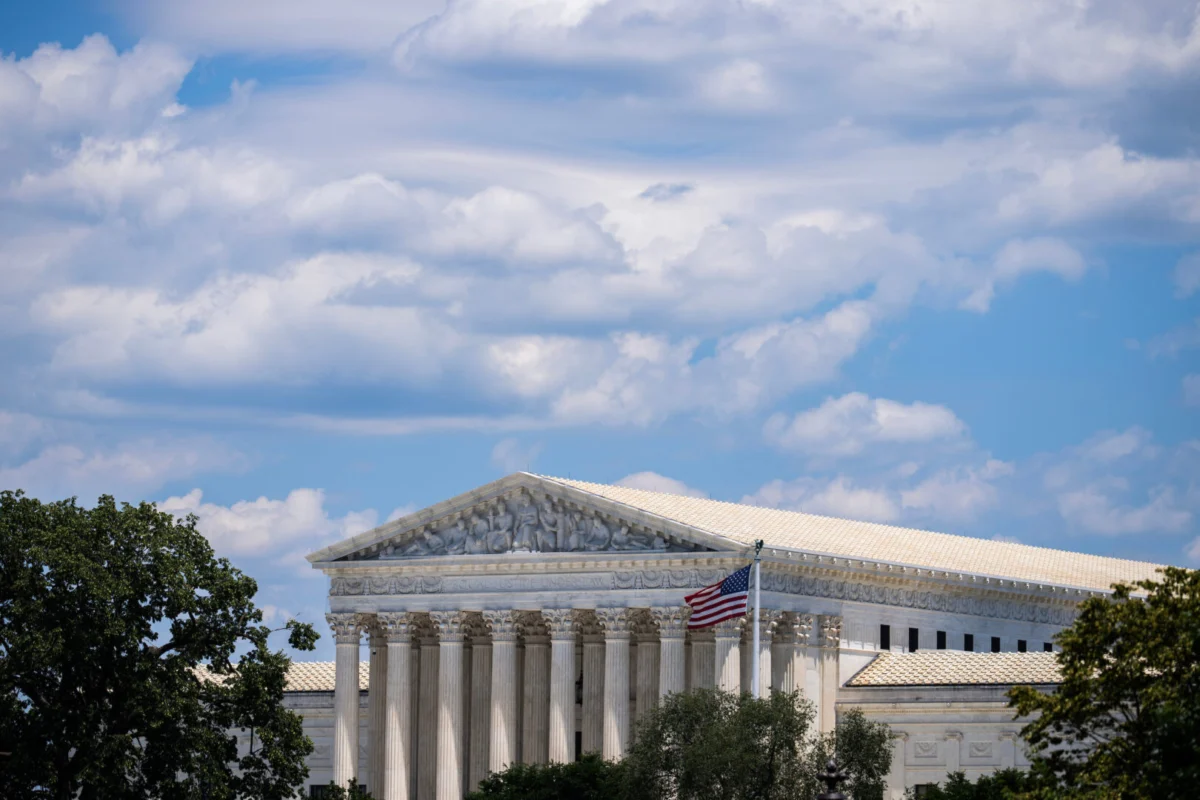
WASHINGTON D.C. – In a monumental decision reshaping the landscape of American campaign finance, the Supreme Court on Tuesday struck down a longstanding restriction, paving the way for political parties nationwide to spend unlimited amounts in direct coordination with their candidates in federal elections. The 6-3 ruling, which immediately sparked fervent debate among legal scholars, political strategists, and reform advocates, effectively dismantles a key safeguard intended to curb the influence of large donors and prevent the circumvention of individual contribution limits.
The decision represents the latest chapter in the Supreme Court’s consistent reinterpretation of campaign finance regulations through the lens of First Amendment free speech rights. Writing for the conservative majority, Justice Brett M. Kavanaugh asserted that concerns about undue influence or the appearance of corruption were insufficient to justify the coordinated spending bar, emphasizing the Court’s increasingly narrow definition of what constitutes legitimate "corruption" that warrants speech restrictions.
The challenge to the coordinated party expenditure limits was brought forth by the National Republican Senatorial Committee (NRSC), then-Senator JD Vance (now Vice President JD Vance), and former Representative Steve Chabot (R-Ohio). Their core argument centered on the belief that these limits infringed upon the free speech rights of political parties to support their candidates, treating parties as mere conduits rather than integral actors in the political discourse. The Court’s majority agreed, setting a new precedent that promises to significantly alter how federal campaigns are funded and managed.
Justice Elena Kagan, in a forceful dissent joined by Justices Sonia Sotomayor and Ketanji Brown Jackson, warned of "untold harm" to the political system, arguing that the decision effectively transforms national parties into "alternative checkbooks" for wealthy donors, allowing them to funnel vast sums to candidates beyond existing individual limits. This stark philosophical divide underscores the profound implications of the ruling for the integrity of elections and public trust in government.
A Landmark Ruling: Unpacking the Majority Opinion
At the heart of the Supreme Court’s 6-3 decision lies a jurisprudential framework that prioritizes the expansive interpretation of free speech under the First Amendment, particularly as it pertains to political spending. Justice Brett M. Kavanaugh, delivering the majority opinion, articulated a clear stance that directly challenged the long-held justifications for restricting coordinated party expenditures.
The Court’s Rationale: Free Speech and Limited Corruption Concerns
Justice Kavanaugh’s opinion hinged on the assertion that the government’s desire to prevent or reduce amorphous concepts like "influence, ingratiation, gratitude, access, or the like" for those who contribute to political parties or candidates is not a constitutionally permissible objective for campaign finance restrictions. This reasoning aligns with a series of previous Supreme Court decisions, notably Buckley v. Valeo (1976), which first distinguished between campaign contributions (which can be limited to prevent quid pro quo corruption) and independent expenditures (which generally cannot be limited as they represent pure speech). Subsequent cases like Citizens United v. Federal Election Commission (2010) and McCutcheon v. Federal Election Commission (2014) further narrowed the scope of permissible campaign finance regulations, largely confining them to preventing direct quid pro quo corruption—an explicit exchange of money for political favors.
Kavanaugh explicitly stated that the concerns cited by defenders of the limits—the circumvention of individual contribution limits and the appearance of undue influence by big donors—were insufficient to justify the coordinated spending bar. He reiterated the Court’s increasingly narrow definition of corruption, arguing that only direct quid pro quo corruption or its undeniable appearance can warrant restrictions on political speech, including spending. This judicial philosophy contrasts sharply with broader definitions of corruption that encompass systemic influence, unequal access, and the distortion of the political process by wealth.
Crucially, the majority opinion contended that a robust system of "prophylaxis upon prophylaxis upon prophylaxis" already exists to prevent actual corruption. Kavanaugh pointed to several remaining safeguards:
- Individual donation limits: Strict caps on how much an individual can contribute directly to a candidate or a party.
- Disclosure rules: Requirements for campaigns, parties, and political committees to publicly report their donors and expenditures, ostensibly providing transparency.
- Limits on "earmarking": Prohibitions against donors specifying that their contribution to a party must be used for a particular candidate, preventing direct circumvention of individual limits through a party intermediary.
By emphasizing these existing regulations, Kavanaugh argued that the coordinated party expenditure limits were redundant and overly broad, impinging on core First Amendment rights without a sufficiently compelling government interest. The Court effectively viewed parties not merely as extensions of candidates but as independent political actors whose ability to spend in coordination with their chosen representatives is a fundamental expression of political speech. This perspective reinforces the idea that robust, well-funded political parties are essential to a healthy democracy, and that restricting their coordinated spending unduly hampers their ability to inform and persuade voters. The ruling thus reasserts a judicial skepticism toward regulations that seek to level the playing field or reduce the perception of influence, prioritizing instead the unfettered flow of money as a form of protected speech.
The Dissent’s Dire Warning: Erosion of Safeguards
While the majority hailed the decision as a victory for free speech, the dissenting justices painted a grim picture of its potential consequences, framing the ruling as a significant step backward for campaign finance regulation and a perilous opening for increased corruption.
Justice Kagan’s Critique: The "Alternative Checkbook" and "Untold Harm"
Justice Elena Kagan, writing for the three dissenting justices (Kagan, Sotomayor, and Jackson), launched a scathing critique of the majority’s reasoning, arguing that the decision dismantles crucial protections against undue influence and opens the floodgates to a new era of money in politics. Her dissent was not merely a legal disagreement but a profound warning about the health and fairness of American democracy.
Kagan’s most vivid metaphor described the ruling as transforming national political parties into "alternative checkbooks" for wealthy donors. She highlighted the stark disparity between existing individual contribution limits and the potential for party donations: while an individual can contribute a maximum of $7,000 directly to a candidate per election cycle (a figure often adjusted for inflation), they can now effectively contribute far more to that candidate’s campaign by donating significantly larger sums to a political party. Kagan pointed out that donors can give up to $500,000 to national party committees, an amount dramatically higher than the individual candidate limit. With the coordinated expenditure limits removed, parties can now spend these vast sums directly on behalf of specific candidates, circumventing the very caps designed to prevent individual donors from overwhelming a candidate’s campaign.
This, Kagan argued, creates a clear pathway for quid pro quo corruption. Donors who give hundreds of thousands of dollars to a party, knowing that money will be used to directly support a candidate’s campaign, will naturally expect "gratitude" and "access" from that candidate should they win office. This, in her view, is precisely the kind of corrupting influence—or at least its appearance—that campaign finance laws were originally designed to prevent. She explicitly stated, "So the Court ushers back in the same opportunities for quid pro quo corruption that the contribution limits were meant to check."
Furthermore, Kagan rejected the majority’s assertion that the First Amendment mandated this outcome. She argued that the constitutional text and historical understanding of free speech do not require the complete dismantling of sensible regulations aimed at preserving the integrity of the political process. The dissent posited that the First Amendment exists to foster a vibrant democracy, not to undermine it by allowing wealth to disproportionately influence elections and governance.
Kagan also expressed profound skepticism about the effectiveness of the remaining safeguards touted by the majority, particularly disclosure regimes. While acknowledging the importance of transparency, she contended that disclosure alone is insufficient to prevent the "backdoor dealings" and subtle forms of influence that the coordinated expenditure limits were intended to curb. Simply knowing who is giving money, she implied, does not prevent the undue influence that comes with such massive donations. She worried that these "untold harms" would manifest in a political system where the voices of ordinary citizens are further drowned out by the amplified voices of wealthy benefactors, leading to a loss of public trust and a perception that government is responsive to donors rather than constituents. The dissent ultimately positioned the ruling as a blow to democratic equality and a dangerous precedent that could invite further challenges to the remaining pillars of campaign finance regulation.
Chronology of Campaign Finance Restrictions
The Supreme Court’s decision on coordinated party expenditures is not an isolated event but the latest development in a long and often contentious history of efforts to regulate money in American politics. Understanding this chronology is crucial to grasping the significance of the latest ruling.
From Post-Watergate Reforms to Modern Challenges
The modern era of campaign finance regulation was largely ushered in by the Federal Election Campaign Act (FECA) of 1971, significantly amended in 1974 in the wake of the Watergate scandal. The widespread abuses and illegal campaign contributions uncovered during Watergate spurred a bipartisan consensus that unchecked money in politics posed a severe threat to democratic integrity. The 1974 amendments established the Federal Election Commission (FEC) to enforce campaign finance law, set limits on individual and PAC contributions, and, crucially, introduced limits on coordinated expenditures by political parties on behalf of their candidates.
The original intent behind these coordinated expenditure limits was twofold:
- Prevent circumvention: To ensure that political parties could not serve as conduits for large donors to effectively bypass individual contribution limits to candidates. If a donor could give an unlimited sum to a party, which then spent that sum directly on a candidate’s campaign, it would render individual candidate limits meaningless.
- Curb undue influence: To reduce the potential for wealthy individuals or special interests to exert excessive influence over candidates and the political process through large, coordinated spending efforts. The limits aimed to level the playing field, at least to some extent, and maintain public confidence in the fairness of elections.
For decades, these limits were upheld, though frequently challenged and occasionally modified. A significant shift occurred in 2014, when Congress passed amendments to FECA, increasing the amounts that could be spent by parties and allowing for new categories of expenditures. These changes were partly a response to previous Supreme Court rulings (like McCutcheon v. FEC which struck down aggregate limits on individual contributions) and a broader push by some to strengthen political parties by giving them more financial flexibility. The 2014 amendments allowed for new expenditures related to nominating conventions, party headquarters, and election court challenges, reflecting an evolving understanding of the legitimate functions of political parties.
The Federal Election Commission (FEC) plays a vital role in implementing and enforcing these regulations. Each year, the FEC sets and adjusts the specific limits for coordinated party expenditures based on inflation and other factors, tailoring them to the state and the office of the candidate. For instance, prior to this ruling, the FEC capped coordinated spending for most House races at approximately $63,600. In states with only one representative, where the electoral landscape differs, committees could spend up to $127,200. For Senate races, the caps varied significantly by state, ranging from as low as $127,000 in Alaska to a substantial $3.9 million in California, reflecting the diverse costs and scale of campaigning across different jurisdictions.
The legal challenge that led to Tuesday’s Supreme Court decision originated with the National Republican Senatorial Committee (NRSC), then-Senator JD Vance, and former Rep. Steve Chabot, R-Ohio. They initiated the lawsuit, arguing that the existing coordinated expenditure limits infringed upon their First Amendment rights to free speech and association. Their case wound its way through the federal courts, ultimately reaching the U.S. Court of Appeals for the 6th Circuit, which upheld the limits. The Supreme Court’s decision to overturn the 6th Circuit’s opinion marks a significant reversal, effectively dismantling a component of campaign finance regulation that has been in place, in various forms, for nearly five decades. This chronology illustrates a continuous tension between the desire to prevent corruption and the constitutional protection of political speech and association, with the Supreme Court increasingly favoring the latter interpretation.
Supporting Data and Expert Analysis
The Supreme Court’s decision arrives amidst a political landscape already awash in campaign spending, and expert analysis suggests the ruling will further amplify the role of money in federal elections. While specific real-time data on the immediate impact will emerge in future cycles, the existing financial landscape provides a critical backdrop.
The Financial Landscape of Federal Elections
Federal elections are incredibly expensive, with billions of dollars spent across presidential, congressional, and senatorial races. In the 2020 election cycle, for example, total spending for federal elections (including presidential, House, and Senate races) exceeded $14 billion, an unprecedented sum. Political parties already play an enormous role in this financial ecosystem, acting as central hubs for fundraising, strategic planning, and direct support to candidates. This ruling now allows them to coordinate their spending efforts with candidates without monetary limits, blurring lines that campaign finance laws previously sought to delineate.
Campaign finance reform advocates have long warned about the corrosive effects of unlimited money in politics. Groups like Common Cause and the Brennan Center for Justice consistently argue that large donations, even when disclosed, create an uneven playing field and lead to a perception—if not the reality—of "pay-to-play" politics. They contend that the Court’s narrow definition of corruption, focused almost exclusively on explicit quid pro quo exchanges, ignores the more subtle but pervasive influence that wealth exerts on policy outcomes and legislative priorities. They point to research indicating that elected officials often spend significant portions of their time fundraising, leading to an environment where donor access and concerns can disproportionately shape their agendas.
Conversely, free speech advocates and many conservative legal scholars argue that campaign spending is a fundamental form of political expression, and that restrictions on such spending are inherently infringements on First Amendment rights. Organizations like the Institute for Justice and the Cato Institute champion the idea that more speech, even if it involves more money, ultimately benefits the democratic process by allowing a wider array of voices and ideas to reach the electorate. They believe that voters are sophisticated enough to discern the motivations behind political spending and that transparency through disclosure is the primary, if not sole, legitimate government interest in regulating campaign finance. They view the Court’s decision as a necessary step to empower political parties, which they see as vital mediating institutions in a democracy, to more effectively engage in the political discourse.
The ruling also invites comparison with Super PACs and independent expenditures. Since the Citizens United decision, Super PACs can raise and spend unlimited amounts of money to advocate for or against political candidates, but they are explicitly prohibited from coordinating with campaigns. This "independence" is the legal fiction that allows their unlimited spending. With the new ruling, political parties can now engage in unlimited coordinated spending. This distinction is crucial: parties can now work hand-in-glove with campaigns, developing strategy, messaging, and advertising in concert, something Super PACs cannot legally do. This may lead to a shift in where large donors direct their funds, potentially strengthening parties at the expense of independent expenditure groups, or simply adding another powerful avenue for high-dollar influence.
Experts predict that the immediate impact will be a surge in party spending, particularly in highly competitive federal races. National party committees will likely intensify their efforts to solicit large donations, emphasizing their newfound ability to directly and seamlessly support candidates. This could lead to an even greater concentration of campaign resources in swing states and districts, further marginalizing less competitive races and potentially exacerbating partisan polarization. The long-term effects on the composition of donor bases, the strategic allocation of campaign funds, and the overall balance of power within federal elections will be closely watched by analysts and stakeholders across the political spectrum.
Official Responses and Political Reactions
The Supreme Court’s decision to lift coordinated party expenditure limits has predictably drawn sharply divergent reactions, reflecting the deep ideological chasm that defines the debate over campaign finance in American politics.
Divergent Views Across the Political Spectrum
Republican Response: The plaintiffs in the case, particularly the National Republican Senatorial Committee (NRSC), welcomed the ruling as a victory for free speech and effective political advocacy. Republican leaders and conservative legal groups lauded the decision, framing it as an overdue correction that restores the ability of political parties to fully participate in the democratic process. They argue that parties are essential vehicles for mobilizing voters, articulating policy platforms, and providing vital support to candidates, and that restricting their ability to coordinate with campaigns was an unconstitutional infringement on these functions.
Vice President JD Vance, who was a plaintiff in the case as a senator, likely views this as a validation of his original argument that the limits stifled legitimate political speech. While no immediate official statement from the Vice President’s office was available, the sentiment among Republicans is that the decision empowers parties to better compete against the financial muscle of special interest groups and allows for more robust engagement with their candidates. They would likely emphasize Justice Kavanaugh’s point about sufficient existing safeguards against corruption, asserting that the prior limits were unnecessary "prophylaxis." This ruling is seen by many Republicans as strengthening party infrastructure and allowing them to more effectively communicate their message to voters.
Democratic Response: On the other side of the aisle, Democratic leaders and progressive advocacy groups reacted with alarm and condemnation. Echoing Justice Kagan’s potent dissent, they warned that the ruling would unleash a torrent of dark money into elections, exacerbate political inequality, and increase the potential for quid pro quo corruption. Democratic National Committee (DNC) officials and prominent figures are expected to express deep concerns that the decision fundamentally undermines the integrity of the electoral system by allowing wealthy donors to bypass individual contribution limits through party channels.
Progressive organizations focused on campaign finance reform, such as Common Cause, Public Citizen, and End Citizens United, quickly issued statements decrying the decision. They emphasized the potential for the ruling to further entrench the influence of corporate interests and the super-rich, drowning out the voices of everyday Americans. They argue that this decision makes it easier for special interests to buy access and influence, leading to policies that favor powerful donors over the public good. Their response typically calls for legislative action to counteract the Court’s ruling or for intensified efforts to push for greater transparency and accountability in campaign finance.
Federal Election Commission (FEC) Response: As the defendant in the case, the Federal Election Commission (FEC) now faces the practical challenge of adjusting its regulations and enforcement mechanisms to comply with the Supreme Court’s ruling. The FEC, often characterized by its partisan gridlock and inability to reach consensus on enforcement matters, will need to interpret the decision’s nuances and issue new guidance. This process could be slow and contentious, potentially leading to further disputes over how the new, unlimited coordinated spending will be monitored, particularly concerning the interaction with existing disclosure requirements and earmarking prohibitions. The FEC’s official response will likely be a procedural acknowledgment of the ruling and a commitment to implement it, while internal divisions among commissioners may reflect the broader political polarization.
Public Opinion: While not a direct official response, public opinion surveys consistently show widespread concern among Americans about the influence of money in politics. A significant majority of voters, across partisan lines, believe that wealthy individuals and corporations have too much sway in elections and government decisions. The Court’s decision, therefore, is likely to be viewed with skepticism by a considerable portion of the electorate, potentially fueling existing cynicism about the fairness and responsiveness of the political system. This ruling could reignite calls for fundamental campaign finance reform, including a constitutional amendment to explicitly allow for greater regulation of money in politics.
In essence, the ruling has drawn clear battle lines, with proponents emphasizing free speech and party empowerment, and opponents warning of increased corruption and democratic decay. The political fallout is expected to be immediate and far-reaching, influencing fundraising strategies, campaign tactics, and the broader debate about the role of money in American democracy.
Broader Implications for the American Political System
The Supreme Court’s decision to eliminate limits on coordinated party expenditures is more than a technical legal adjustment; it represents a profound shift with potentially sweeping implications for the American political system, touching everything from fundraising dynamics to electoral competitiveness and public trust.
Shifting Power Dynamics and the Future of Elections
One of the most significant implications is the increased power of political parties. By removing the spending cap, the Court has given national party committees an unparalleled ability to directly support their candidates. This means parties can now integrate their financial resources seamlessly with campaign strategy, messaging, and advertising, making them even more central to federal election efforts. This could strengthen party discipline and influence over candidates, as candidates will be more reliant on party resources for direct campaign activities. It might also lead to a more centralized campaign approach, with national parties dictating more of the strategy rather than individual campaigns having full autonomy.
The ruling will inevitably lead to a substantial impact on fundraising strategies. Political parties will intensify their efforts to solicit large, unrestricted donations from wealthy individuals, corporations, and unions. Donors who previously sought to maximize their influence through a complex web of contributions to Super PACs, individual campaigns, and various party committees may now find a simpler, more direct avenue to support their preferred candidates: through the national party. This could potentially divert funds from Super PACs that are legally prohibited from coordinating with campaigns, consolidating more financial power within the established party structures. The focus will be on attracting "mega-donors" capable of contributing hundreds of thousands, or even millions, of dollars, knowing that these funds can be directly channeled into specific campaigns.
The decision also raises questions about electoral competitiveness. Will unlimited coordinated spending make it easier for well-funded challengers to unseat incumbents by allowing parties to pour resources into competitive races? Or will it primarily serve to entrench incumbents by giving parties more power to defend them against challengers, particularly in districts where the party holds a strong base? The answer likely depends on the specific electoral context, but it’s plausible that races in swing states and competitive districts will see an even greater influx of party-coordinated funds, potentially exacerbating the high cost of campaigning and making it more difficult for grassroots or less-funded candidates to compete.
The ruling fundamentally reinvigorates the "corruption" debate in campaign finance law. By adhering to a very narrow definition of quid pro quo corruption, the Supreme Court has effectively declared that broader concerns about "influence," "access," and "ingratiation" are not sufficient to justify restrictions on political spending. This creates a disconnect between the Court’s legal standard and the public’s perception of corruption, which often encompasses any situation where money appears to buy political favors or undue access. This divergence could further erode public trust in the political system, fostering a perception that the government is more responsive to wealthy donors than to the average citizen.
Looking ahead, this decision could pave the way for future legal challenges to other remaining campaign finance restrictions. If the Court continues to prioritize expansive free speech rights over concerns about undue influence, individual contribution limits, and even some disclosure requirements, could face renewed legal scrutiny. Each successful challenge to existing regulations chips away at the overall framework designed to balance free speech with democratic integrity.
Finally, the long-term impact on policy outcomes and democratic trust is perhaps the most significant. If parties become even more reliant on large, unrestricted donations, there is a legitimate concern that legislative priorities could increasingly align with the interests of these major donors. The "gratitude" and "access" that Justice Kagan warned about could translate into specific policy concessions or a bias in the legislative agenda. This could further deepen public cynicism about the democratic process, leading to decreased voter turnout and a sense that the system is rigged in favor of the wealthy. The Supreme Court, through this decision, has once again underscored its powerful role in shaping the fundamental rules of American democracy, with consequences that will reverberate for generations.