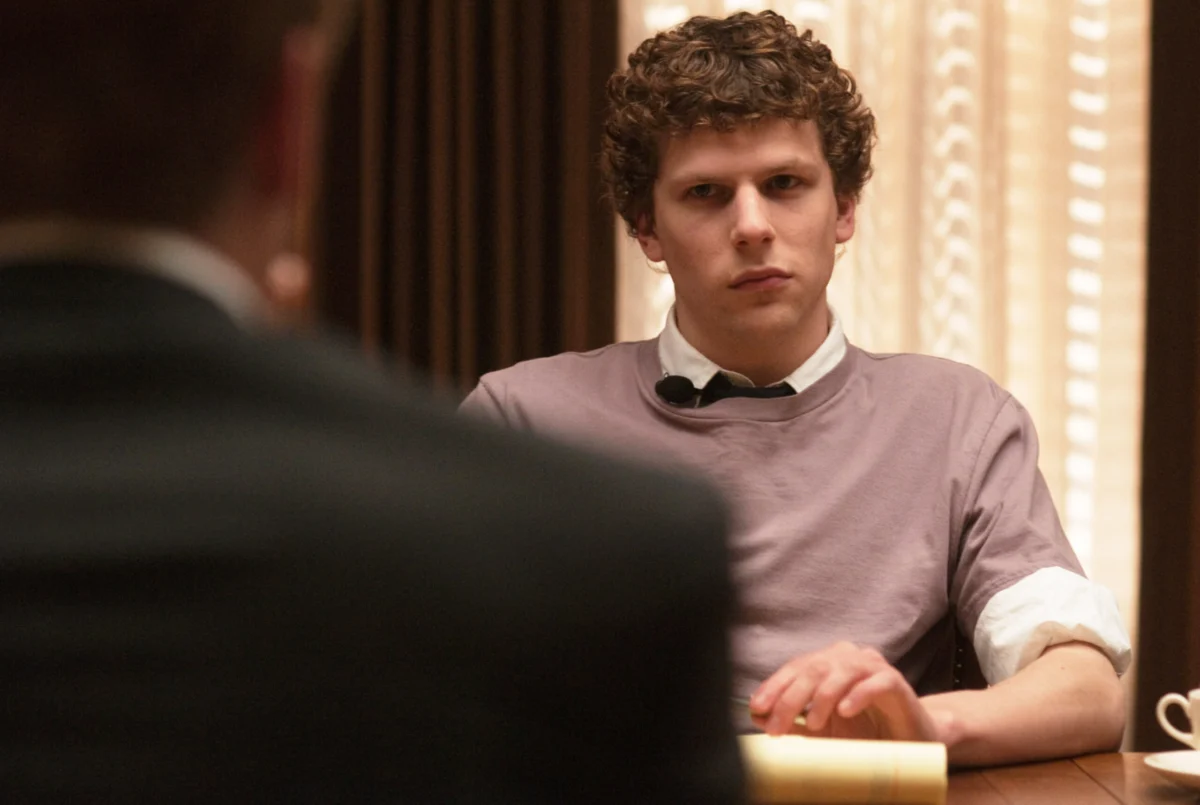
In a cinematic landscape dominated by sequels, reboots, and the persistent desire to revisit the origins of modern tech giants, the news that Jesse Eisenberg would not be reprising his iconic role as Mark Zuckerberg in Aaron Sorkin’s The Social Network follow-up, The Social Reckoning, sent shockwaves through Hollywood.
For over a decade, Eisenberg’s portrayal of the Facebook founder served as the definitive cinematic rendering of Silicon Valley ambition—a cold, calculated, and brilliant performance that earned him an Academy Award nomination. However, as the production gears up for its next chapter, Eisenberg has made it clear: he is ready to move on.
The Core Conflict: A Departure from the Tech Titan
The decision to step away from the role was not born of professional friction, but rather a personal evolution. Speaking exclusively to Variety at the Los Angeles premiere of his recent project, Minions & Monsters, Eisenberg offered a candid look into the conversations that transpired between him and screenwriter Aaron Sorkin.
"It’s an honor to speak to Aaron in any capacity, because he’s so articulate and charming and so bright," Eisenberg said. The actor described a multi-day dialogue with Sorkin, noting the unique pressure of turning down a script from a writer of such caliber. "The way Aaron speaks, he speaks so wonderfully, as he writes that, in a way, if you’re not going to do something with him, it feels almost like you’re letting down America."
Despite this deep mutual respect, the creative pull was not enough to override Eisenberg’s desire to disentangle his identity from the tech mogul. "I just told him I’m moving in different directions in my life," Eisenberg explained. "I don’t want to be associated with that character, but all of my reasons for not wanting to do the movie have nothing to do with how wonderful the movie is, and will be, and I’m sure is already."
A Chronology of the Casting Conundrum
The public realization that Eisenberg would not return was preceded by a strenuous effort on the part of Sorkin to bring his original lead back into the fold.
- Early 2024: Development of The Social Reckoning begins in earnest, with Sorkin focusing on a narrative that shifts from the founding of Facebook to the internal turmoil of the platform during the mid-2010s.
- June 2026: Sorkin reveals to Vanity Fair that he spent three intensive days attempting to persuade Eisenberg to return to the role. The effort, while ultimately unsuccessful, highlighted the director’s desire to maintain continuity across the franchise.
- Post-Decision: Once it became clear that Eisenberg had firmly declined, the production team moved quickly to recast, ultimately landing on Jeremy Strong—a choice that signals a shift in the tone of the Zuckerberg portrayal from the "college-aged wunderkind" of the first film to the more hardened, controversial executive of the present day.
Sorkin’s recollection of the talks sheds light on the exhaustion Eisenberg feels regarding the role. According to the writer, the actor was tired of being "conflated" with Zuckerberg. Sorkin shared a telling anecdote regarding the fan interaction that pushed Eisenberg toward this final break: "He doesn’t like kids coming up to him in airports with business cards that say ‘I’m CEO, bitch’ for him to sign."
Supporting Data: The Evolution of the Zuckerberg Narrative
The Social Network (2010) was an exploration of intellectual property theft, social alienation, and the birth of a global phenomenon. The Social Reckoning, by contrast, positions itself as an autopsy of the company’s moral and operational failures.
The new film centers on the testimony of Facebook whistleblower Frances Haugen, played by Mikey Madison, and the investigative journalism of the Wall Street Journal’s Jeff Horwitz, portrayed by Jeremy Allen White. This narrative shift mirrors the real-world trajectory of the company. In 2021, the "Facebook Papers"—a massive cache of internal documents—revealed that the company was aware of the platform’s damaging effects on teenage mental health, the spread of misinformation, and the role of its algorithms in inciting political violence.
While the first film was a portrait of a startup, The Social Reckoning is a portrait of an institution. By moving the focus away from the founder’s personal rise and toward the systemic impact of his creation, the film necessitates a different kind of performance—one that perhaps benefits from the fresh, intense energy of Jeremy Strong rather than the established, audience-conditioned familiarity of Eisenberg.
Official Responses and Industry Implications
The casting of Jeremy Strong represents a significant pivot for the franchise. Strong, known for his transformative method acting in HBO’s Succession, brings a gravity that suggests The Social Reckoning will be a darker, more somber experience than its predecessor.
Aaron Sorkin has been vocal about his acceptance of Eisenberg’s decision, despite the difficulty of the process. "I felt like it belonged to him, and he was certainly battle-tested," Sorkin noted. The director’s acknowledgement of Eisenberg’s "battle-testing" serves as an implicit admission that the role has become a burden, a cultural artifact that haunts the actor as much as it defines him.
The implications for Hollywood are clear: actors are increasingly protective of their public image, especially when playing real-life figures who face intense public scrutiny. For Eisenberg, the risk of being permanently linked to a figure embroiled in privacy scandals and regulatory battles became a professional liability he was no longer willing to bear.
The Broader Context: Art, Reality, and Public Perception
The tension between an actor and their role is a recurring theme in cinema, but rarely is it as pronounced as in the case of Eisenberg and Zuckerberg. When an actor plays a fictional character, the audience knows the separation. When an actor plays a living, controversial billionaire, the lines blur.
Eisenberg’s refusal to participate is an act of artistic boundary-setting. By opting out, he is reclaiming his own identity from the digital caricature he helped create. He is signaling that his career is defined by his range—from his work in independent dramas to his directorial efforts—rather than by the single, albeit monumental, role of a tech CEO.
As The Social Reckoning moves into production, the film stands as a testament to how far the conversation around social media has come. In 2010, the focus was on the excitement of connection. In 2026, the focus is on the cost of that connection.
Conclusion: The Legacy of a Performance
Jesse Eisenberg’s exit from the Zuckerberg saga is more than a casting news item; it is a commentary on the shelf life of roles and the necessity of artistic autonomy. While fans may lament the loss of the original face of the franchise, Eisenberg’s choice reflects a deeper professional maturity.
As the industry prepares for the release of The Social Reckoning, the focus will undoubtedly shift toward Jeremy Strong’s ability to inhabit the persona of the now-infamous tech mogul. But for Eisenberg, the chapter is closed. He leaves behind a performance that remains etched in the annals of modern cinema—a brilliant, biting, and definitive look at the man who changed the world, even if he no longer wishes to play the man who changed it.
Ultimately, the sequel will serve as a mirror to the current state of the tech industry, reflecting its failures and its complexities. Whether it succeeds in capturing the zeitgeist as effectively as the original will remain a subject of debate. But one thing is certain: the conversation has shifted, and Eisenberg has chosen to step out of the frame, moving toward a future that is entirely his own.