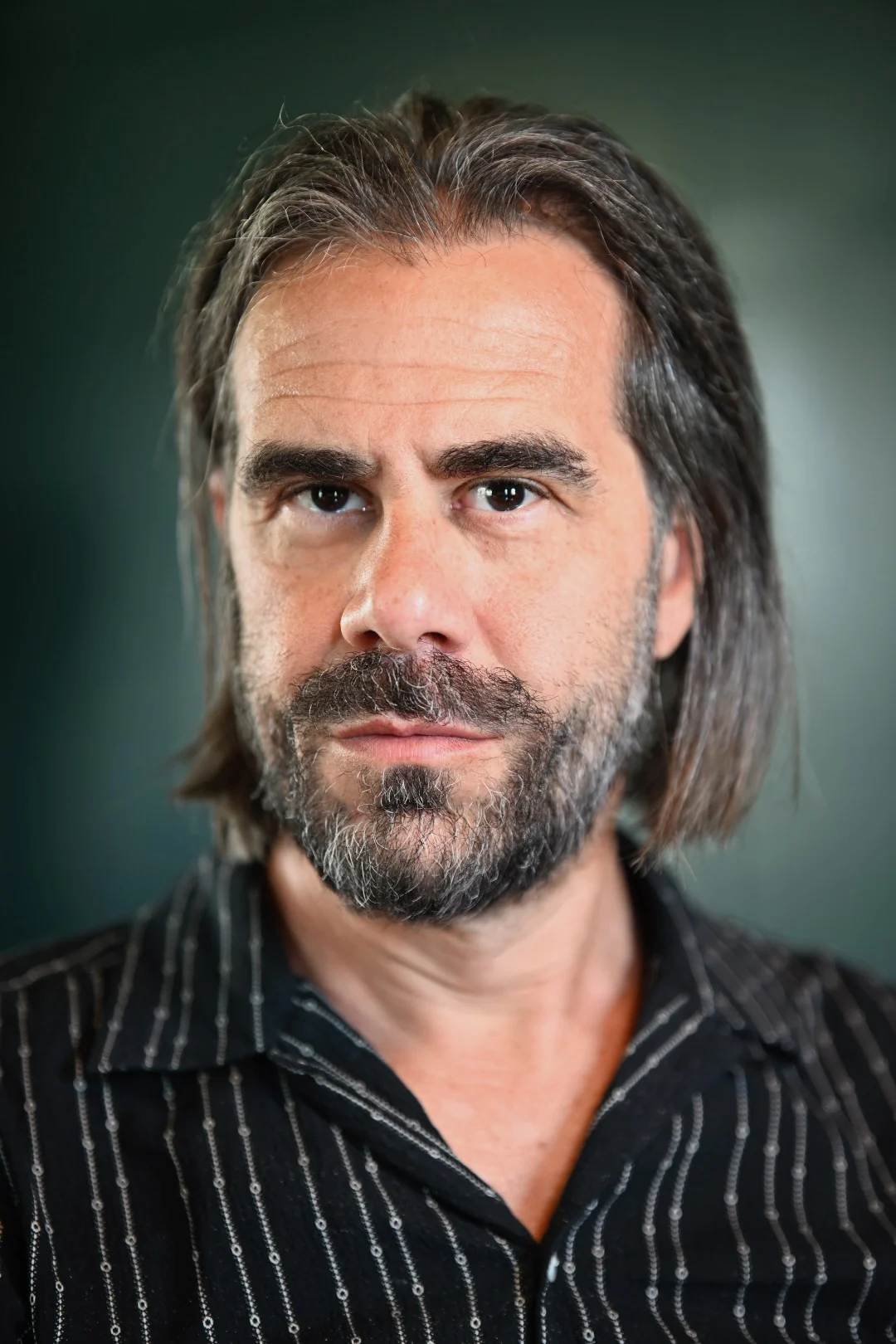
Has Silicon Valley been building the wrong things? It is a question that, until recently, would have been dismissed as Luddite heresy in the corridors of Menlo Park. However, as the digital transformation of daily life reaches its zenith, a growing chorus of thinkers is beginning to ask if the pursuit of seamlessness has come at a catastrophic cost. Among them is Ian Bogost, the academic, designer, and writer whose forthcoming book, The Small Stuff: How to Lead a More Gratifying Life, posits a provocative thesis: in our quest to optimize the world, we have effectively "dematerialized" it.
The book, which serves as both a cultural autopsy and a manual for reclamation, argues that our modern environment—from the cars we drive to the restrooms we use—has been stripped of its sensory texture. By prioritizing efficiency and invisibility, we have unintentionally severed our connection to the physical world, leaving us increasingly alienated from the very lives we are trying to "streamline."
The Genesis of an Idea: From Stick Shifts to Sensory Loss
The seeds for The Small Stuff were sown in 2022, when Bogost penned a widely read article for The Atlantic regarding the decline of the manual transmission. What began as a lament for a dying mechanical art form unexpectedly struck a nerve with a global audience.
"People have been lamenting the decline of the stick shift for years," Bogost notes. "But electric vehicles made it real, because they don’t have transmissions. Assuming EVs become the universal standard, this really is the end."
The enormous response to that piece suggested that the stick shift was merely a proxy for a deeper, more pervasive cultural anxiety. Readers weren’t just mourning a gear-shifter; they were mourning the loss of a tactile, intentional interaction with their machinery. This realization prompted Bogost to examine his own catalog of interests—from the mechanics of toasters to the sensory experience of a slushy—realizing that ordinary life, when engaged with fully, is deeply meaningful. The stick shift was, in his words, "a window opening," allowing a breeze of reality into an increasingly sterile digital existence.
The Theory of Dematerialization
At the heart of Bogost’s work is the concept of "dematerialization." It is not merely a critique of Silicon Valley, but a diagnosis of a broader societal shift involving bureaucracy, efficiency, and regulatory systems.
"We’ve become disconnected from the sensory world, and the reason that happened is what you might call convenience technologies," Bogost explains. He cites the modern airport restroom as the quintessential example: "The toilet flushes for you, the sink turns on for you, the soap dispenses for you—or it doesn’t. You notice these things when they don’t work, and that friction helps you see the problem. But in most cases, we don’t even realize there is a problem. We’ve made a tradeoff between progress and giving up that contact with the physical world."
This "frog-boiling" effect has been so gradual that society has accepted it as the default. We have traded the texture of life for the speed of service, rarely pausing to consider what that transaction actually entails.
Beyond the "Enshittification" Narrative
In recent years, the tech-criticism landscape has been dominated by voices like Cory Doctorow, who popularized the term "enshittification" to describe the inevitable degradation of digital platforms. While Bogost respects these critiques, he expresses a certain weariness with the "constant critique" loop.
"It’s very satisfying to believe there are good guys and bad guys, or that there’s a simple explanation, and once we understand it, we just need to unwind it," Bogost says. However, he points out the hypocrisy in the movement: "I like Amazon Prime. I like to be able to search Google for information. We have to be honest that our lives are broadly better, but we missed the part where we became distanced from our sensory lives."
Unlike those who call for a total systemic overhaul of capitalism or wealth inequality as a prerequisite for happiness, Bogost argues that "ordinary people don’t need to wait for that." His work focuses on finding gratification in the present moment, suggesting that one can reclaim their sensory life without necessarily burning down the entire digital infrastructure.

Silicon Valley’s Existential Error
The interview delves into the culture of Silicon Valley, a place where "efficiency, automation, invisibility, transparency, and scale" are the ultimate virtues. Bogost suggests that the industry’s fundamental error lies in its view of the human condition.
"There’s this weird sense that the embodied human experience is unnecessary," he asserts. "The general-purpose computer can sieve through any kind of experience and turn it into a computational one. But we are—thank God—not able to exit our bodies."
This philosophy has led to a generation of products that view "friction" as an enemy to be eliminated. However, Bogost suggests that UX designers have lost the plot. By attempting to make everything "invisible," they have made everything meaningless. He challenges entrepreneurs to rethink the balance: "The experience of doing something is also important, not just the outcome."
He looks back at the 1970s, specifically at Apple and Xerox PARC, as a time when computing was viewed as a "cultural tool" that respected human factors engineering. Somewhere in the early 2000s, that focus on the user’s physical relationship to the tool was replaced by an obsession with seamless, frictionless delivery.
Implications: Can We Reclaim the Sensory?
If the trend toward dematerialization is the current trajectory, where does that leave the average person? Bogost is careful to avoid the trap of "hipster nostalgia"—the idea that buying a Walkman or a rotary phone will solve the modern malaise.
"Nostalgia can be orienting, but it’s indulgent to think you can live in the past," he warns. "We’re not going back. You live in the present, into the future."
Instead, he advocates for a shift in perspective. He argues that we should stop romanticizing "friction" as a goal in itself—we don’t need to make things unnecessarily difficult—but rather seek out opportunities to feel ourselves doing things. Whether it is the sonic quality of a phone call, the physical sensation of an ice cube in a water bottle, or the intentionality of a manual task, these "small things" serve as an anchor.
A Call for More Human-Centric Design
As the conversation concludes, the implications for the tech industry become clear: if they want to build products that truly serve humans, they must stop viewing the body as an inconvenience to be automated away.
For the reader, the message is one of personal agency. While we may not be able to dismantle the massive economic structures that drive dematerialization, we can change our own relationship to the environment. We can choose to be present in the restrooms we use, the cars we drive, and the screens we look at.
"Ordinary people have to live in their sensory lives," Bogost says. "There’s something they can do right now, in this moment, every day, rather than wring their hands or post obsessively on Facebook about how shitty everything is. We’ve tried that for a while, and it doesn’t seem to have helped."
Ultimately, The Small Stuff is an invitation to stop waiting for the system to change and start reclaiming the texture of our own existence. It is a reminder that while the digital world offers infinite convenience, it cannot replace the simple, visceral satisfaction of being fully, physically present in the world we inhabit.