
Beneath the Abyss: The Discovery of a Centuries-Old Giant in New Zealand’s Fiordland

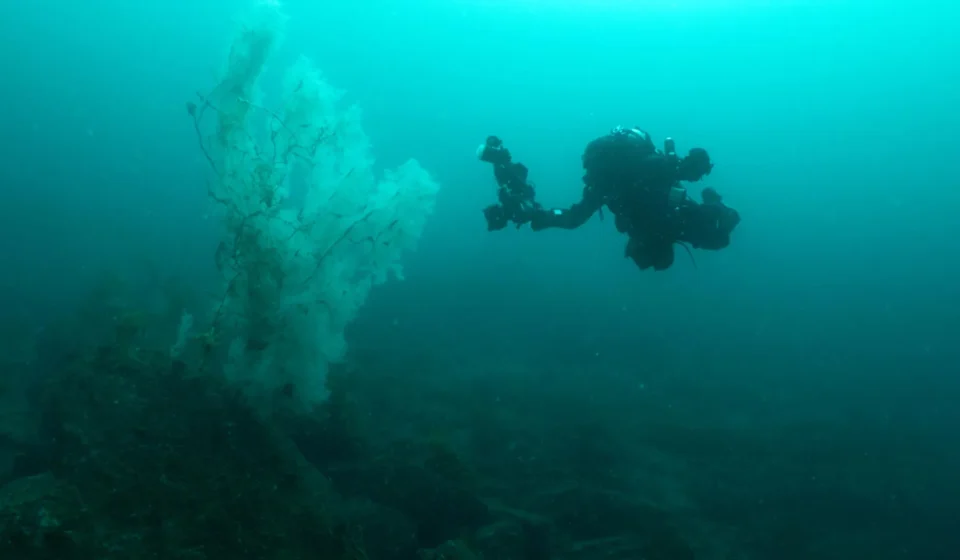
In the silent, light-starved depths of New Zealand’s Fiordland, researchers have uncovered a prehistoric sentinel. A gargantuan black coral, standing four meters (13 feet) tall and spanning 4.5 meters (15 feet) in width, has been identified by a collaborative team of marine biologists and conservationists. This discovery, which offers a rare window into the longevity of deep-sea ecosystems, is believed to be one of the largest specimens of its kind ever documented in the waters of Aotearoa New Zealand.
The find represents more than just a biological curiosity; it serves as a critical indicator of the health and stability of the fiord’s unique marine environment. Estimated to be between 300 and 400 years old, this "oceanic redwood" has stood silent witness to the passage of centuries, surviving in the challenging, high-pressure environment of the fiords.
Main Facts: A Biological Marvel in the Deep
The specimen was discovered during a routine survey aimed at mapping the biodiversity of the remote fiords. The sheer scale of the coral is unprecedented in the region. While black corals (Antipatharia) are known for their longevity and slow growth rates, a colony of this size is an outlier.
To understand the scale, one must look at the typical growth patterns of these organisms. Most black corals encountered by divers in these depths are modest in size, rarely exceeding two meters. Finding a specimen that reaches four meters in height and nearly five meters in width is comparable to discovering an ancient forest in the middle of a modern cityscape. The living tissue of the coral is a stark, clean white, a deceptive camouflage that hides the jet-black, protein-rich skeleton for which the species is named.
The Chronology of Discovery: A Rare Encounter
The discovery was not the result of mere chance, but rather the culmination of a rigorous, multi-year initiative involving Te Herenga Waka—Victoria University of Wellington, the Department of Conservation (DOC), and the Fiordland Marine Guardians.
The Dive
The expedition team had been conducting surveys to assess the distribution of protected species within the fiord network. As they descended into the twilight zone—the layer of water where sunlight fades into near-total darkness—the team encountered the massive structure. For the divers, the moment of revelation was profound.
Richard Kinsey, a senior biodiversity ranger at the Department of Conservation with two decades of experience in the region, described the moment of contact: "To see such a large coral looming out of the darkness was pretty special. I’ve been a marine ranger in Fiordland for nearly 20 years, and it’s rare to see a coral so big. It’s easily the largest one I can remember seeing."
Post-Discovery Analysis
Following the physical sighting, researchers utilized photogrammetry and high-resolution video mapping to document the dimensions of the colony. The data collected was then cross-referenced with historical marine surveys of the area. The conclusion was unanimous: this was a record-breaking find, a living artifact that has been anchoring the seafloor since before the modern settlement of New Zealand.
Supporting Data: Why Size Matters in the Deep
The significance of this discovery is grounded in the biology of the species. Black corals are slow-growing, perennial organisms. Their ability to reach such immense sizes over several centuries suggests that this specific location in the fiord offers an ideal confluence of nutrient-rich currents and protection from surface-level environmental stressors.
The Role of Large Colonies
In marine ecology, large colonies act as the "elder statesmen" of the reef. They are essential for:
- Breeding Stock: Older, larger corals produce significantly more reproductive output than their younger counterparts, acting as the primary source of larvae for the surrounding ecosystem.
- Structural Complexity: These giants provide a complex habitat for a wide variety of fish, crustaceans, and other marine invertebrates, effectively acting as "apartment complexes" in the deep sea.
- Carbon Sequestration and Longevity: By living for hundreds of years, these corals sequester carbon within their skeletons, playing a subtle but vital role in the long-term cycle of the marine environment.
Official Responses: The Scientific Perspective
Professor James Bell, a renowned marine biologist at Victoria University of Wellington, has spent over 25 years studying the intricacies of marine life. For him, this discovery provides a benchmark for what a healthy, undisturbed fiord ecosystem should look like.
"It’s by far the largest black coral I’ve seen in my 25 years as a marine biologist," Professor Bell stated. "Most black corals we come across when we’re diving are small, with the bigger ones usually less than two to three meters tall, so finding this one was really cool."
Professor Bell emphasizes that the rarity of such a large specimen is exactly why the scientific community must prioritize mapping these sites. "Pinpointing where large corals occur means we can better protect them by letting people know where not to anchor their boats or drop pots," he noted.
The Department of Conservation has echoed this sentiment, highlighting the importance of the collaboration between the university and the Fiordland Marine Guardians. This partnership is designed to bridge the gap between academic research and on-the-ground management, ensuring that data moves quickly into policy.
Implications: Conservation and Future Mapping
The discovery has triggered a new phase in the project: a public outreach and mapping campaign. The research team is now calling for a "citizen science" contribution, asking commercial fishers, divers, and charter operators to report any sightings of exceptionally large black corals.
The Protection Mandate
Black corals are strictly protected under New Zealand’s Wildlife Act. This legislation makes it illegal to intentionally damage, remove, or disturb these colonies. However, legislation is only as effective as its enforcement and the public’s awareness of the locations that need protection.
"We’d love to receive reports from anyone who knows of particularly large black corals that are greater than four meters," Professor Bell said. "This allows us to map their distribution and find out how common such large coral colonies are throughout Fiordland."
The Challenges of the Fiords
The fiords are notoriously difficult environments to survey. The water is often dark due to tannin-stained freshwater runoff, and the steep, underwater walls mean that a vast majority of the seabed remains unexplored. The mapping project aims to use this new data to create a "heat map" of coral density.
By identifying these "hotspots," the Department of Conservation can implement targeted management strategies. This may include "no-anchor" zones or restricted areas for commercial potting, which can inadvertently damage the delicate, brittle skeletons of these centuries-old organisms.
Conclusion: A Living Heritage
The discovery of a four-meter-tall black coral is a humbling reminder of the hidden life that thrives in the depths of Aotearoa. This organism, having survived through centuries of environmental change, represents the resilience of the natural world.
As the mapping project continues, the hope is that this giant is not an anomaly, but one of many hidden treasures within the labyrinthine channels of Fiordland. By combining the expertise of marine biologists with the observations of those who traverse these waters daily, New Zealand is taking a significant step toward safeguarding its deep-sea heritage. The survival of these slow-growing giants depends on human intervention—specifically, the restraint to keep anchors and nets away from the quiet, dark corners of the ocean where these ancient beings reside.
As we look toward the future, the lessons learned from this 400-year-old coral will undoubtedly shape the conservation landscape, ensuring that the next generation of marine explorers will have the privilege of discovering these giants still standing in the dark.