Primary Battles Reshape Congressional Landscape: Incumbents Prevail in Maryland, Utah as Money and Messaging Dominate

WASHINGTON D.C. – Primary elections across Maryland, Utah, and South Carolina this week delivered a complex mosaic of outcomes, affirming the resilience of several incumbents while ushering in new faces in open races. The contests, marked by intense spending, high-profile endorsements, and sharp intra-party divisions, offer a significant preview of the political currents shaping the 2026 general election cycle.
In a closely watched Maryland contest, Rep. April McClain Delaney successfully fended off a challenge from her immediate predecessor, former Rep. David Trone, in a race emblematic of the financial and ideological battles increasingly defining primary campaigns. Her victory mirrored those of two Republican House members in Utah, Blake D. Moore and Celeste Maloy, who also secured their party’s nominations against formidable challengers. However, the night was not without its incumbent casualties, as two Democratic colleagues from New York notably lost their bids for renomination, underscoring the volatile nature of the current political environment.
The primaries showcased the enduring power of incumbency, albeit tested by unprecedented levels of self-funding and outside group expenditures. From the Washington suburbs to the rural stretches of Western Maryland, and across the diverse landscapes of Utah and South Carolina, voters grappled with choices that will undoubtedly influence the balance of power in Congress and statehouses.
Maryland: A Gauntlet of Costly Challenges and New Leadership
Maryland’s primary elections proved to be a crucible for both established figures and aspiring leaders, with particularly intense battles in the 6th and 5th Congressional Districts.
MD-06: The Expensive Rematch Between McClain Delaney and Trone
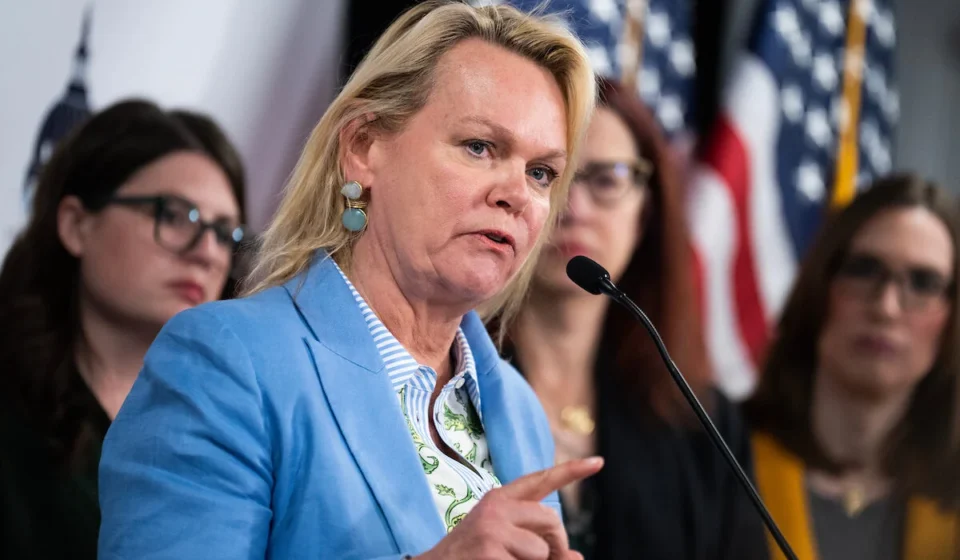
The Democratic primary for Maryland’s 6th Congressional District pitted incumbent Rep. April McClain Delaney against her predecessor, former Rep. David Trone, in a contest that quickly became one of the nation’s most expensive and acrimonious intra-party battles. McClain Delaney emerged victorious, leading Trone 44 percent to 37 percent when The Associated Press called the race at 11:38 p.m. Eastern time on Tuesday. The remaining votes were split among six other candidates, unable to bridge the gap between the two well-funded frontrunners.
Chronology and Context:
The narrative of this race is deeply rooted in recent political history. Trone, a wealthy businessman, had previously held the 6th District seat before vacating it in 2024 for an ultimately unsuccessful bid for the U.S. Senate. His Senate campaign saw him pour nearly $63 million of his personal fortune into the race, which he lost to fellow Democrat Angela Alsobrooks. McClain Delaney, whose husband previously represented the district, then successfully ran for the open seat in 2024. Trone’s decision to attempt a return to his former House seat set the stage for a compelling and often bitter rematch.
Supporting Data: The Financial War Chests:
The financial firepower deployed by both candidates was staggering, even by the standards of modern politics. Trone, true to his past campaigns, injected an astounding $25 million of his personal wealth into his bid to reclaim the district through June 3. This figure dwarfed most congressional campaigns nationwide. Not to be outdone, McClain Delaney, herself a significant self-funder, loaned her campaign $7.4 million, demonstrating a willingness to match her opponent’s financial commitment. Beyond direct candidate funding, the race also attracted significant outside spending. Protect Progress, a political action committee with well-documented ties to the burgeoning cryptocurrency industry, actively supported McClain Delaney, further amplifying her campaign’s reach and message. This influx of external funds added another layer of complexity and controversy to an already heated contest.
Official Responses and Campaign Dynamics:
The primary was characterized by sharp exchanges and tactical maneuvers. In April, McClain Delaney’s campaign dispatched a cease-and-desist letter to Trone’s team, challenging his use of the title "Congressman" in campaign materials while soliciting votes for re-election, arguing that he was not an incumbent officeholder. This legalistic skirmish highlighted the fierce competition and the candidates’ attempts to define each other for voters.
Policy debates also played a crucial role. Trone frequently criticized McClain Delaney for her early 2025 vote in favor of the Laken Riley Act, an immigration bill that had become a flashpoint in national political discourse. The bill, which passed the House with bipartisan support but faced significant opposition from many Democrats, sought to mandate the detention of undocumented immigrants charged with theft-related offenses. McClain Delaney has since expressed regret for her vote, acknowledging the complexities and criticisms surrounding the legislation. Her willingness to address this stance publicly likely aimed to mitigate damage within her Democratic base.
Following her victory, McClain Delaney’s campaign is expected to pivot quickly towards unifying the district’s Democratic electorate and preparing for the general election. Sources close to her campaign indicated a focus on her legislative record and her commitment to the district’s diverse communities, which span from the densely populated Washington suburbs to the more rural, conservative Western Maryland. Trone, in his concession, is anticipated to emphasize the importance of party unity moving forward, though the scale of his personal investment and the bitterness of the campaign may leave lingering questions about his future political ambitions.
MD-05: Hoyer’s Legacy and the Battle for a New Era
In Maryland’s 5th Congressional District, state Delegate Adrian Boafo emerged victorious from a crowded Democratic primary field, positioning himself to succeed former House Majority Leader Steny H. Hoyer, a towering figure in Democratic politics who had represented the district for decades. Boafo secured 32 percent of the vote in a sprawling 24-candidate race when the AP called it at 9:28 p.m. Eastern time.
Supporting Data and Key Contenders:
The field was notably diverse and competitive. Businesswoman Quincy Bareebe, who largely self-funded her campaign, finished in second place with 19 percent. Former Capitol Police officer Harry Dunn, who gained national prominence for his powerful testimony and advocacy after defending the Capitol during the January 6th attack, placed third with 14 percent. This marked Dunn’s second consecutive House bid, having previously lost a primary for the 3rd District in 2024. His repeated attempts underscore a continued desire to translate his national profile into electoral success.
Official Responses and Endorsements:
Boafo’s victory was bolstered by significant establishment support. He received key endorsements from his former boss, Steny Hoyer, whose legacy he now hopes to carry forward. Further backing came from prominent Maryland Democrats, including Senator Angela Alsobrooks and Governor Wes Moore. These endorsements provided crucial organizational and fundraising advantages in a fragmented field.
However, Boafo’s campaign also benefited from, and faced scrutiny over, substantial outside spending. Millions of dollars poured into the race from the cryptocurrency industry and the political arm of the American Israel Public Affairs Committee (AIPAC). This influx of external funds drew sharp criticism from other candidates in the primary, who publicly urged Boafo and his supporters to reject such spending, arguing it distorted the democratic process and reflected outside interests rather than local concerns. Boafo’s campaign, while acknowledging the support, maintained its focus on grassroots outreach and district-specific issues.
His win signals a generational shift in leadership for the 5th District, but also highlights the increasing role of national special interest groups in shaping local primary outcomes, a trend likely to continue into the general election.
Utah: GOP Incumbents Hold Firm, New Map Creates Democratic Opportunity
Utah’s primary elections on Tuesday presented a mixed bag of results, with Republican incumbents successfully defending their seats while a new congressional map offered Democrats a rare opening.
GOP Incumbents Weather Challenges: Moore and Maloy Secure Nominations
Two Republican House members in Utah, Rep. Blake D. Moore (2nd District) and Rep. Celeste Maloy (3rd District), successfully navigated primary challenges, demonstrating the continued strength of incumbent Republicans in the state.
Chronology and Context:
Third-term Rep. Blake D. Moore, a member of House GOP leadership, defeated state Rep. Karianne Lisonbee in the 2nd District, leading 58 percent to 42 percent just after midnight Wednesday, as reported by the AP. Moore’s victory reaffirms his position within the Republican conference and his ability to connect with the district’s conservative base.
In the 3rd District, Rep. Celeste Maloy, who was elected in 2023 in a special election, turned back a challenge from former state Rep. Phil Lyman. Maloy led Lyman 67 percent to 33 percent with 76 percent of the vote counted, according to the AP. Her decisive win solidifies her hold on the seat and signals voter approval of her brief tenure.
Official Responses and Endorsements:
Both Moore and Maloy benefited significantly from the endorsement of former President Donald Trump. Trump’s backing remains a potent force in Republican primaries, often providing a decisive boost to candidates in competitive races. Their victories underscore the continued influence of the former president within the GOP electorate, particularly in states like Utah, which leans heavily Republican. Their campaigns are expected to emphasize their conservative bona fides and their alignment with national party priorities heading into the general election.
Redrawn UT-01: Ben McAdams Poised for Return
The Utah elections took place under a newly implemented, court-picked congressional map. This redistricting significantly altered the political landscape, creating a rare opportunity for Democrats to potentially flip a seat. Former Rep. Ben McAdams, a moderate Democrat, capitalized on this opportunity, winning the Democratic primary for the redrawn 1st District, which is now anchored in heavily blue Salt Lake City.
Supporting Data and Key Contenders:
McAdams led a crowded Democratic field with approximately 60 percent of the vote around 12:30 a.m. Wednesday, according to the AP. His strong showing against three progressive candidates highlights his enduring appeal as a moderate voice within the party. State Senator Nate Blouin, who had the backing of Vermont Senator Bernie Sanders, finished in second place with 24 percent, followed by tech policy expert Liban Mohamed (12 percent) and tax attorney Michael Farrell (4 percent).
Implications:
McAdams’s victory sets the stage for a compelling general election contest in the redrawn 1st District. His moderate stance could appeal to a broader electorate, making the district genuinely competitive for Democrats, a rarity in traditionally Republican Utah. The outcome of this primary signifies the strategic importance of redistricting and its potential to shift electoral dynamics. McAdams’s campaign is expected to focus on his proven track record and his ability to work across the aisle, positioning him as a pragmatic choice for voters in the general election. Republicans, meanwhile, will likely pour resources into defending the seat, framing the contest as a battle for ideological direction.
South Carolina: Gubernatorial Runoff and Congressional Runoffs Set General Election Stage
South Carolina’s primary runoffs on Tuesday finalized key nominations, including a high-stakes gubernatorial contest and a competitive congressional district, providing further clarity on the state’s political direction for November.
GOP Gubernatorial Runoff: Wilson Triumphs Over Evette
In a surprising turn of events, State Attorney General Alan Wilson, the son of Rep. Joe Wilson, triumphed over Lt. Gov. Pamela Evette in the Republican primary runoff for governor. Wilson secured a commanding lead of 69 percent to 31 percent with more than 95 percent of the vote counted, according to the AP.
Chronology and Context:
The runoff followed a closely contested first round of voting on June 9, where Evette narrowly finished ahead of Wilson. Evette had initially secured former President Donald Trump’s coveted endorsement, which typically provides a significant advantage in Republican primaries. However, in an unusual move on Friday, Trump announced on Truth Social that he was backing both candidates, effectively neutralizing the impact of his initial endorsement and leaving voters to decide based on other factors. This unprecedented dual endorsement created a unique dynamic, allowing Wilson to gain momentum in the runoff.
Official Responses and Implications:
Wilson’s victory is a testament to his deep-seated political connections within the state, leveraging his family legacy and his current role as Attorney General. His campaign is expected to emphasize his conservative credentials and his experience in state government. He will now face Democratic state Rep. Jermaine Johnson in the general election. The gubernatorial race in South Carolina historically favors Republicans, with Democrats failing to win the governorship since 1998. However, Johnson’s campaign will likely seek to mobilize Democratic voters and highlight any potential vulnerabilities of Wilson. Wilson, in his victory speech, is anticipated to call for party unity and articulate a vision for continued conservative leadership in the state. Evette’s concession will likely acknowledge the strong showing by Wilson and emphasize the importance of supporting the party’s nominee.
SC-01: Honeycutt and Lacore Set for November Showdown
The November match-up was also finalized in South Carolina’s 1st Congressional District, following primary runoffs for both parties. Republican Jenny Costa Honeycutt, a Charleston County councilmember, and Democrat Nancy Lacore, a retired Navy admiral, emerged victorious in their respective contests.
Supporting Data and Implications:
Inside Elections with Nathan L. Gonzales rates the race to succeed GOP Rep. Nancy Mace as "Solid Republican," indicating a strong advantage for the Republican candidate. However, Democrats are expressing optimism that Lacore can make the race competitive. Lacore’s background as a retired Navy admiral, coupled with her removal from her post as chief of the Navy Reserve last year by Defense Secretary Pete Hegseth, could provide a compelling narrative for voters. Democrats are likely to frame her as an independent voice with a strong service record, potentially appealing to moderate voters and disaffected Republicans. Honeycutt, meanwhile, will seek to consolidate Republican support and campaign on conservative principles, emphasizing her local government experience. The general election will test whether Lacore’s unique profile can overcome the district’s inherent Republican lean.
Broader Implications: Money, Endorsements, and the Future of Intra-Party Contests
The primary elections across Maryland, Utah, and South Carolina offer crucial insights into the evolving landscape of American politics, highlighting several pervasive trends that will undoubtedly influence the 2026 general election and beyond.
The Enduring Power of Incumbency (and its Limits):
While McClain Delaney in Maryland and Moore and Maloy in Utah successfully defended their seats, their victories were often hard-won and expensive. These races underscore that while incumbency remains a significant advantage, it is not an impenetrable shield against well-funded and motivated challengers, especially those with previous ties to the district or a strong base of support. The losses of Democratic incumbents in New York, as well as Rep. Julie Elizabeth Johnson’s defeat in Texas to former Rep. Colin Allred in a similar scenario last month, serve as stark reminders that the political currents can turn quickly, even against those holding office. Voters, increasingly engaged in primary contests, are willing to consider alternatives, particularly when presented with clear ideological differences or perceived performance issues.
The Proliferation of Personal Wealth and Outside Spending:
The sheer volume of personal funds injected into these campaigns, particularly by David Trone in Maryland, signals a growing trend where wealthy individuals can finance their own political aspirations on an unprecedented scale. Trone’s $25 million for a House primary and $63 million for a Senate bid are staggering figures that dwarf traditional fundraising efforts. Similarly, McClain Delaney’s $7.4 million loan to her own campaign, and Quincy Bareebe’s self-funded effort in MD-05, demonstrate the increasing reliance on personal wealth to compete at high levels.
Alongside self-funding, the influence of outside groups, such as those tied to the cryptocurrency industry and AIPAC, was a defining feature, particularly in Maryland’s 5th District. This spending, often through Super PACs and dark money groups, can significantly shape narratives and voter perceptions, raising questions about transparency and the democratic process. The criticism from other candidates in MD-05 regarding this external spending reflects a growing discomfort within the parties about the outsized role of special interest money.
The Variable Impact of High-Profile Endorsements:
Former President Donald Trump’s endorsements continued to be a significant factor in Republican primaries. His backing proved decisive for Moore and Maloy in Utah, helping them to consolidate conservative support and repel challengers. However, the South Carolina gubernatorial runoff offered a more nuanced picture. Trump’s initial endorsement of Pamela Evette was undermined by his subsequent, unusual decision to back both candidates, effectively nullifying its impact and allowing Alan Wilson to win. This suggests that while Trump’s endorsement remains powerful, its effectiveness can be contingent on the specific dynamics of a race and the clarity of his support. Similarly, Bernie Sanders’s endorsement of Nate Blouin in Utah’s 1st District primary, while mobilizing a progressive base, was not enough to overcome Ben McAdams’s broader appeal.
Intra-Party Divisions and the Battle for Ideological Direction:
Many of these primaries were not simply contests of personality but reflections of deeper ideological fissures within both the Democratic and Republican parties. The moderate-versus-progressive dynamic was evident in Utah’s 1st District, where McAdams defeated several progressive challengers. Similarly, the Maryland primaries highlighted tensions over policy issues like immigration, as seen in the Laken Riley Act debate in MD-06. These internal party battles are crucial indicators of the future direction of the major parties, as activists and voters vie for control over legislative priorities and party platforms.
Looking Ahead to November:
The primary results have now set the stage for the general election in these states. In Maryland, McClain Delaney will likely face a Republican challenger in a district that can be competitive in a presidential year. Adrian Boafo’s victory in MD-05 positions him to succeed Hoyer in a reliably Democratic district. In Utah, while Moore and Maloy are favored in their deeply red districts, Ben McAdams’s return to the UT-01 primary signifies a genuine Democratic pickup opportunity created by the new map. South Carolina’s gubernatorial race will test Democratic strength in a historically red state, while the SC-01 congressional contest will be a barometer for whether a compelling candidate like Nancy Lacore can defy a district’s partisan lean.
These primaries underscore the ongoing volatility and evolution of American electoral politics, where money, messaging, and strategic endorsements intertwine to shape the path to power. The outcomes provide a clearer, though still complex, roadmap for the battles that lie ahead in the general election, promising further intense and closely watched contests.