
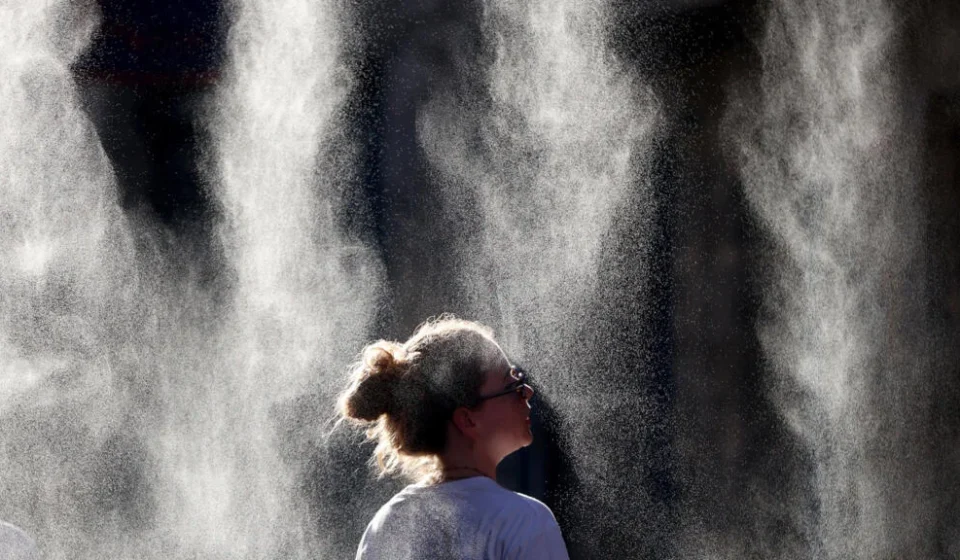

Across France and much of Western Europe, the normalcy of early summer has been shattered by a blistering heat dome, leaving millions to endure stifling, sleepless nights and record-breaking daytime temperatures. As the mercury climbs well above 40 degrees Celsius (104 degrees Fahrenheit), the continent is once again confronting the harsh reality of human-caused climate change—a phenomenon that is transforming seasonal weather patterns into existential threats.
The Current Crisis: A Nation Paralyzed
On Tuesday morning, millions of French citizens awoke to find that the nocturnal reprieve from the heat had failed to materialize. With Météo-France placing 54 departments—nearly half the country—under a red heatwave alert, the situation is classified as "exceptional" and "dangerous." The oppressive heat is not merely an inconvenience; it is a public health emergency.
The absence of widespread residential air-conditioning in France, a country designed for temperate climates, has turned homes, schools, and offices into heat traps. Public transport systems are buckling under the strain, and sporting events have been postponed or canceled to protect both participants and spectators. The atmosphere is heavy with a persistent, exhausting humidity that offers no relief even after sunset.
A Tragic Toll: The Hidden Danger of the Water
Beyond the immediate risk of heatstroke and dehydration, the heatwave has claimed lives in a secondary, more insidious manner. French Prime Minister Sébastien Lecornu confirmed following a high-level crisis meeting that 40 people have drowned since June 18. Officials warn that as temperatures soar, the temptation to seek refuge in rivers, lakes, and oceans has led to a surge in water-related accidents, particularly among the youth who may underestimate the risks of sudden immersion or the treacherous currents of local waterways.
Chronology of a Heat-Stressed Europe
The current crisis did not emerge in a vacuum. The trajectory of this summer’s heatwave is part of a broader, concerning trend of early-season extreme weather.
- Mid-June: Unusually high temperatures began creeping across the Mediterranean, signaling an early start to the summer heat cycle.
- June 18: The threshold of crisis was reached, marking the beginning of the period in which the reported 40 drowning deaths occurred.
- June 20: As documented in Rome, record-shattering temperatures forced residents and tourists alike to seek desperate relief at public fountains, a scene echoed in cities across France and Spain.
- Tuesday, Current Week: The peak of the intensity in France, with 54 departments under red alert.
- Wednesday and Thursday (Forecast): The heatwave is projected to cross the English Channel, with the UK Met Office issuing red extreme heat warnings. Forecasts suggest that June’s all-time daily temperature records in southern England and Wales are likely to be shattered, with highs expected to reach 39°C (102.2°F).
Supporting Data: Europe’s Warming Trajectory
The scientific consensus is unequivocal: Europe is the fastest-warming continent on Earth. Data from the European Union’s Copernicus Climate Change Service reveals that temperatures on the continent have increased at twice the global average rate since the 1980s.
The metrics of this decline are stark. According to the World Health Organization’s (WHO) Europe office, more than 200,000 people have died from heat-related causes across the continent in the last four years alone. Most of these deaths are classified as preventable, highlighting a critical gap in infrastructure and public health preparedness. Furthermore, the WHO emphasizes that these temperatures trigger a cascade of health issues, including heat exhaustion, cardiovascular strain, and life-threatening heat stroke.
The UN climate agency’s projections add a sobering layer to these statistics, suggesting that the next five years are likely to shatter even more records, regardless of the time of year. The comparison to the catastrophic August 2003 heatwave—which claimed 15,000 lives in France—is no longer hyperbolic. While France established a robust heat watch system in the wake of that disaster, the sheer intensity and early arrival of this current wave are testing the limits of those safeguards.

Official Responses and Policy Shifts
In response to the mounting death toll and the strain on the national grid, Prime Minister Lecornu’s government has pivoted to an emergency management posture. The "Plan Canicule" (Heatwave Plan) has been activated, prioritizing the protection of the elderly, the vulnerable, and the young.
However, the political discourse is shifting from reactive management to long-term adaptation. With the EU monitoring agency confirming that 2024 was the hottest year on record, European leaders are under increasing pressure to address the structural deficiencies of their cities. This includes "greening" urban environments to mitigate the heat-island effect, retrofitting older apartment blocks for cooling, and re-evaluating the safety protocols of schools that lack modern climate control.
The Global Implications of a Warming World
The implications of these events extend far beyond the borders of France or the UK. The scientific community warns that climate change is exacerbating the frequency, intensity, and duration of heatwaves and droughts, particularly in southeastern Europe. This creates a feedback loop: dry conditions increase the risk of wildfires, which in turn release carbon into the atmosphere, further accelerating the warming trend.
The "heat stress" days—a metric used to measure the impact of high temperatures on human biology—are becoming a standard feature of the European calendar. As global temperature records continue to fall, the distinction between "summer" and "dangerous heat" is blurring.
Conclusion: Adapting to the New Normal
As the heatwave is expected to persist until at least the end of the week, the message from meteorologists and health officials is one of extreme caution. "Sunshine continues to dominate," Météo-France stated, warning that some temperatures could surpass all previous historical records for this time of year.
The challenge for France and its European neighbors is no longer just about surviving the week; it is about acknowledging that the climate has fundamentally shifted. The 2003 heatwave, once considered a "black swan" event, has become a recurring nightmare. The path forward requires a massive investment in public infrastructure, a rethink of urban planning, and, most importantly, an aggressive commitment to the global climate goals that are the only viable path to curbing these increasingly lethal extremes.
For the millions currently enduring the sweltering heat, the reality is simple: the air they breathe and the environment they inhabit are changing faster than they can adapt, leaving society to grapple with the consequences of a climate that is, in every sense, boiling over.