
Porsche’s Strategic Pivot: Navigating a Period of Unprecedented Market Headwinds

For years, Porsche was the gold standard of the automotive industry—a brand that seemingly defied the gravity of economic cycles. With record-breaking deliveries and profit margins that were the envy of luxury competitors, the Zuffenhausen-based manufacturer appeared invincible. However, the automotive landscape has shifted dramatically since 2023, a year that now stands as the company’s "high-water mark." Today, Porsche finds itself at a critical crossroads, grappling with cooling demand in key markets, stringent regulatory hurdles, and an internal debate over the pace of its electrification transition.
The Peak and the Pullback: A Chronological Overview
To understand the current state of Porsche, one must first look at the meteoric rise that preceded this correction. In 2023, Porsche celebrated its most successful year in history, shipping 320,221 vehicles to customers worldwide. This volume was fueled by a robust global economy and insatiable demand for the Cayenne and Macan SUVs, alongside the enduring appeal of the 911.
However, the momentum proved difficult to sustain. By the start of 2025, the reality had shifted. Deliveries plummeted to 279,449 units, effectively erasing the growth achieved over the previous half-decade and resetting the company to 2020 volume levels. The downturn did not stabilize quickly; the first quarter of 2026 saw an additional 15 percent drop in demand, with only 60,991 units delivered.
This rapid decline is not merely a statistical anomaly. It is the result of a "perfect storm" of three primary factors:
- The China Contraction: Long a pillar of Porsche’s growth, the Chinese market has become increasingly hostile to legacy luxury brands. Rising domestic competition, particularly from agile, tech-forward electric vehicle (EV) manufacturers, has eroded Porsche’s market share.
- Regulatory Hurdles: In Europe, the discontinuation of the Macan and 718 models—due to their inability to meet updated cybersecurity regulations—created an unintended supply vacuum, forcing loyal customers to look elsewhere.
- Macroeconomic Volatility: Global inflationary pressures and rising interest rates have tempered the enthusiasm of the ultra-high-net-worth individuals who typically drive Porsche’s sales volume.
The New Philosophy: "Profits Over Volume"
Facing these persistent headwinds, Porsche CEO Michael Leiters has moved to redefine the brand’s mission. In a candid interview with the German newspaper Frankfurter Allgemeine Zeitung (FAZ), Leiters made the company’s new North Star clear: "Porsche has to make money even with fewer cars."
This pivot represents a fundamental departure from the growth-at-all-costs strategy often favored by large-scale manufacturers. Under Leiters, the focus has shifted toward high-margin exclusivity. The company is actively reducing production capacity to align with the current, more modest demand. By doing so, Porsche aims to optimize its cost base and protect its premium pricing structure, even if it means accepting lower overall sales volume.
"We want to continue attracting new customers to the brand," Leiters noted, emphasizing that while the headcount and manufacturing footprint may shrink, the product portfolio is set to expand. This dual approach—paring down operational inefficiencies while diversifying the lineup—is the core of Porsche’s recovery strategy.
The 718 Dilemma and the Hybrid Future
Central to the brand’s revival is the evolution of the 718 platform. The return of the Boxster and Cayman to the spotlight is not just a nod to tradition; it is a calculated bet on consumer preference. While the company has remained tight-lipped regarding specific powertrain configurations, it is widely understood that the next iteration of these sports cars will offer a "best of both worlds" approach: a mix of traditional internal combustion engines (ICE) and high-performance electric drivetrains.
This strategy acknowledges a hard truth that the automotive industry has been forced to confront: the transition to full electrification is not a linear path. While Porsche’s initial vision for the early 2020s was heavily skewed toward an EV-only future, the reality of market sentiment has necessitated a "multi-path" strategy. By continuing to offer ICE options, Porsche is effectively building a bridge for traditionalists who are not yet ready to make the jump to battery power, while simultaneously keeping its technological edge sharp for the electric-curious demographic.
The Uncertainty of the Flagship: The K1 Project
Perhaps the most significant question mark in Porsche’s future is the fate of the "K1," a rumored three-row, flagship SUV intended to sit above the Cayenne. Initially envisioned as a pure-electric status symbol, the project has hit a wall of indecision.
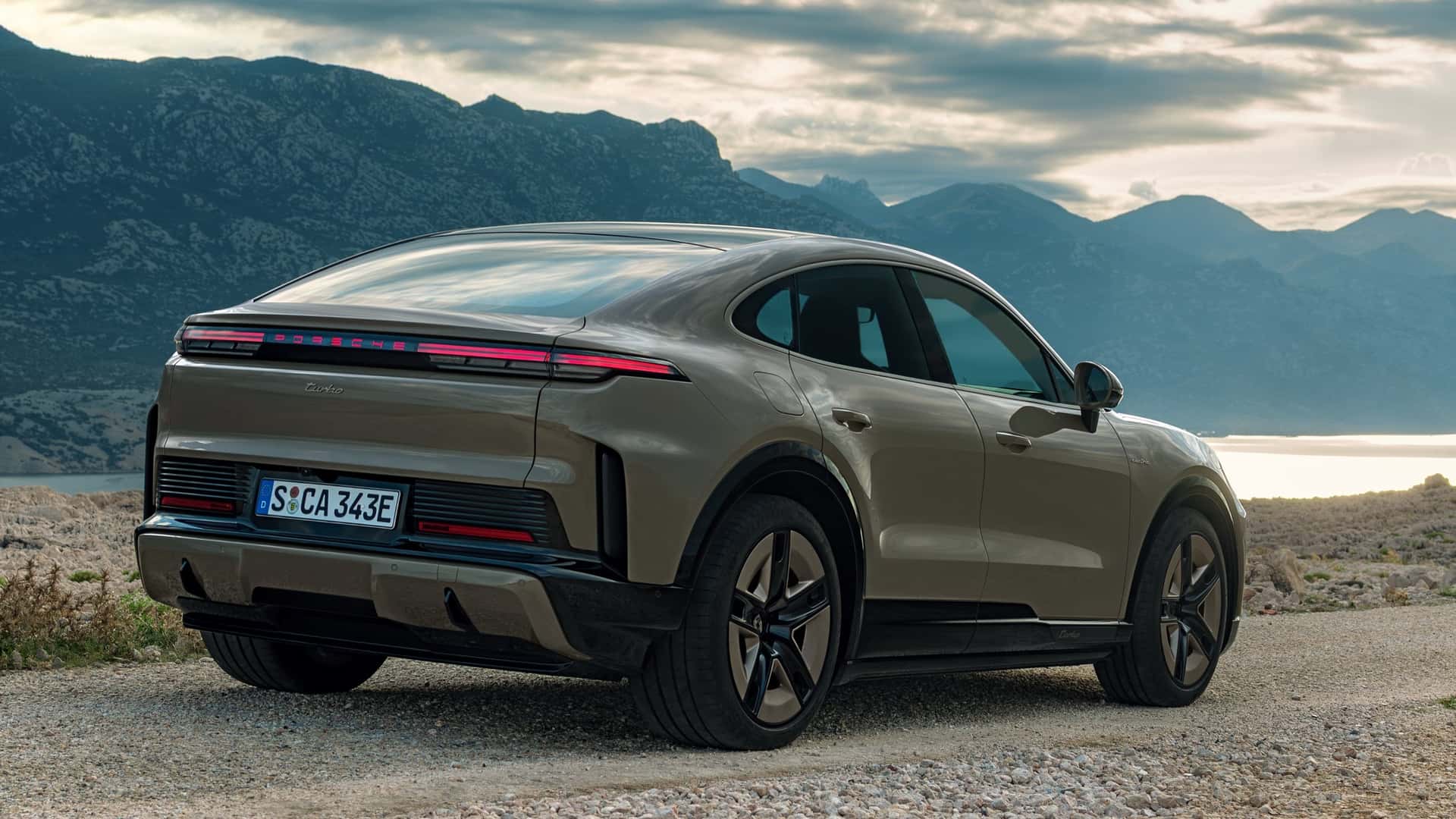
Reports suggest that after evaluating the cooling demand for high-end EVs, Porsche went back to the drawing board to see if a combustion-engine variant could be integrated into the K1’s architecture. As of mid-2026, the company remains undecided on whether to move forward with the model at all. The hesitation reflects a broader internal conflict: does the market need a larger, more expensive SUV, or would that capital be better spent on refining the core lineup and protecting the 911’s status?
The indecision surrounding the K1 is symptomatic of a larger issue within the Volkswagen Group ecosystem: the difficulty of balancing massive R&D budgets against volatile consumer demand.
Operational Realignment: Deepening Ties with Audi
To mitigate what Leiters described as costs that have "spiraled out of control," Porsche is deepening its collaboration with Audi. The two brands have long shared platforms, but the new, closer relationship is designed to streamline development costs significantly.
The most prominent example of this is the upcoming compact crossover, which will be the successor to the first-generation Macan. By utilizing mechanical underpinnings shared with the Audi Q5, Porsche is aiming to achieve economies of scale that would have been impossible if they had developed the vehicle entirely in isolation.
However, cost-cutting often comes at a human cost. While Leiters declined to comment on specific rumors regarding workforce reductions of 2,000 to 4,000 employees, the industry remains on high alert. A new, comprehensive cost-cutting program is expected to be finalized before the annual summer break in July, and analysts expect it will be one of the most aggressive restructurings in the company’s recent history.
Implications and Outlook
For investors and enthusiasts alike, the coming months will be a period of intense scrutiny. The "Motor1 Take" on the situation is clear: Porsche is in a delicate position, but it is far from broken. The decision to embrace a hybrid-heavy future for the 718 and its upcoming crossover lineup is a pragmatic move that acknowledges the current state of consumer demand.
Furthermore, the potential for a new flagship sports car—a hypercar positioned above the 911—shows that the brand has not lost its appetite for innovation. By focusing on "halo" products to maintain brand prestige while using shared platforms for high-volume crossovers, Porsche is attempting to execute a difficult balancing act.
Ultimately, the success of this strategy hinges on whether the brand can successfully convince its customers that a "smaller, more exclusive" Porsche is just as desirable as the record-breaking volume leader of 2023. If the first quarter of 2026 is any indication, the road ahead will be steep. But if history is any guide, Porsche has a unique ability to adapt its engineering genius to the prevailing winds of the market.
As we look toward the fall, the automotive world will be waiting for the official roadmap. Whether it involves the cancellation of the K1, the launch of a new hybrid sports car, or further austerity measures, one thing is certain: the Porsche of 2027 will look very different from the Porsche of 2023. The company is betting that, in this case, different will be better.