As the spring market blooms, the real estate sector finds itself at a unique crossroads. For homeowners contemplating a move, the decision to list a property in 2026 is no longer a simple matter of timing the seasons. Instead, it is an exercise in managing volatility, understanding shifting economic indicators, and adapting to a landscape where the balance of power remains in flux.
With monthly housing payments eclipsing the $2,600 threshold and home prices continuing to outpace wage growth, the dream of homeownership has become an endurance test for many. For those on the other side of the transaction—the sellers—the current environment requires a strategic approach that prioritizes flexibility over the rapid-fire gains seen during the pandemic era.
The State of the Market: Key Realities
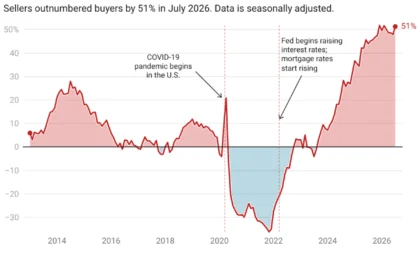
The current housing market is defined by a standoff between buyers and sellers. On one side, prospective buyers are grappling with near-record costs and a persistent sense of uncertainty. On the other, many would-be sellers are choosing to "stay put," opting to protect their low-interest rate mortgages rather than re-entering a market characterized by high borrowing costs and cooling demand.
Data from Redfin indicates that there are currently 470,000 more home sellers than buyers nationwide. While this gap has begun to narrow as both parties slowly re-engage, the market is far from the frenzied pace of years past. The result is a slow-moving, cautious environment where inventory is available, but the urgency to purchase has been dampened by broader economic pressures.
The Macroeconomic Headwinds
The housing market does not exist in a vacuum. A confluence of global and domestic factors is exerting downward pressure on market confidence:
- Geopolitical Instability: The ongoing conflict in Iran has introduced significant volatility into the energy sector. Rising energy costs contribute directly to inflation, which in turn influences the Federal Reserve’s interest rate policy and keeps mortgage rates elevated. While a potential peace deal offers a glimmer of hope for price relief, the long-term outlook remains tethered to global stability.
- Trade and Tariffs: New tariff policies and shifting trade landscapes are creating uncertainty for consumers, affecting household budgets and long-term financial planning.
- The AI Labor Shift: As the labor market evolves under the influence of artificial intelligence, workers are becoming more cautious about their financial futures. This hesitation to commit to major long-term debt—like a 30-year mortgage—is a palpable factor in current buyer behavior.
Chronology of a Shifting Landscape
To understand why the market feels so stagnant, one must look at the recent timeline of the industry. The post-pandemic surge created an environment of "easy money" and record-low inventory. However, starting in late 2025, the narrative began to shift as the cumulative effect of rising interest rates took hold.
- Mid-2025: High interest rates led to a wave of delistings. Homeowners who had refinanced at sub-3% rates realized that moving meant doubling their monthly payments, even if their home equity had skyrocketed.
- Late 2025: The gap between supply and demand began to widen, with buyers increasingly sidelined by the sheer cost of entry.
- Early 2026: Market participants began to stabilize, but the "new normal" emerged as one where homes sit on the market significantly longer than the record-fast timelines of 2022.
- Spring 2026: We are currently in a period of "cautious re-entry." Sellers are realizing that to move a property, they must be willing to offer concessions, participate in price adjustments, and accept that the days of "as-is" bidding wars are largely behind them.
Expert Analysis: The View from the Top
Daryl Fairweather, Chief Economist at Redfin, warns that sellers must recalibrate their expectations. "Home sellers should prepare for a strong buyer’s market," she notes. "Rising inventory has given buyers more options, but record costs have made them wary. Volatile mortgage rates and an uneasy job market are adding a layer of uncertainty as well."
According to Fairweather, the current market is one of negotiation. While affordability is showing signs of slow improvement, the buyers who are currently active are those who have done their homework. They are prepared to walk away if a property is overpriced, and they are leveraging their newfound options to secure favorable terms.
Chen Zhao, Head of Economics Research at Redfin, emphasizes the role of the global economy in domestic real estate. "Mortgage rates are reacting to the war in Iran," Zhao explains. "The peace deal nudged rates down, but long-term improvement depends on a stronger economic outlook. Unless homebuilding skyrockets or the country falls into a severe recession, housing affordability and buyer activity are unlikely to improve substantially."
Geographical Divergence: A Tale of Two Markets
It is a mistake to view the U.S. housing market as a monolith. The experience of a seller in the Midwest is vastly different from that of a homeowner in the Sun Belt.
The Competitive Midwest and Northeast
In cities like Rochester, New York, and Milwaukee, Wisconsin, the inventory shortage remains acute. Here, demand consistently outpaces supply, leading to localized pockets of competition. Sellers in these regions are still likely to see multiple offers and, in some cases, relatively quick sales. The lack of new housing starts in these areas has effectively created a floor for home prices.
The Shifting Sun Belt
Conversely, many cities in the Sun Belt are experiencing a cooling phase. Residents are increasingly wary of escalating climate risks and the surging cost of property insurance. As these costs mount, many homeowners are reconsidering their tenure, leading to a higher volume of listings that, when combined with a smaller pool of qualified buyers, creates a distinct buyer’s market.
Strategic Implications for Potential Sellers
If you are considering listing your home, the decision should be driven by a combination of financial readiness and market strategy. The "rules of the game" for 2026 are as follows:
When Selling Makes Sense
- Low Local Supply: If your specific neighborhood or city has a shortage of active listings, you are in a position of strength. Even in a high-rate environment, scarcity drives value.
- Anticipated Rate Drops: Should mortgage rates dip, expect an immediate influx of buyer demand. Being "market-ready" before a rate drop allows you to capitalize on the surge before inventory levels rise to match it.
- Life Circumstances: Sometimes, the personal necessity of a move—a new job, a growing family, or downsizing—outweighs the "optimal" market timing. In these cases, focus on professional staging and aggressive pricing to ensure your property stands out.
When to Hold Off
- High-Rate Constraints: If your target buyer demographic is particularly sensitive to mortgage rates, be aware that high rates shrink their purchasing power. If you are unwilling to adjust your price to accommodate their lower budget, you may find your home languishing on the market.
- Recent Refinance: If you have a locked-in, low-interest rate, the "cost of carry" for your next home may be prohibitive. Calculate the total cost of moving, including current interest rates and transaction fees, before concluding that a move is financially advantageous.
- Deferred Maintenance: In a competitive, selective market, buyers are less willing to take on "fixer-uppers." If your home requires significant repairs, the cost of completing them before listing is often recouped through a higher final sale price and a faster close.
Conclusion: The Path Forward
The reality of 2026 is that the era of effortless home selling is over. Today, a successful transaction requires a marriage of realistic pricing, strategic marketing, and professional guidance.
For those who decide to proceed, consider "phased marketing." By testing your pricing with a smaller audience—such as a pocket listing or an "off-market" approach—before registering your home on the Multiple Listing Service (MLS), you can gauge demand and refine your strategy without the penalty of "stale" days-on-market stats.
The market may be in a rut, but it is not frozen. By understanding the broader economic forces at play and accepting the shift in power toward the buyer, sellers can still achieve their goals. Whether you are relocating, downsizing, or simply looking to capture the equity built over the last several years, the key to success in 2026 is to move with intention, not impulse.