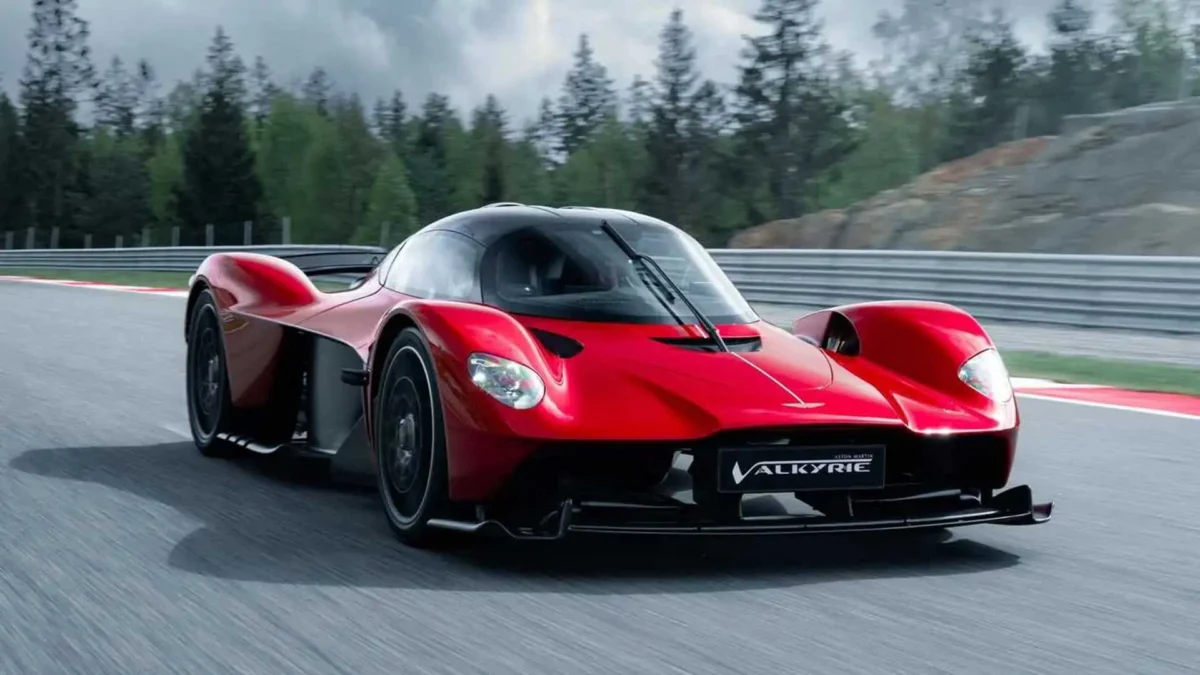
In the rarified world of hypercar manufacturing, where exclusivity is the hallmark and engineering perfection is the baseline expectation, even the most legendary marques are not immune to the complexities of modern automotive safety standards. Aston Martin has recently issued a voluntary safety recall affecting a segment of its most ambitious project to date: the Valkyrie.
While recalls are typically associated with mass-produced vehicles involving thousands or even millions of units, this particular campaign is remarkably intimate. Aston Martin has identified a potential mechanical defect in only seven 2024 model-year Valkyries. Despite the minuscule scope of the affected fleet, the technical nature of the issue—involving brake master cylinder seals and high-performance carbon-fiber components—highlights the extreme engineering thresholds at play when road-legal cars are built with the heart of a Formula 1 machine.
The Mechanical Root Cause
The technical heart of this recall lies within the brake master cylinder of Valkyrie models equipped with the optional track-oriented suspension configuration. According to the recall documentation filed with the National Highway Traffic Safety Administration (NHTSA), a specific seal within the brake master cylinder is susceptible to deformation.
Under standard operating conditions, the brake system functions as intended. However, if the seal undergoes this deformation, it triggers a cascading failure. The primary symptom is a disruption in the hydraulic fluid cycle: the seal prevents brake fluid from returning to the reservoir after the driver releases the brake pedal. Consequently, the hydraulic pressure remains trapped within the system, preventing the brake pads from retracting and leading to continuous, unwanted drag against the brake discs.
The danger of this "brake drag" is compounded by the Valkyrie’s extreme performance profile. Should the vehicle be operated in a high-intensity environment where brake discs are already subjected to immense thermal loads, the drag induces further friction and heat. Under specific, extreme circumstances, this localized heat can reach temperatures sufficient to ignite the resin within the carbon-fiber rear brake cooling ducts, presenting a potential fire hazard.
Chronology of the Discovery
The path to this recall reflects the meticulous and often lengthy process of forensic engineering. Aston Martin’s internal quality control teams first flagged a potential inconsistency in the braking system’s behavior in November 2022. Recognizing the gravity of any issue related to a vehicle’s stopping power, the manufacturer initiated a collaborative investigation with its tier-one supplier, Alcon, a firm globally renowned for high-performance braking systems.
For the subsequent two years, the teams engaged in a comprehensive review of the design, testing the hydraulic architecture against the real-world performance data of the Valkyrie. It was not until February 2025 that the root cause—the specific seal deformation under high-load cycles—was definitively isolated.
With the cause identified, the engineering teams moved to formulate a solution. By March 2025, a redesign of the master cylinder component was finalized. The transition to the updated parts began in September 2025. Following the rollout, the company’s internal "Critical Concerns Review Group" spent the early months of 2026 analyzing the data to determine the necessity of a formal recall. By late May 2026, the Recall Committee officially greenlit the voluntary safety campaign to ensure that every one of the seven affected vehicles is brought up to the latest safety specification.
Why Public Roads Are Not the Primary Concern
One of the most intriguing aspects of this recall is the extreme specificity of the conditions required for the failure to occur. The Valkyrie was designed as a track-focused vehicle, yet it is road-legal. The braking system issue is a byproduct of a design clash: the integration of Electronic Stability Program (ESP) and traction control into a system that was originally conceptualized without them.
According to the recall report, for the brake dragging to manifest, a highly specific set of environmental and operational variables must be met simultaneously:

- The vehicle must be equipped with the specific track suspension package.
- The car must be subjected to sustained, aggressive driving maneuvers that engage the Electronic Stability Program (ESP) repeatedly.
- The driver must rely heavily on the brake pedal during these high-intensity cycles.
Because the system does not allow for the simultaneous, harmonious modulation of brake fluid through both manual pedal input and automated ESP activation, the fluid displacement becomes erratic. Under normal driving conditions on public roads—where ESP intervention is minimal and brake temperatures remain within standard ranges—the conditions required for the seal to deform and cause drag simply do not exist. Therefore, owners are at virtually no risk during daily operation.
Implications for the Valkyrie Owner
For the seven owners of the affected vehicles, the recall represents a necessary technical update rather than an indictment of the car’s overall capabilities. Aston Martin has outlined a clear path to resolution. Owners will be instructed to present their vehicles to an authorized Aston Martin dealership.
The remedy involves a comprehensive replacement of the existing brake master cylinder with a newly engineered component designed specifically to interface seamlessly with the ESP and traction control systems. Given the complexity of the Valkyrie’s chassis and the limited access to these high-performance components, the repair is estimated to take up to five hours per vehicle. Aston Martin will perform this service at no cost to the owners.
The Engineering Philosophy: A "Safety-First" Culture
The decision to issue a voluntary recall for only seven cars underscores a shift in how boutique manufacturers approach liability and brand integrity. In the past, such a niche issue might have been addressed through a "silent service campaign" or a routine inspection during scheduled maintenance. However, in the modern regulatory environment, transparency is paramount.
By initiating a formal NHTSA recall, Aston Martin is demonstrating a commitment to safety that supersedes the inconvenience of the process. It also serves as a reminder of the "bleeding edge" nature of hypercar development. When a manufacturer attempts to force the technology of a track-only racer into a road-legal chassis, the margin for error in hydraulic and thermal management is paper-thin.
The Broader Context of Automotive Safety
While the Valkyrie recall is unique due to the low number of affected units, it joins a broader trend of increased scrutiny within the automotive industry. As vehicles become more reliant on software-driven safety features like ESP and adaptive braking, the complexity of these systems has increased exponentially.
Manufacturers are now dealing with "cascading failures"—where a minor hardware issue (a deformed seal) creates a software-hardware conflict (incompatible ESP modulation), leading to a significant safety risk (brake drag and heat). This interdependency is the new reality of automotive engineering. For a company like Aston Martin, maintaining the trust of a clientele that expects perfection is worth the logistical effort of a recall, even if that recall affects less than a handful of vehicles.
Final Perspective
The Valkyrie remains one of the most significant engineering achievements in automotive history, a car that blurs the lines between a Le Mans prototype and a road-legal grand tourer. While the necessity of a recall for a brake component might strike some as a blemish on its record, it should arguably be viewed in the opposite light: it is a testament to the rigorous, data-driven approach Aston Martin applies to its flagship product.
It took nearly four years to pinpoint a fault that would likely never surface in 99% of driving scenarios. That level of forensic detail, applied to seven individual cars, speaks volumes about the brand’s dedication to the safety of its customers and the long-term reliability of its most extreme creation. The seven owners of these affected Valkyries can rest assured that their machines will soon be equipped with the most robust, thoroughly vetted braking hardware available, allowing them to return to the track with full confidence in their vehicle’s performance.