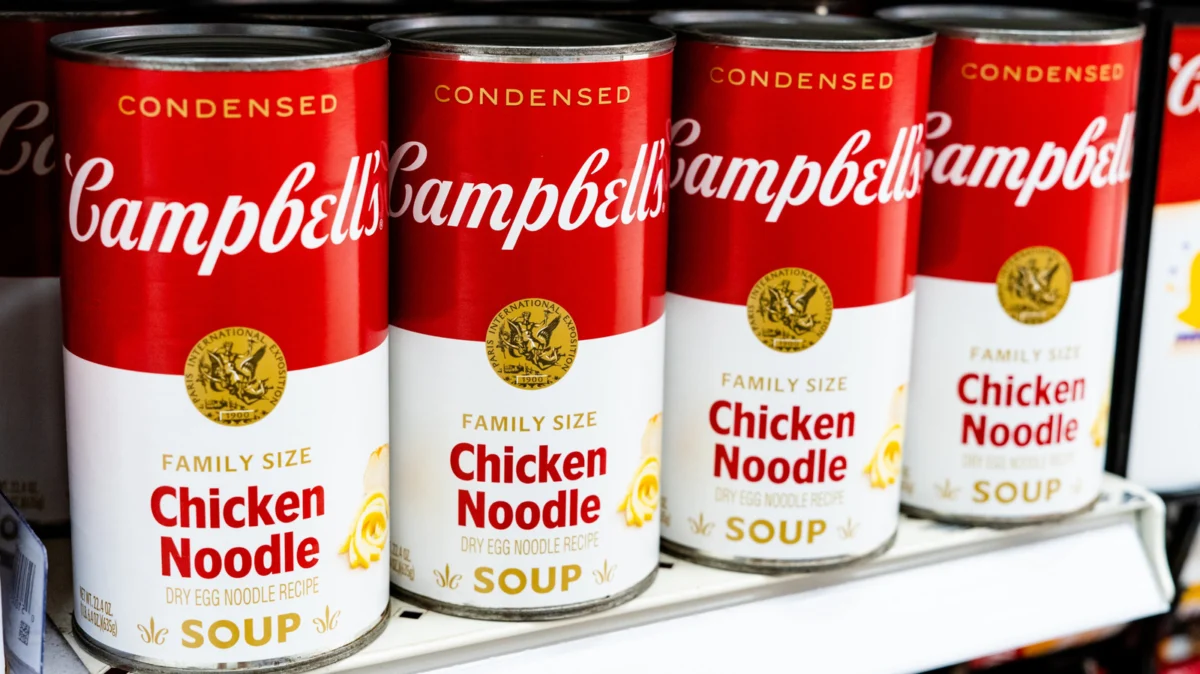
For nearly a century, the red-and-white label of Campbell’s Chicken Noodle Soup has served as the quintessential emblem of American comfort. Since its introduction in 1934, the product has transcended its status as a simple pantry staple, becoming a cultural touchstone for generations of families. Yet, for the estimated 30% of Americans who actively seek gluten-free alternatives—whether due to Celiac disease, gluten sensitivity, or lifestyle preferences—the iconic soup has long been a forbidden fruit.
In a landmark move for the soup giant, Campbell’s has announced the launch of its Condensed Gluten-Free Banza Chickpea Pasta and Chicken Soup, a strategic collaboration with the innovative pasta brand Banza. This development marks a significant evolution in the company’s product strategy, signaling a transition from traditional wheat-based recipes to ingredient-conscious formulations that do not compromise on the familiar, nostalgic flavor profile consumers have come to expect.
The Evolution of an Icon: A Brief Chronology
The story of Campbell’s is one of constant adaptation, but the journey toward a gluten-free chicken noodle soup has been a methodical, years-long endeavor.
- 1934: Campbell’s launches its legendary Chicken Noodle Soup, which quickly cements its place as a household name.
- 2013: The brand reports an astonishing 200 million cans of Chicken Noodle Soup sold in a single year, highlighting the depth of its market penetration.
- 2023: Recognizing the growing demand for dietary inclusivity, Campbell’s pivots toward the "cooking soup" market by introducing gluten-free versions of its Cream of Mushroom and Cream of Chicken soups, utilizing rice flour as a thickener.
- 2026: Campbell’s officially enters the high-demand gluten-free pasta market through a partnership with Banza, launching the first-ever gluten-free iteration of its flagship Chicken Noodle soup.
This trajectory reflects a broader corporate philosophy: while the core identity of the brand remains rooted in "comfort," the definition of that comfort is expanding to ensure that no demographic is left behind.
The Science of the Swap: Partnering with Banza
The primary technical challenge in creating a gluten-free chicken noodle soup has always been the noodle itself. In a canned environment, gluten-free pasta often loses its structural integrity, turning mushy or disintegrating entirely when exposed to the heat and moisture of a broth-based soup.
Campbell’s addressed this by partnering with Banza, a company that has already garnered significant acclaim for its high-protein, chickpea-based pasta alternatives. Chickpea flour provides a structural density that allows the noodles to remain firm, "al dente," and satisfying even after sitting in a canned broth for an extended period.
For the consumer, this means the eating experience remains virtually identical to the original. Early feedback from initial retail testing suggests that the "mouthfeel" of the chickpea pasta is remarkably similar to traditional wheat noodles, a detail that was essential for the product’s success. As one Amazon reviewer noted, "It’s the classic flavor you grew up loving… I honestly can’t tell it’s gluten-free."
Market Dynamics and Consumer Implications
The introduction of this product is not merely a culinary experiment; it is a calculated response to shifting market demographics. According to data regarding dietary habits, the gluten-free market is no longer a niche corner of the food industry.
Accessibility and Pricing
The new soup is currently available on platforms like Amazon and is rolling out to traditional grocery retailers nationwide. With a suggested retail price of $1.99 per can, it sits slightly above the price point of standard Campbell’s offerings, aligning more closely with the brand’s "premium" or specialized product lines.
While the price hike may be a point of friction for some, it reflects the increased cost of sourcing specialized, gluten-free ingredients like chickpea flour. For the consumer, however, the value proposition lies in the accessibility. Prior to this, those requiring gluten-free diets often had to rely on artisanal, expensive, or hard-to-find specialty brands. Having a mass-market, trusted label like Campbell’s provide a safe, affordable option is a significant win for households managing Celiac disease or gluten intolerance.
The "Cooking Soup" Precedent
It is important to note that the success of this new release is built upon the groundwork laid by the 2023 release of the gluten-free Cream of Mushroom and Cream of Chicken soups. By successfully swapping wheat flour for rice flour in those cooking bases, Campbell’s proved that it could maintain its signature flavor profiles while adhering to strict dietary standards. The overwhelming positive feedback—with the Cream of Mushroom soup garnering over 2,000 glowing reviews—provided the data-backed confidence needed to tackle the more complex challenge of a pasta-based soup.
Addressing the "Missing Link" in Dietary Inclusion
For many, the appeal of Campbell’s is rooted in nostalgia. The Celiac Disease Foundation has long highlighted the difficulty of navigating the soup aisle, where wheat flour is frequently used as a thickener, and barley is common in vegetable-heavy varieties. This hidden gluten often forces families to avoid canned soups entirely, depriving them of a quick, reliable meal.
By creating a product that is both gluten-free and widely available, Campbell’s is effectively lowering the barrier to entry for the gluten-free community. It acknowledges that people with dietary restrictions want the same things everyone else does: a warm, quick, and comforting meal that doesn’t require a special trip to a health food store or an expensive, specialized ingredient list.
Challenges and Future Outlook
Despite the praise, the product is not without its critics. Some early consumers have pointed to a desire for a higher ratio of noodles to broth, a common critique in the soup industry that highlights the difficulty of balancing ingredient cost with consumer expectations. However, the consensus regarding the quality of the noodles themselves remains high.
Looking forward, the success of the Banza collaboration may set a precedent for future partnerships. If the market continues to demand more inclusive versions of legacy products, we may see Campbell’s expanding its gluten-free footprint into other categories, such as vegetable-heavy minestrones or heartier, protein-packed chowders.
The company has successfully managed to balance its 90-year history with the realities of the 21st-century pantry. By acknowledging that comfort is a universal language—one that should not be defined by the presence or absence of wheat—Campbell’s has secured its relevance for another generation of soup lovers. As the industry moves toward more transparent and inclusive labeling, Campbell’s serves as a prime example of how a heritage brand can evolve without losing its soul.
In conclusion, while the $1.99 price point may be a modest premium to pay, the return on investment—the ability to enjoy a piece of culinary history safely and deliciously—is likely to be a massive success for both the company and the millions of Americans who have been waiting for this exact can to hit the shelf.