Introduction: A Riff in the Canopy
For decades, Saul Hudson—universally known as Slash—has been defined by his iconic top hat, cascading curls, and the searing guitar solos that cemented Guns N’ Roses as titans of rock history. Yet, beneath the leather and the Marshall stacks lies a lifelong devotion that few casual fans fully appreciate: a profound, scholarly passion for herpetology. That passion has now culminated in a unique scientific tribute that bridges the worlds of music history and evolutionary biology.
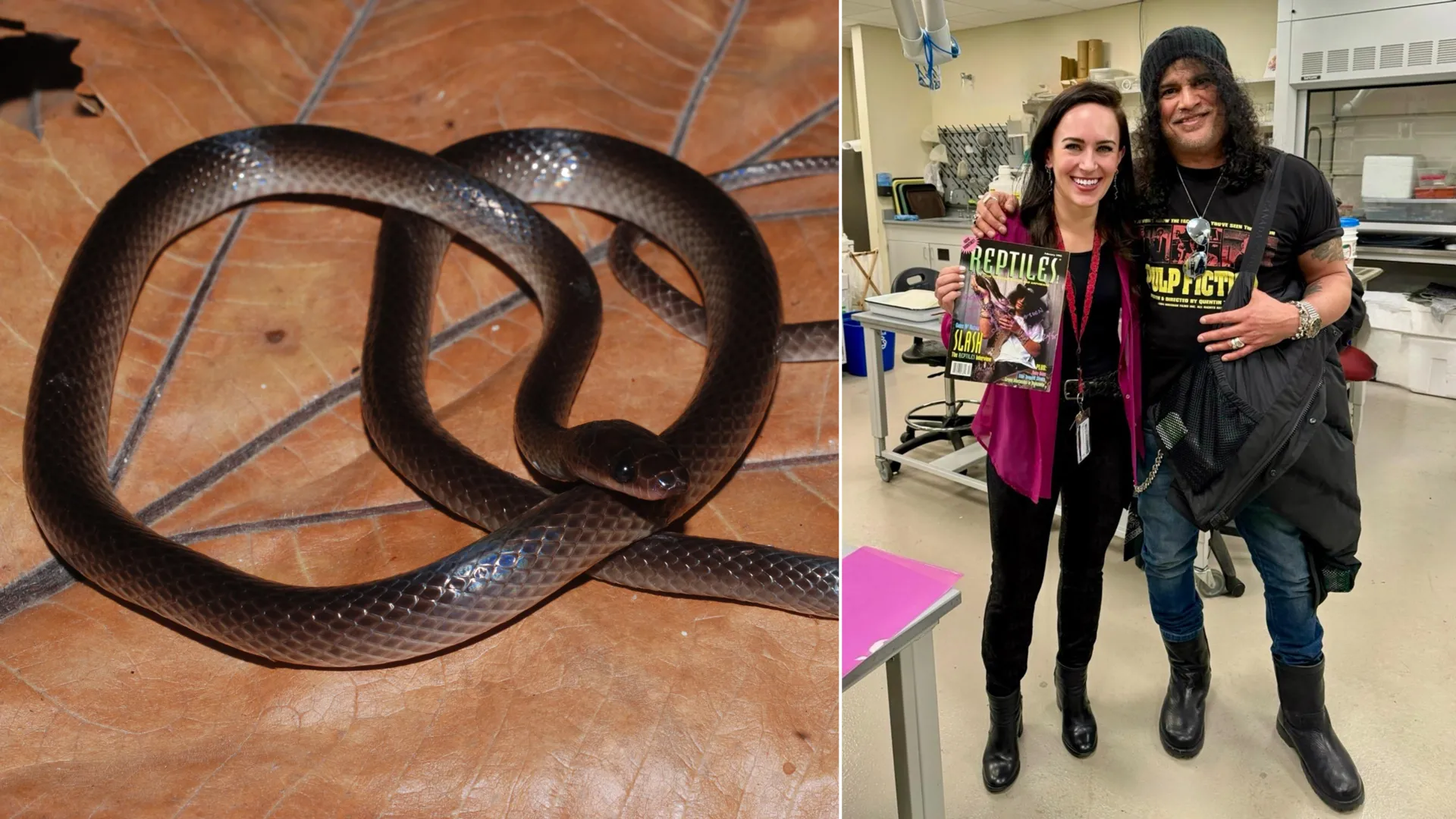
Researchers have officially christened a newly discovered species of groundsnake from the remote forests of New Guinea Lielaphis slashi, or "Slash’s groundsnake." The designation, published in the journal Zootaxa, marks a rare intersection where pop culture reverence meets rigorous taxonomic classification. For the scientists involved, the naming is not merely a novelty; it is a tribute to a man who, long before he was a household name, was an enthusiast championing the preservation of the natural world.
The Chronology of a Discovery
The journey of Lielaphis slashi began long before it was formally named in a laboratory. The story spans nearly two decades of fieldwork, beginning in the dense, unmapped tropical corridors of New Guinea.
2006: The Initial Encounter
The discovery traces back to a nocturnal expedition in 2006. Chris Austin, a professor and curator of herpetology at the Louisiana State University Museum of Natural Science, was navigating the island’s challenging terrain under the cover of darkness. In the biodiversity-rich forests of New Guinea, the night is when the true inhabitants emerge. It was during this expedition that Austin encountered a snake that defied his initial classification efforts.
"These New Guinea groundsnakes are nocturnal, so the best way to find them is at night," explains Austin. "They are typically found just after sunset at the base of large trees, scouting for food. Working at night in New Guinea requires extreme caution, as there are several highly venomous species that share physical characteristics with these non-venomous groundsnakes."
2016: The Collaboration
The specimen remained a subject of intrigue for years until 2016, when Dr. Sara Ruane, then a postdoctoral researcher, began working alongside Austin at LSU. Their collaboration focused on the poorly studied reptiles of the region. As they delved into the genetic data, the specimen collected by Austin in 2006 began to stand out. It wasn’t just another member of the existing Lielaphis genus; it was something entirely distinct.
2024: Formal Identification
Following years of rigorous genetic sequencing and ecological modeling led by the Field Museum’s Tianqi Huang, the team finalized their results. The snake, a reddish-brown reptile measuring approximately 28 inches in length, was formally described as Lielaphis slashi. The naming process, however, was guided by more than just data—it was guided by a deeply personal connection held by the lead author.
The Scientist’s Muse: A Childhood Connection
For Dr. Sara Ruane, now an Associate Curator of Herpetology at the Field Museum, the naming of the species represents the closing of a circle that began in her childhood.
"Guns N’ Roses was one of my favorite bands since I was in first grade," Ruane recalls. By the time she reached the fifth grade, she had already declared her intention to become a herpetologist. Her path was solidified when, at age twelve, she opened a copy of Reptiles Magazine to find Slash featured on the cover, cradling a pet reticulated python.
"I thought, ‘This guy is so cool,’" she says. Years later, while preparing the research paper, Ruane revisited that old interview. She was struck by how deeply the guitarist spoke about his childhood obsession with seeking out snakes in the wild, his appreciation for museums, and his support for natural history. It was a mirror of her own journey. When the time came to name the new species, Ruane realized there was no one more fitting to represent this elusive, nocturnal hunter.
Supporting Data: Unmasking the New Species
The classification of L. slashi was not a subjective choice; it was the result of a multi-faceted scientific investigation involving cutting-edge genetic analyses.
Genetic Distinction
"Using multiple cutting-edge genetic analyses, we found that L. slashi is genetically distinct from other similar snakes in the same genus," explains Tianqi Huang, the study’s first author. While the snake might appear mundane to the untrained eye, the molecular data told a different story.
Morphological and Ecological Markers
The team identified several key factors that separate L. slashi from its cousins:
- Scale Counts: The team performed detailed counts of the snake’s scales, discovering consistent differences that separated the new species from known variations within the genus.
- Ecological Modeling: Using environmental data, the researchers demonstrated that L. slashi occupies a specific ecological niche distinct from other New Guinea groundsnakes.
- Anatomy: While the snake is relatively small, its anatomy provides clues to its survival. It possesses large, specialized teeth in the rear of its mouth, which scientists believe are used to grip slippery prey, such as small lizards and reptilian eggs.
Official Responses
Slash’s Gratitude
Upon hearing the news, the legendary guitarist expressed a mix of disbelief and profound gratitude. "As a long-time herpephile, I am extremely honored and humbled to have Lielaphis slashi from New Guinea named after me," Slash stated. "It is really exciting; I never would have imagined this moment would arrive."
The Scientific Community
The research team, which includes experts from the Field Museum, Rutgers University, Slippery Rock University, and the Papua New Guinea National Museum and Art Gallery, views the naming as a vital engagement tool. By tethering a new species to a cultural icon, they hope to bring much-needed attention to the biodiversity of New Guinea—a region that remains one of the most mysterious and under-documented areas of the world.
Implications: The Fragility of Biodiversity
While the discovery of L. slashi is a cause for celebration, it serves as a stark reminder of the environmental fragility of the New Guinea region.
The Threat of Industry
New Guinea, the world’s second-largest island, is a hotspot for biodiversity. However, its forests are increasingly under siege. Dr. Ruane notes that the habitats favored by L. slashi are currently threatened by commercial interests, specifically coffee farming and mining operations.
"That’s part of why describing the species that live there is important," Ruane asserts. "Every species should be recognized in order for us to better understand how ecosystems work, how everything fits into the environment. We can’t conserve animals or other living things that we don’t know about."
A Call to Conservation
The formal identification of L. slashi is an essential step in the conservation process. By documenting the species, scientists create a legal and biological foundation for protecting its habitat. If the land is not identified as the home of a unique, newly named species, it is far easier for commercial entities to justify its clearing.
Furthermore, the study highlights that while Guns N’ Roses may have earned the moniker of the "most dangerous band in the world," the reptilian namesake of their lead guitarist is entirely harmless to humans. The snake is non-venomous and plays a quiet, vital role in the delicate web of the New Guinea undergrowth.
Conclusion: A Lasting Legacy
The story of Lielaphis slashi is more than a taxonomic update; it is a testament to the power of curiosity. It connects a young girl reading a magazine in the 1990s to a rock star who never lost his sense of wonder, and to the researchers working today to map the remaining mysteries of our planet.
As we continue to lose species to habitat destruction at an alarming rate, the work of researchers like Ruane, Austin, and Huang becomes ever more critical. By naming this snake after a figure who has long advocated for the natural world, they have ensured that Slash’s contribution to the planet extends far beyond the stage. Lielaphis slashi now slithers through the New Guinea rainforest, a living, breathing piece of history, serving as a reminder that science, like rock and roll, is best pursued with passion, persistence, and a healthy dose of curiosity.