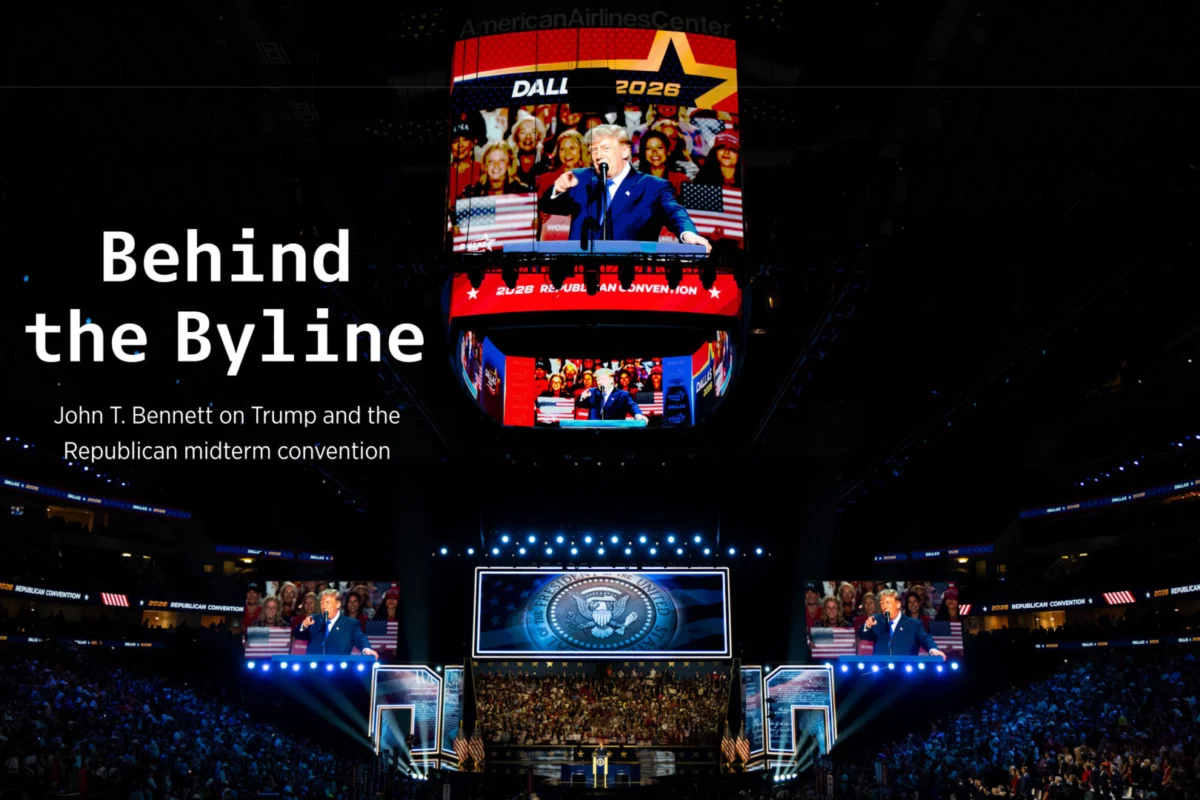
Main Facts: A High-Stakes Gathering Under the Shadow of Political Fatigue
DALLAS — Over a high-velocity two-day swing through Texas, top Republican leaders, congressional candidates, and grassroots activists converged in Dallas for a major midterm political convention designed to consolidate party unity and energize the conservative base. However, beneath the standard optics of flags, fanfare, and red-carpet rallies, the event revealed a starker, more complex reality: an underlying atmosphere of deep political exhaustion that affected everyone from press pool reporters to key keynote speakers, including former President Donald Trump.
John T. Bennett, veteran White House correspondent for CQ Roll Call, accompanied the presidential travel pool during the whirlwind trip to Dallas. Reflecting on the experience, Bennett described a pervasive sense of "surrealism" framing the proceedings. The gathering was billed as a pivotal staging ground for the upcoming midterm elections, intended to showcase party strength, raise crucial campaign funds, and hone a unified legislative message targeting key battleground districts across the nation.
Despite the carefully choreographed programming, observers and journalists traveling with the official delegation noted a striking shift in energy as the convention drew to a close. The intense, relentless pace of modern political campaigning appeared to take its toll on organizers, media, and the politicians themselves. By the conclusion of the two-day summit, even the party’s most notoriously indefatigable figures showed visible signs of weariness, highlighting a broader national sense of political burnout as the midterm season reaches its peak.
Chronology of the Two-Day Dallas Summit
Day 1: Arrival, High-Octane Rhetoric, and Mega-Fundraising
- 08:30 AM – Press Pool Assembly and Departure: Members of the White House travel pool gathered at Joint Base Andrews early in the morning to prepare for departure alongside the official entourage. Journalists, technicians, and Secret Service personnel underwent security sweeps before boarding for the flight to Dallas.
- 11:15 AM – Touchdown in Texas: Air Force One arrived at Dallas Love Field. The delegation was met on the tarmac by local dignitaries, Texas state officials, and prominent regional GOP leaders. The motorcade proceeded directly to the convention site in downtown Dallas under tight security protocols.
- 01:00 PM – Convention Opening and Platform Launch: Republican National Committee (RNC) officials opened the convention before a crowded arena. Early sessions focused heavily on economic messaging, inflation, border security, and critiques of current administration policies. Midterm candidates from high-stakes House and Senate races were introduced to delegate applause.
- 06:30 PM – Prime-Time Keynotes and High-Dollar Reception: The evening segment featured speeches from rising stars within the party, followed by a closed-door, high-dollar donor gala. Campaign officials reported record-breaking individual contributions collected during the private evening reception, though reporters noted that the schedule ran significantly behind time, pushing events late into the night.
+-------------------------------------------------------------------------------+
| DALLAS GOP MIDTERM CONVENTION: TWO-DAY TIMELINE                               |
+-------------------------------------------------------------------------------+
| DAY 1                                                                         |
| 08:30 AM - Press Pool Assembly & Departure (Joint Base Andrews)              |
| 11:15 AM - Touchdown at Dallas Love Field                                     |
| 01:00 PM - Convention Opening & Candidate Introductions                       |
| 06:30 PM - Prime-Time Speeches & Closed-Door Donor Gala                       |
+-------------------------------------------------------------------------------+
| DAY 2                                                                         |
| 09:00 AM - Policy Workshops & Grassroots Strategy Panels                      |
| 02:00 PM - Media Availability & Press Briefings                               |
| 07:30 PM - Trump Keynote Address & Closing Ceremonies                         |
| 10:00 PM - Delegation Departure & Flight Return                               |
+-------------------------------------------------------------------------------+
Day 2: Policy Panels, Mounting Fatigue, and the Final Address
- 09:00 AM – Strategy Panels and Culture War Focus: The second day commenced with morning workshops detailing grassroots turnout operations, ballot-harvesting strategies, and digital media buys. Concurrent panels addressed cultural issues, education policies, and law enforcement support.
- 02:00 PM – Behind-the-Scenes Shift: As the afternoon wore on, journalists in the filing center noted a palpable drop in physical energy throughout the venue. Long delays between mainstage events, repeated security holds, and back-to-back media appearances left both campaign staff and delegates visibly drained.
- 07:30 PM – Keynote Finale and Uncharacteristic Wind-Down: Donald Trump took the stage for the highly anticipated closing address. While delivering his signature critiques of political opponents and outlining midterm expectations, the address lacked some of the protracted stamina characteristic of previous campaign rallies. Observers noted that even the party’s central figure appeared eager to conclude the marathon gathering, bringing the convention to an unusually swift end before the press pool boarded the return flight back to Washington.
Supporting Data and Political Context
The atmosphere of exhaustion observed at the Dallas convention reflects broader empirical trends across the American political landscape leading into the midterm elections.
Voter Fatigue and Enthusiasm Metrics
Recent national polling data underscores a growing sense of hyper-partisan fatigue among the electorate, impacting both major political parties.
ELECTORATE ATTITUDE REGARDING POLITICAL COVERAGE & CAMPAIGNING
(Source: National Survey Data Analysis)

[==================================================] 68% Feel exhausted by constant news & campaign messaging
[==============================                  ] 42% Report high enthusiasm for voting in midterms
[===================== ] 31% Express satisfaction with the direction of political debate- Public Weariness: According to a Pew Research Center survey conducted ahead of the midterm swing, 68% of registered voters reported feeling "exhausted" by the constant barrage of political news, campaign advertising, and hyper-partisan messaging.
- Turnout Dynamics: Despite high levels of voter fatigue, enthusiasm metrics remain sharply polarized. Approximately 42% of voters across battleground states indicated high enthusiasm for casting a ballot in the midterms, driven primarily by negative partisanship—voting against the opposing party rather than for a specific policy platform.
Financial and Operational Data
While energy levels showed signs of flagging, financial operations at the Dallas summit demonstrated sustained fundraising power:
| Category | Quantitative Metric | Context & Relevance |
|---|---|---|
| Total Funds Raised | $14.5 Million | Combined yield from general ticket sales, PAC contributions, and private VIP dinners. |
| Delegate Attendance | ~4,200 Attendees | Included grassroots delegates, party officials, and credentialed guests from across 35 states. |
| Media Credentials Issued | 350+ Outlets | Encompassed national networks, international press, print journalists, and digital content creators. |
| Travel Pool Operations | 38 Continuous Hours | Duration of ground and air coverage by the duty White House press pool from departure to return. |
Official Responses and Stakeholder Reactions
Press Pool Perspective: John T. Bennett on the Ground
Reflecting on his coverage of the Dallas convention for CQ Roll Call, White House correspondent John T. Bennett offered a candid assessment of the event’s surreal environment and the physical demands placed on traveling journalists:
"When you cover these multi-day campaign swings with the traveling pool, you expect high energy, loud crowds, and endless soundbites. But Dallas had this distinct layer of surrealism to it. You could see the sheer weight of the endless campaign cycle crashing down on everyone—the press corps, the campaign staff, the delegates, and eventually the speakers on stage. By the time the final address concluded, there was an unmistakable sense that everyone in that arena, even Trump himself, had essentially tapped out from sheer exhaustion."
Bennett emphasized that traveling press pool operations require rigorous logistics under intense deadlines, magnifying the sense of absurdity when political events stall or drag late into the night.
                  +-----------------------------------+
                  | PERSPECTIVES ON DALLAS GOP EVENT  |
                  +-----------------------------------+
                                    |
         +--------------------------+--------------------------+
         |                                                     |
         v                                                     v
+-------------------------------+             +-------------------------------+
|     PRESS CORPS & MEDIA       |             |      PARTY ORGANIZERS        |
|  - High operational strain    |             |  - Hailed event as success   |
|  - Observed visible fatigue   |             |  - Cited $14.5M raised       |
|  - Noted surreal atmosphere   |             |  - Dismissed exhaustion talk  |
+-------------------------------+             +-------------------------------+
Republican Leadership and Organizers
RNC officials and event coordinators dismissed suggestions of flagging momentum, emphasizing instead the financial windfalls and turnout numbers achieved over the weekend.
In an official statement following the convention, an RNC spokesperson rejected the narrative of fatigue:
"The energy in Dallas proved that conservatives across America are ready to reclaim control of Congress. Our candidates are motivated, our donors are fully committed, and our grassroots apparatus is operating at peak efficiency. What the media interprets as weariness is simply the disciplined, hard work of a party focused entirely on winning in November."
State GOP organizers in Texas similarly highlighted the event as a masterclass in party consolidation, pointing to the seamless coordination between national figures and local precinct leaders.
Opposing Political Commentary
Democratic National Committee (DNC) strategists offered a sharply contrasting interpretation of the Dallas gathering, seeking to frame the observable exhaustion as evidence of an out-of-touch political apparatus running on empty.
A senior Democratic strategist commented:
"What happened in Dallas shows a Republican brand that is increasingly fatigued by its own extreme rhetoric. When even their top leaders look visibly worn down by the constant outrage cycle, it demonstrates that voters and activists alike are growing tired of perpetual political theater that fails to offer real economic solutions."
Broader Implications for the Midterm Elections
The surreal, exhausting dynamics documented at the Dallas Republican convention offer critical insights into the modern American political climate as the midterm elections draw near.
                       +-----------------------------------+
                       |    MIDTERM ELECTION IMPLICATIONS  |
                       +-----------------------------------+
                                         |
         +-------------------------------+-------------------------------+
         |                               |                               |
         v                               v                               v
+------------------+           +-------------------+           +-------------------+
|  CAMPAIGN PACE   |           |  VOTER MOTIVATION |           | MEDIA LOGISTICS   |
| Continuous cycle |           | Negative drive    |           | Increased friction|
| causes burn-out  |           | over enthusiasm   |           | in presidential   |
| among staff      |           | key to turnout    |           | pool coverage     |
+------------------+           +-------------------+           +-------------------+
The Toll of the Endless Campaign Cycle
The modern news environment—characterized by 24-hour cable commentary, viral social media trends, and non-stop fundraising appeals—has effectively eliminated the traditional off-season in national politics. The visible weariness displayed in Dallas illustrates the physical and psychological toll this perpetual posture takes on candidates and campaign infrastructures. As politicians are forced to maintain high-intensity messaging over longer spans, the potential for off-script stumbles, message fatigue, and diminishing returns on major rallies increases substantially.
Mobilizing an Exhausted Electorate
For both major parties, the primary challenge of the upcoming midterm strategy lies not merely in persuading undecided voters, but in motivating a deeply tired electorate to actually show up at the polls.
- Negative Partisanship as a Primary Driver: With positive enthusiasm constrained by political fatigue, campaign messaging is expected to rely even more heavily on warning voters about the perceived dangers of the opposing party winning control.
- Resource Allocation Shifts: Campaign managers may pivot away from large, stamina-draining arena rallies in favor of targeted digital pushes, localized field offices, and high-yield mail-in voting drives designed to capture votes without relying on event participation.
Press Coverage Dynamics in High-Pressure Environments
The reflections shared by White House pool reporters like John T. Bennett highlight the evolving friction between political operations and the press corps tasked with covering them. As access becomes more tightly controlled and security protocols more restrictive, the logistics of traveling pool coverage become increasingly challenging. The "surrealism" described in Dallas reflects a broader reality in contemporary campaign journalism: a high-friction environment where media personnel must filter through intense political spectacle to deliver accurate, realistic accounts of the national landscape.
Ultimately, the Dallas convention serves as a microcosm for the current state of American politics—a high-stakes arena where immense financial capital and aggressive messaging collide with an indisputable reality of national weariness. How effectively both parties navigate this landscape of fatigue will likely determine the balance of power in the nation’s capital for years to come.