In the rapidly evolving landscape of automotive technology, few decisions have sparked as much consumer ire—and industry speculation—as General Motors’ 2023 declaration that it would phase out Apple CarPlay and Android Auto from its future vehicle lineup. For years, these smartphone projection systems served as the gold standard for in-car connectivity, allowing drivers to seamlessly mirror their digital lives onto their dashboard screens. When GM announced it would transition exclusively to its own proprietary, Google-integrated infotainment software, the backlash was swift and severe.
However, recent developments suggest that the automotive giant is quietly reconsidering its hardline approach. As GM prepares to launch its 2027 Chevrolet Silverado and GMC Sierra, the company is introducing a sophisticated new user interface that not only accommodates but elevates the integration of Apple CarPlay and Android Auto. This tactical shift, while perhaps not a complete reversal of the company’s long-term software strategy, represents a significant concession to market demand and user experience realities.
A Chronology of Conflict: From Integration to Exclusion and Back
The friction between GM and its customer base began in earnest in early 2023. At that time, General Motors announced a bold, high-stakes gamble: it would discontinue support for smartphone mirroring in its future electric vehicles (EVs). The automaker argued that by controlling the entire software stack, it could better integrate battery management, route planning for charging stops, and voice command functionality.
Industry analysts noted at the time that this move was largely about data ownership and the potential for recurring subscription revenue. By walling off the garden, GM hoped to own the ecosystem in which its customers lived while driving. The internet, however, remained unconvinced. Critics pointed out that while native systems had improved, they rarely matched the reliability, speed, and familiarity of the interfaces provided by Apple and Google.
For nearly two years, the narrative remained consistent: GM was committed to a post-CarPlay future. But as the 2027 model year approaches, the reality of the showroom floor has begun to dictate terms. The upcoming light-duty pickups—the bread and butter of GM’s North American sales volume—are set to debut with a dual-system approach. This evolution from "exclusion" to "coexistence" marks a turning point in the automaker’s digital strategy.
The 2027 Refresh: A New Era of Dashboard Harmony
The centerpiece of this update is a reimagined user interface that solves the "switching problem." Historically, drivers have had to toggle between the car’s native software and a smartphone projection screen, a process that can be distracting and clunky.
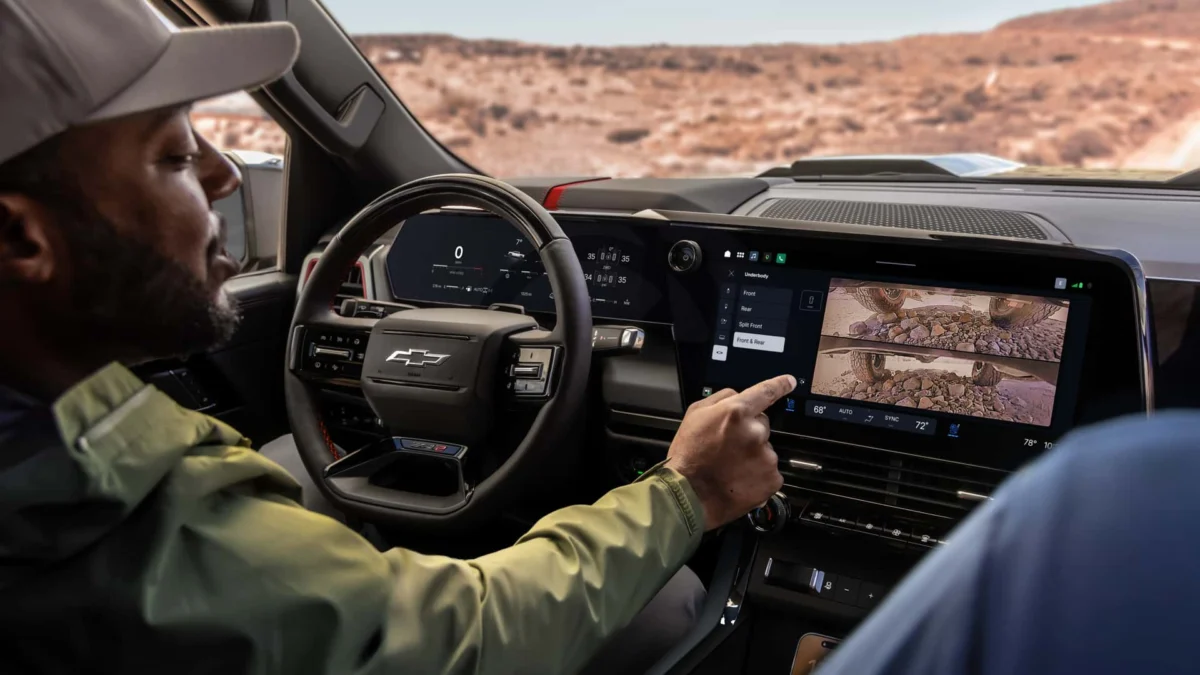
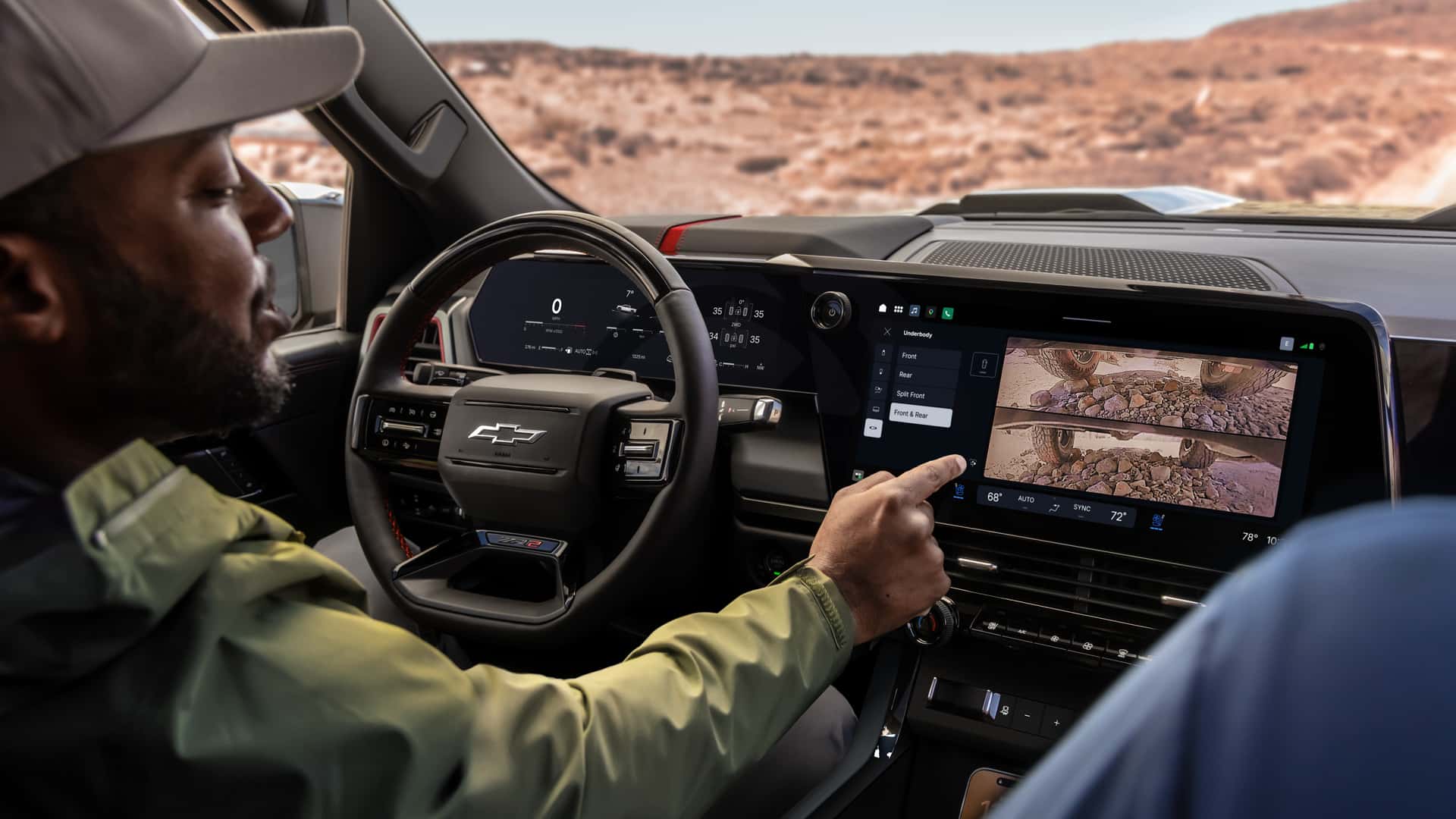
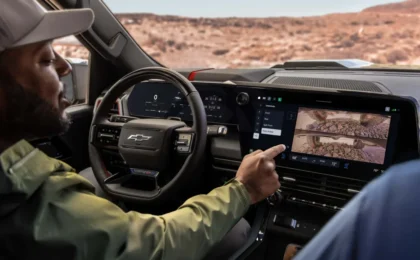
In the 2027 Silverado and Sierra, GM has implemented a side-by-side integration. The new UI allows the smartphone projection to occupy a significant window on the primary infotainment screen while simultaneously maintaining access to vehicle-specific controls and native systems. This means a driver can utilize the intuitive navigation of Google Maps or Apple Maps while keeping the truck’s climate, off-road, or towing settings just a tap away, without ever needing to exit the projection environment.
The system is designed to be "mode-aware." The gauge cluster and the center display adjust their high-contrast, information-dense graphics based on the vehicle’s current state. Whether the truck is crawling over rocks, towing a trailer, or engaged in hands-free highway driving via the upgraded Super Cruise system, the display prioritizes the most relevant data. The inclusion of 3D visualizations—which map traffic, lane markers, and other real-time environmental data—further underscores that GM is not abandoning its own sophisticated software, but rather choosing to augment it with the tools drivers actually want.
Official Stances and the "Scalable Foundation"
The ambiguity surrounding the expansion of this feature has led to intense debate. When GM noted that its new software foundation was "scalable" and could "extend across electric, gas, and diesel-powered vehicles," many interpreted it as an admission that the company would eventually bring CarPlay back to its EV fleet.
GM, however, has been careful to manage these expectations. In an official statement provided to Motor1, a spokesperson clarified the terminology:
"A ‘scalable foundation’ is intended to convey flexibility of the framework, not signify future implementations. The 2027 light-duty pickups are our highest-volume vehicles and among the most important in our portfolio, so that’s where the team’s focused. And because these are gas-powered trucks, they were always going to support CarPlay and Android Auto. Now, the experience is more integrated, so drivers can enjoy native and CarPlay/AA features on the same screen."
This statement highlights a clear distinction in GM’s internal philosophy: gasoline-powered vehicles, which have traditionally featured these systems, will continue to do so with improved integration. However, the company stops short of promising a return of smartphone mirroring to its EV lineup, where the push for a proprietary, data-rich ecosystem remains the primary strategic driver.
Supporting Data: Why Consumers Are Voting with Their Phones
The tension between automakers and tech giants is rooted in a fundamental disagreement over who owns the "dashboard real estate." According to recent surveys, over 70% of new car buyers consider Apple CarPlay or Android Auto a "must-have" feature. For many, the choice of a vehicle is often dictated by its ability to mirror the smartphone they already use for messaging, music, and navigation.
Automakers fear that by allowing Apple and Google to control the center screen, they are surrendering the customer relationship to third-party tech companies. Yet, the data suggests that when automakers force their own inferior systems on users, customer satisfaction scores plummet.
GM’s decision to integrate both systems side-by-side is a compromise designed to keep the user within the GM environment (for vehicle controls) while keeping them happy (via their preferred phone OS). It is an admission that the "all-or-nothing" approach is a losing battle in a competitive market where consumer choice is king.
Broader Implications: The Future of In-Car UX
The move by GM has ripple effects across the industry. Competitors are watching closely. Companies like Rivian have taken a similar path to GM’s original plan, doubling down on proprietary software and even suggesting that advancements in Artificial Intelligence will eventually make the "CarPlay debate" obsolete. Others, such as Ford, have taken the opposite approach, publicly committing to keeping smartphone projection systems because their customers "really enjoy" them.
The implication for the future is a bifurcation of the market. We are likely to see two distinct philosophies:
The Tech-Integrated Model: Automakers that leverage AI and deep software integration to create an experience so superior that users don’t feel the need to use their phones.
The Hybrid Model: Automakers that realize the "third screen" (the car’s display) is an extension of the smartphone, and that forcing a walled garden is a hurdle to sales, not a competitive advantage.
For now, General Motors is straddling the line. By prioritizing the user experience in its most important vehicles—the high-volume trucks—GM is acknowledging that the customer is the ultimate arbiter of value. If the 2027 Silverado and Sierra see high adoption rates and positive feedback for this dual-interface system, the pressure on GM to roll out similar capabilities to its EV lineup will become immense.
Conclusion: A Lesson in Adaptability
General Motors’ trajectory regarding Apple CarPlay and Android Auto serves as a masterclass in the complexities of the modern automotive industry. It is a sector caught between the desire to become a "software-defined" company and the reality of meeting the expectations of a consumer base that values consistency and ease of use above all else.
Whether this represents a permanent pivot or a temporary tactical retreat remains to be seen. What is clear is that the "boneheaded move," as some critics once labeled the exclusion of smartphone mirroring, has evolved into a sophisticated engineering challenge. GM has figured out how to have its cake and eat it too: keeping its own proprietary system at the heart of the vehicle’s identity while providing the seamless connectivity that users demand.
As we look toward the 2027 model year, the industry will be watching to see if this hybrid approach proves to be the winning formula. For the average driver, however, the result is the most important thing: a dashboard that finally respects their preference for the tech they carry in their pockets. In the high-stakes game of automotive UX, the consumer has once again proven that they, not the automaker, hold the ultimate control.