Introduction: A Nation Abandoned
The international community is facing a moral crisis of its own making as Afghanistan teeters on the brink of total collapse. UN High Commissioner for Human Rights Volker Türk issued a harrowing warning this week, characterizing the situation in Afghanistan as a catastrophic convergence of state-sponsored repression, systemic poverty, and an unprecedented humanitarian withdrawal by global powers. As international funding evaporates, the Afghan population—now numbering over 21.9 million in dire need of aid—is being left to navigate an increasingly brutal regime without the safety net of global intervention.
The High Commissioner’s remarks serve as a piercing indictment of the "deafening global silence" regarding the plight of the Afghan people. Beyond the geopolitical apathy, the Taliban’s internal policies have hardened, transforming the country into what human rights organizations and UN officials now unequivocally label as a system of "gender apartheid."
Main Facts: The Anatomy of Repression
The current reality in Afghanistan is defined by a systematic dismantling of civil society and the total erasure of women from the public sphere. Since the Taliban’s return to power in 2021, the de facto authorities have implemented a rigid interpretation of Sharia law that has decimated the fundamental rights of its citizens.
The Erosion of Personal Liberty
The Taliban’s governance is enforced through a combination of psychological intimidation and physical brutality. During the first half of 2026 alone, the UN documented at least 449 instances of state-sanctioned corporal punishment. These public displays of violence serve as a chilling deterrent against dissent. Furthermore, the regime maintains strict policing of daily life, including aggressive monitoring of dress codes, the enforcement of mandatory beard lengths for men, and the total prohibition of music in public spaces.
The "Gender Apartheid" Crisis
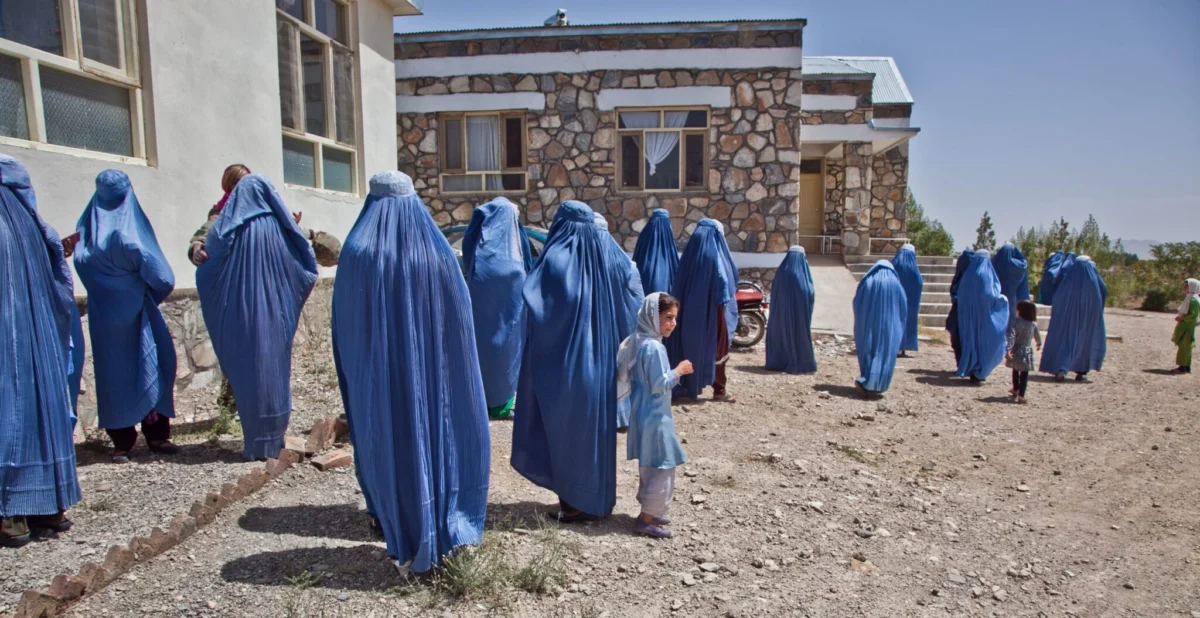
The most egregious aspect of the current administration is the systematic exclusion of women. Over two million girls have been denied access to education beyond primary school since 2021. The situation has deteriorated further this year with the introduction of new legal frameworks that effectively strip women of their bodily autonomy. New decrees complicate the legal process for women seeking to separate from abusive spouses and, according to recent reports, provide a legal veneer for child marriage and domestic violence.
The Georgetown Institute for Women, Peace and Security (GIWPS) has been among the most vocal critics, pointing out that the Taliban’s new "Criminal Procedural Regulations for Courts" stand in direct violation of the Cairo Declaration of Human Rights in Islam, failing to uphold the core guarantees of human dignity and equal protection under the law.
Chronology: A History of Upheaval
To understand the current crisis, one must view the timeline of Afghanistan’s modern history as a series of repeated traumas.
- September 1996: The Taliban first seizes control of Kabul, establishing an Emirate characterized by extreme isolationism and the suppression of women’s rights, lasting until the U.S.-led intervention in 2001.
- August 2021: Following the withdrawal of international coalition forces, the Taliban recaptures Kabul, initiating the current era of de facto rule.
- July 2025: The International Criminal Court (ICC) issues arrest warrants for Taliban leader Haibatullah Akhundzada and Chief Justice Abdul Hakim Haqqani, citing systemic persecution based on gender.
- December 2025: The Permanent People’s Tribunal for Women of Afghanistan rules that the Taliban’s treatment of women constitutes crimes against humanity under the Rome Statute.
- 2026 (Ongoing): A year marked by record-high forced returns of Afghan refugees from neighboring countries and a sharp decline in international humanitarian funding, leaving millions in a state of acute vulnerability.
Supporting Data: The Humanitarian Toll
The statistics surrounding the Afghan crisis paint a picture of a nation in freefall. The humanitarian sector, once a lifeline for millions, is struggling to sustain operations as global attention shifts to other conflicts.
The Refugee Crisis and Forced Returns
Regional pressures have exacerbated the internal disaster. In 2025 alone, Iran and Pakistan expelled an estimated 2.6 million Afghans, of whom approximately 60 percent were women and children. These deportations have been labeled as "unlawful" by Amnesty International, as they violate the principle of non-refoulement—the international legal standard that forbids returning individuals to countries where they face a real risk of persecution or grave human rights violations.
Many of these returnees have never lived in Afghanistan, arriving in a country where they lack social networks, employment opportunities, and access to basic services like clean water and healthcare. For these individuals, the "return" is not a homecoming but a sentencing to extreme poverty.
The Financial Chasm
The decline in international aid is not merely a budgetary matter; it is a death sentence for millions. With 21.9 million people in need of urgent assistance, the UN warns that the withdrawal of foreign aid is directly linked to the rising mortality rates and the collapse of the rudimentary medical and educational infrastructure that managed to survive the 2021 transition.
Official Responses and Legal Accountability
The international legal community has begun to move beyond mere condemnation, though enforcement remains a formidable challenge.
The ICC and International Tribunals
The arrest warrants issued by the ICC in 2025 were a landmark moment in international law, marking a shift toward holding specific Taliban leaders individually responsible for crimes against humanity. The ruling by the Permanent People’s Tribunal in The Hague reinforced this, providing a comprehensive legal analysis of how the Taliban’s decrees violate binding international human rights treaties to which Afghanistan remains a signatory.
The Call to Action
Volker Türk’s message to the global community was unequivocal: governments must prioritize the lives of Afghan citizens over political convenience. He urged the international community to:
- Halt forced returns: Stop the expulsion of refugees to a territory where they face imminent danger.
- Restore funding: Recommit to humanitarian aid packages that target the most vulnerable, regardless of the political climate.
- Diplomatic Pressure: Leverage collective influence to force the Taliban into compliance with international human rights obligations.
Implications: The Long-Term Consequences
The failure to address the situation in Afghanistan has profound implications for the future of global human rights norms. If the international community allows a regime to systematically strip half of its population of their fundamental rights—and commit crimes against humanity—with relative impunity, it risks setting a dangerous precedent for authoritarian regimes worldwide.
The Cost of Apathy
The "deafening silence" mentioned by Türk implies an implicit acceptance of the status quo. If the world stops demanding accountability, the Taliban will feel further emboldened to institutionalize its repressive measures. The long-term consequence will be a "lost generation" of Afghan women and girls, a shattered economy, and a regional refugee crisis that will likely spill over borders for decades to come.
A Path Toward Solidarity
True solidarity, according to human rights advocates, requires more than rhetoric. It requires a sustained, multi-lateral strategy that keeps the plight of the Afghan people in the spotlight. Whether through the enforcement of existing ICC warrants, the imposition of targeted sanctions that do not harm the civilian population, or the continued support of grassroots NGOs working inside Afghanistan, the international community must pivot from passivity to active engagement.
As the UN High Commissioner noted, the rights of all Afghans—not just those who have managed to flee—must be the cornerstone of any future diplomatic interaction with the de facto authorities. Without a radical shift in the global posture, the crisis in Afghanistan will remain one of the 21st century’s most profound failures of humanitarian responsibility. The time for empty declarations has passed; the time for concrete, coordinated action to protect the people of Afghanistan is long overdue.