Denver, Colorado – The political establishment of the Democratic Party is facing an unprecedented wave of challenges, as decades of experience and accumulated seniority prove increasingly insufficient to safeguard long-serving incumbents from insurgent primary rivals. This tectonic shift, exemplified by the recent stunning defeat of Colorado Democrat Diana DeGette, signals a profound recalibration of voter priorities within the party, away from traditional notions of Capitol Hill influence and towards a fervent demand for immediate, transformative change.
DeGette, a 15-term House incumbent who had anchored her campaign on her extensive experience, found herself swept aside in a deep-blue Denver-area district she had represented for nearly three decades. Her loss, alongside a growing list of veteran Democrats, underscores a potent new dynamic in American politics: the waning power of incumbency, and the ascendance of a restless Democratic base hungry for a new generation of leadership and a bolder ideological stance.
The Seismic Shock in Colorado
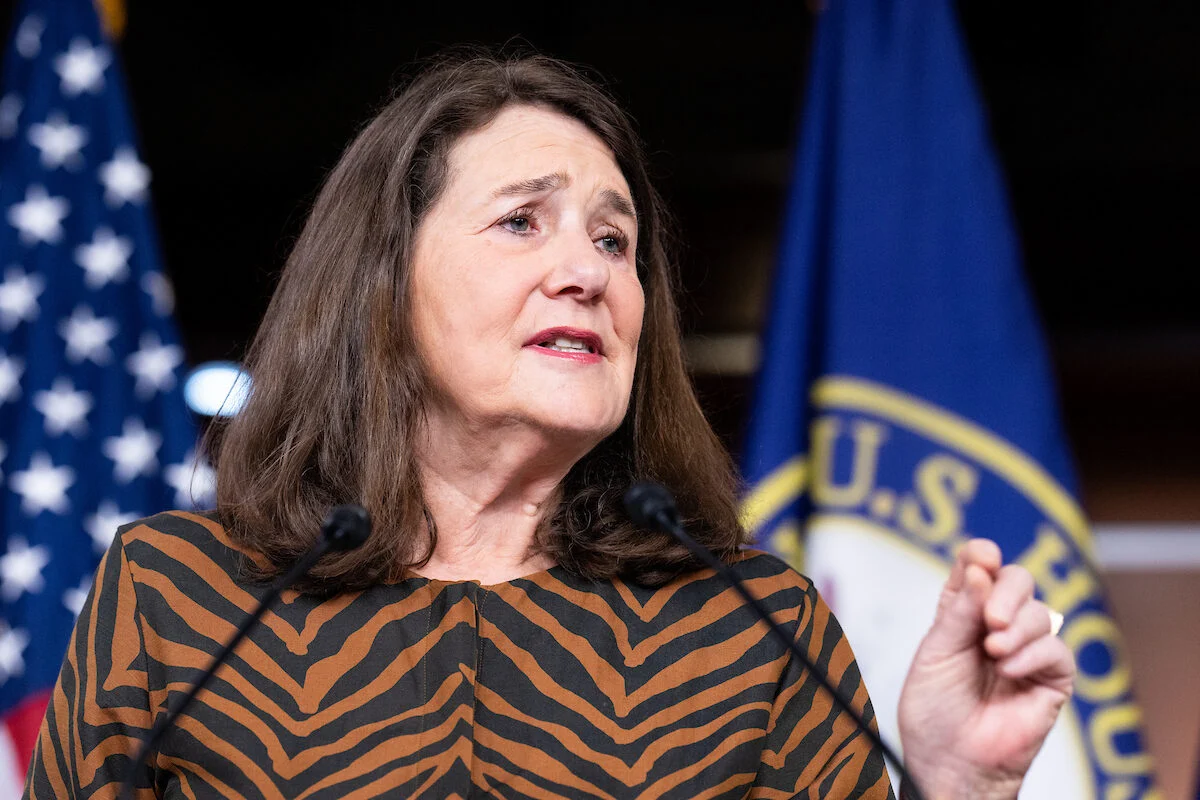
Diana DeGette, 68, had built a formidable political career, cultivating a reputation as a seasoned legislator capable of navigating the complex corridors of power in Washington. Heading into the primary, her message was clear and direct: her unparalleled experience was an asset, a shield against the volatility of national politics, particularly in an era dominated by figures like former President Donald Trump. Less than two weeks before the primary, at a candidate forum, DeGette articulated her strategy: "Now is not the time to gamble and send somebody with no experience to Washington." She pitched herself as the "strong, bold, hardened leader" necessary to hold Trump accountable, implicitly contrasting her seasoned approach with the perceived inexperience of her challengers.
For years, this narrative resonated with voters, rewarding her long tenure with successive victories. However, on Tuesday, July 1, 2026, Democratic voters in Colorado’s 1st Congressional District chose a different path. They cast DeGette aside, opting instead for Melat Kiros, a 29-year-old democratic socialist embarking on her first-ever run for elective office. Kiros’s victory was not merely a generational handover but a stark ideological repudiation, reflecting a growing impatience with incrementalism and a yearning for more radical policy shifts.
A Chronology of Discontent: The Incumbent Exodus
DeGette’s defeat is far from an isolated incident; it is a prominent ripple in a rapidly expanding wave that has begun to reshape the Democratic landscape. The signs of this shift have been accumulating throughout the current primary season, signaling a broader disillusionment with established political figures, even within their own party strongholds.
The New York Upheaval: Just the week prior to DeGette’s loss, on June 23, 2026, two other long-serving House Democrats in New York City faced similar fates. Representatives Dan Goldman and Adriano Espaillat, the latter a prominent figure chairing the Congressional Hispanic Caucus, were both defeated by Washington outsiders. Their losses sent shockwaves through the party, particularly Espaillat’s, given his leadership role and the institutional support he commanded. These victories for insurgent candidates, often backed by progressive groups, demonstrated that the appetite for new blood was not confined to a single district or region.
Beyond the House – A Broader Trend: The sentiment of distrust toward Washington isn’t exclusive to House Democrats. The primary season has also seen Republican House members struggle in their bids for higher office. Representatives Dusty Johnson of South Dakota, Randy Feenstra of Iowa, and both Nancy Mace and Ralph Norman of South Carolina, all seeking gubernatorial promotions, lost their primaries this year. In Colorado, Democratic Senator Michael Bennet also fell short in his gubernatorial quest on Tuesday, losing his primary to state Attorney General Phil Weiser. These broader struggles suggest a pervasive voter fatigue with career politicians, regardless of party affiliation, and a growing desire for fresh perspectives in executive roles.
Upcoming Battles in Democratic Strongholds: The current trend indicates that DeGette, Goldman, and Espaillat may be just the vanguard of a larger exodus. At least a dozen other long-established Democrats in seemingly safe seats face serious intraparty threats in the coming weeks. These contests are often marked by sharp generational and stylistic differences, but deeper ideological divisions are also at play, particularly concerning the role of corporate super PACs in campaigns and the U.S. policy toward Israel – issues that energize the progressive wing of the party.
-
Hawaii’s Generational Divide: In Hawaii, Representative Ed Case, a long-time centrist serving his sixth full term, is battling state Senator Jarrett Keohokalole. Keohokalole has explicitly positioned himself as a "change agent" poised to usher in "a new generation of leadership." Case, meanwhile, has clung to the traditional defense of experience, declaring in a recent video: "Seniority, experience and relationships in Congress are critical. Otherwise we just get lost, chewed up and spit out. We can’t afford that." This encapsulates the core clash: established wisdom versus the demand for renewal.
-
Connecticut’s "Security" Question: In Connecticut’s 1st District, Representative John B. Larson, who first came to Congress in 1999, is facing his toughest campaign yet against three rivals, including former Hartford Mayor Luke Bronin, a center-left Democrat who has managed to outraised the incumbent. Larson has doubled down on the value of longevity, kicking off his reelection effort with the slogan, "My seniority is your security," and touting the prospect of chairing a powerful panel overseeing Social Security if Democrats regained the House majority. Yet, the fundraising disparity and the strength of his challengers suggest this traditional argument is losing its luster.
-
Massachusetts’ Old Guard Under Fire: Massachusetts sees progressive attorney Patrick Roath challenging Representative Stephen F. Lynch, an old-school Democrat from Boston seeking his 13th full term. Roath’s campaign launch last year highlighted the urgency for new approaches: "We have really big problems that we need to solve. And we have got to have some new people and new leadership and fresh perspectives." This sentiment resonates with voters who believe the complexity of modern challenges demands a departure from conventional political wisdom.
-
California’s November Showdown: In California, Representative Doris Matsui, with 21 years in the House, is emphasizing her tangible achievements, touting the billions of dollars she has brought home for flood protection, healthcare, clean energy, and local jobs. Despite her proven track record, she faces a November showdown with progressive challenger Mai Vang, after both secured the top-two spots in the June 2 nonpartisan primary. This indicates that even significant district-level delivery may no longer be enough to preempt a strong primary challenge from the left.
Internal Shifts Within the Caucus: The re-evaluation of seniority isn’t limited to the ballot box; it’s also manifesting within the House Democratic Caucus itself. In 2024, New York Representative Jerrold Nadler, a long-time fixture, announced he would cede his influential role as the House Judiciary ranking member, endorsing Maryland Representative Jamie Raskin as his successor. This move, while perhaps voluntary, symbolized a willingness within the party to elevate newer, often more dynamic voices to key positions. The following year, in 2025, California Representative Robert Garcia further underscored this shift by taking over as the top Democrat on the House Oversight and Government Reform Committee. Notably, Garcia secured this prominent role over more senior contenders, including Representative Stephen F. Lynch (the same Lynch facing a primary challenge in Massachusetts), who had more than two decades of seniority over him. This internal reordering suggests that even within the institutional structures of Congress, the rigid adherence to seniority is being questioned and, in some cases, bypassed.
Supporting Data: The Fading Luster of Seniority
The long-held belief in the "potency of incumbency" and the traditional Democratic Party system, which historically rewarded seniority with prime committee assignments and leadership posts, is clearly faltering. House districts around the country are experiencing a restless Democratic base gripped by a potent mix of populist fervor and impatience with incremental change.
Aaron Regunberg, a former Rhode Island state legislator who notably led a Democratic group urging Joe Biden to abandon his 2024 reelection bid after a disastrous debate, succinctly captures the generational shift in perspective: "I don’t know anyone under 40 who gives the tiniest possible rat’s ass about [seniority]." He concedes that "I’m sure there’s still a sector of voters for whom that means something, but I haven’t talked to anyone like that in quite some time." This highlights a profound disconnect between the values of the party’s younger, more progressive base and the traditional metrics of success in Washington.
David Karol, a professor of government and politics at the University of Maryland, acknowledges that while "a freshman is not going to become speaker," the once "rigid seniority system, especially in the House, is largely a thing of the past." However, he also points out a potential paradox: "it’s not clear that voters understand any of this. You have to follow politics pretty closely to understand how [the committee structure] works." This suggests that while the internal mechanisms of power may be changing, the public’s perception is driven more by a general sentiment of dissatisfaction and a desire for disruption rather than a nuanced understanding of legislative processes.
In the contemporary "attention economy," where engagement and visibility are paramount, the traditional focus on committee work and legislative minutiae has been supplemented, if not overshadowed, by the need for a compelling public persona. Building a robust social media presence and cultivating a strong online following have become almost as essential as legislative acumen. DeGette, first elected in 1996, maintained a relatively low profile throughout her tenure, focusing on her role as the top Democrat on the powerful Energy and Commerce Health Subcommittee and advocating for progressive policies like universal healthcare. While these efforts are significant, they often lack the immediate, viral impact that today’s challengers, like Kiros, leverage to galvanize support and bypass traditional media gatekeepers.
The Trump presidency, in particular, appears to have fundamentally altered the calculus for many Democratic voters. Regunberg asserts that the perceived high stakes of the political moment have rendered traditional "bringing home the bacon" arguments less compelling. "When you’re faced with all of that," he says, referring to the broader political environment, "the fact that someone brought in x number of dollars for the road improvements in some town… I just don’t think that really resonates anymore." Voters are increasingly looking for bold, ideological leadership on national and global issues rather than localized material benefits.
Official Responses: The Incumbents’ Defense
Faced with this formidable tide, many House Democrats locked in tough reelection fights have defiantly embraced the mantle of the Washington insider, arguing that experience, not just ideology, is crucial for effective governance. Their arguments often center on the tangible benefits that longevity and established relationships in Congress can bring to their constituents and the broader legislative agenda.
Representative Ed Case of Hawaii exemplifies this stance, stressing the indispensable nature of "Seniority, experience and relationships in Congress" to avoid getting "lost, chewed up and spit out." This perspective reflects a practical understanding of how Congress functions, where trust, rapport, and a deep understanding of parliamentary procedure can unlock legislative victories and steer federal resources.
Similarly, Representative John B. Larson of Connecticut has staked his campaign on the promise that "My seniority is your security," suggesting that his long tenure directly translates into a protective shield and enhanced benefits for his district. He has even highlighted the potential for him to chair a powerful committee overseeing Social Security, implying that his continued presence in Congress is a direct investment in his constituents’ future.
Representative Doris Matsui of California has also highlighted the concrete results of her 21 years in the House, detailing "billions of dollars she’s brought home for flood protection, health care, clean energy and local jobs." For these incumbents, their long service is not a liability but a testament to their effectiveness and ability to deliver tangible benefits that directly improve the lives of their constituents.
Veteran members of the Democratic Caucus frequently assert that seniority is absolutely critical to "getting things done in Congress," from setting the legislative agenda to navigating complex appropriations processes and delivering for their district. They argue that legislative success requires not just good intentions but a deep understanding of the system, cultivated over years of service. Historically, House Democrats have indeed placed a high premium on career longevity, viewing it as a pathway to influence and power within the chamber. This perspective, however, is now being directly challenged by a base that prioritizes ideological purity and immediate action over the slower, more deliberative pace of legislative consensus-building.
Implications: A Democratic Party at a Crossroads
The rapid erosion of incumbent power and the ascendance of insurgent, often more progressive, candidates carries profound implications for the future trajectory of the Democratic Party and, by extension, American governance.
A Shifting Ideological Core: The most immediate implication is a likely leftward shift in the party’s ideological center of gravity. Victories by figures like Melat Kiros, who explicitly campaigned on platforms such as "abolish ICE," "Medicare for All," and "end the genocide in Palestine," demonstrate a powerful demand for more radical policy interventions. If this trend continues, the Democratic Party in Congress could become significantly more progressive, pushing for policies that challenge corporate power, expand social safety nets, and re-evaluate U.S. foreign policy. This could lead to a more unified, albeit potentially smaller, progressive bloc in Congress, but also risks alienating more moderate general election voters in swing districts.
Governance Challenges and Opportunities: The influx of less experienced members could pose challenges for legislative effectiveness in the short term. While passion and fresh perspectives are invaluable, navigating the intricate rules and traditions of Congress, building bipartisan coalitions, and shepherding complex legislation requires a specific kind of institutional knowledge that develops over time. The loss of seasoned committee chairs and ranking members could diminish the party’s collective expertise and its ability to exert influence in key policy areas. However, it also presents an opportunity for a more dynamic, less beholden-to-tradition approach to governance, potentially fostering innovation and a willingness to tackle long-standing problems with fresh solutions.
Re-energizing the Base: The success of insurgent campaigns suggests a highly engaged and less complacent primary electorate. Voters, particularly younger ones, are no longer content to simply re-elect incumbents based on past performance or institutional clout. They are actively seeking out candidates who articulate a clear vision for change and demonstrate an urgency to address pressing societal issues. This re-energized base could be a powerful force in general elections, but it also demands a more responsive and accountable party leadership.
The "Trump Effect" and Political Polarization: The lingering shadow of the Trump presidency continues to shape voter priorities. For many Democrats, the perceived existential threat posed by Trump and his allies has amplified the desire for "strong, bold" leadership – but often defined differently than DeGette’s appeal to experience. Instead, it’s a call for unyielding resistance and immediate action on issues like climate change, social justice, and economic inequality. This heightened sense of urgency and ideological purity contributes to the erosion of incrementalism and the appetite for radical transformation.
Adapt or Perish for Incumbents: The current political climate demands that incumbents re-evaluate their campaign strategies. Simply touting seniority or past legislative achievements may no longer suffice. To survive, incumbents must articulate a compelling vision for the future, demonstrate a clear understanding of the evolving concerns of their constituents, and adapt to new modes of communication and engagement. The era of comfortable, unchallenged incumbency in Democratic primaries appears to be drawing to a close, ushering in a more competitive, ideologically driven, and unpredictable political landscape. The Democratic Party is at a crossroads, forced to reconcile its traditional reverence for experience with a grassroots demand for revolutionary change.