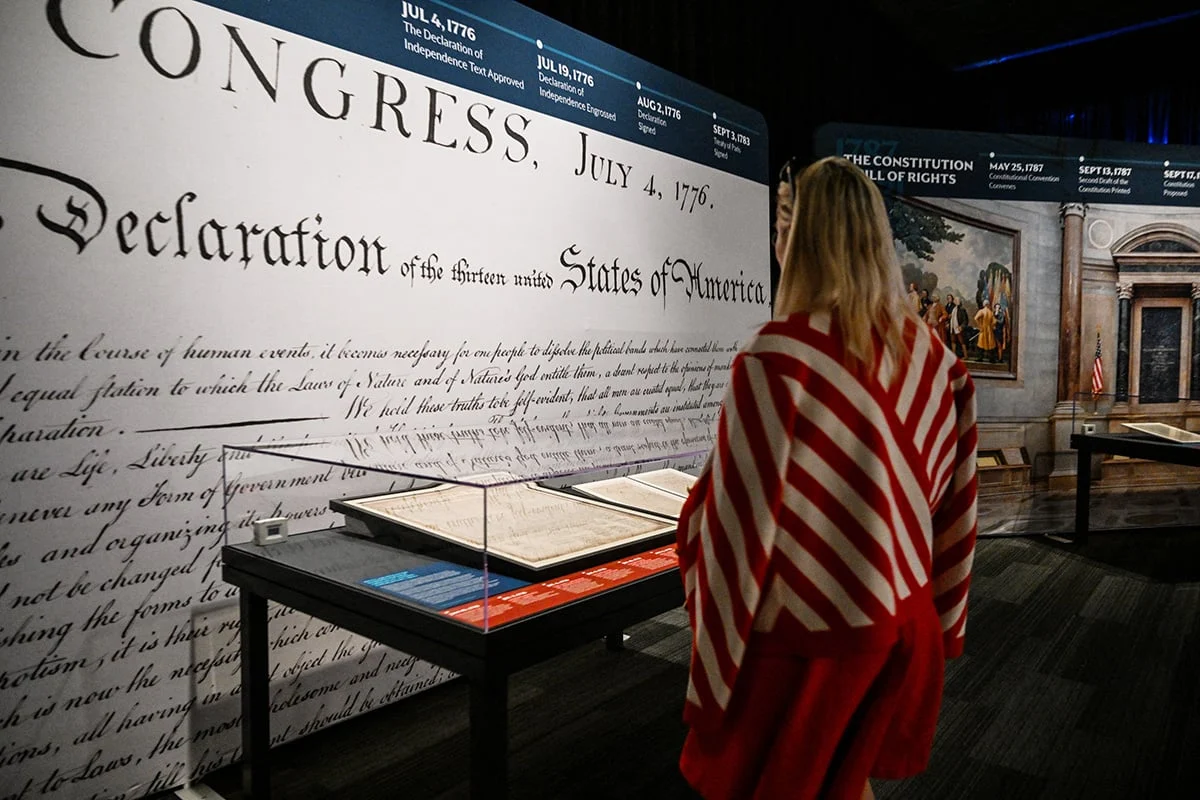
As the United States reaches its semiquincentennial—the 250th anniversary of the signing of the Declaration of Independence—a profound ideological divide has emerged regarding how the nation should commemorate its past. While the Trump administration pushes a streamlined, celebratory narrative of American exceptionalism, the nation’s colleges and universities are positioning themselves as vital forums for a far more complex, often uncomfortable, exploration of history.
This tension has transformed the 250th anniversary into a high-stakes cultural battleground. For academics, the anniversary is an invitation to examine the "sacred messiness" of democracy; for the White House, it is an opportunity to unify the public around a simplified, patriotic vision of the American story.
Main Facts: A Tale of Two Anniversaries
The core of this conflict lies in two divergent approaches to historical interpretation. The Trump administration’s "Freedom 250" initiative, developed in close coordination with conservative-leaning institutions like Hillsdale College and PragerU, emphasizes a triumphant, singular narrative of American progress. Critics—including professional historians—have labeled the initiative as an attempt to sanitize the nation’s history, arguing that it deliberately minimizes the realities of race-based slavery, segregation, and structural inequality.
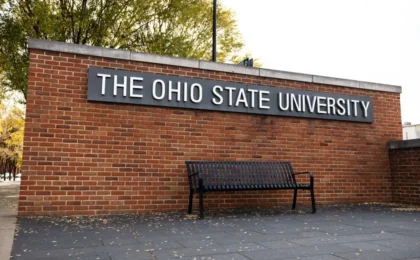
Conversely, higher education institutions across the country have launched a series of initiatives—ranging from Ohio State University’s "America 250" efforts to Brown University’s "Brown 2026"—that prioritize "honest exploration." These institutions are utilizing lectures, essay contests, and public forums to engage with the contradictions of the American project. They argue that understanding the nation’s "warts and all" is not merely a pedagogical exercise, but a prerequisite for a functioning, healthy democracy.
Chronology of a Commemorative Conflict
The build-up to the 2026 milestone has been years in the making, marked by a steady escalation of government intervention in campus discourse:

- Late 2025: The federal government begins prioritizing grant funding for projects that promote "patriotic education," while simultaneously restricting federal support for research focused on race, gender, and equity.
- January 2026: The administration moves to reshape higher education accreditation, specifically targeting institutions that host civic discourse programs perceived as non-patriotic.
- March 2026: James Madison University launches its "What’s Next, America?" initiative, establishing a series of deliberative dialogues that bring together individuals with disparate political beliefs.
- June 2026: The "Freedom Plane National Tour" debuts at the Museum of Miami, showcasing historical documents under the administration’s curated framework.
- Late June 2026: Arizona State University President Michael Crow issues a public call for universities to act as "instruments of democracy," explicitly pushing back against the trend of sanitized historical narratives.
- July 2026: The formal 250th anniversary period reaches its peak, with campuses across the nation holding community-based reflections that often center on the theme of "Freedom in Progress."
Supporting Data and Campus Initiatives
The breadth of the academic response is significant. Universities are not simply hosting academic lectures; they are facilitating deep, deliberative community engagement.
At James Madison University, the Madison Center for Civic Engagement has moved beyond traditional classroom settings to create small, facilitated groups where students and staff navigate the "thorny past" of the United States. According to Kara Dillard, the center’s executive director, the goal is to teach students how to hold space for disagreement. "We can’t talk about those values without talking about the historical context behind them," Dillard notes. "Slavery does come up. It raises the question of which values we need to advance as a country that allow us to move ahead without jettisoning the past."
Similarly, at Florida A&M University (FAMU), the "Freedom in Progress" essay contest offered students a platform to define liberty through their own lived experiences. Bryce Webb, the winning student, encapsulated this perspective: "Freedom in America has never been clearly defined, but has continually evolved through struggle, resistance, and progress."
Official Responses and Perspectives
The divide is further highlighted by the rhetoric of those leading these initiatives. Karin Wulf, director of the John Carter Brown Library at Brown University, contends that higher education is fundamentally built on the concept of "free inquiry."
"People are interested in complex history," Wulf explains. "They don’t want a simple story because they understand that life isn’t so simple. The fullest story is both good history and good civics. It helps us to be healthier as a country."

In stark contrast, proponents of the "Freedom 250" initiative argue that their goal is to provide a unified, accessible, and positive identity for the nation. Officials from organizations associated with the administration’s initiative have maintained that their objective is to highlight the most "important elements" of the founding—specifically the ideals of liberty and individual agency—which they argue have been obscured by years of academic revisionism.
Implications for the Future of American Democracy
The ongoing struggle over how to commemorate the 250th anniversary carries profound implications for both the future of higher education and the nature of American civil society.
The Erosion of Academic Autonomy
The Trump administration’s efforts to redirect funding and influence accreditation have placed university administrators in an incredibly precarious position. As institutions face mounting pressure from state legislators to remove social justice and diversity-focused courses from graduation requirements, the ability of faculty to pursue "truth" as they see it is being challenged. This creates a "chilling effect" where educators may avoid controversial historical topics to ensure the financial and political survival of their departments.
The Challenge of Political Polarization
Perhaps the most significant implication is the effect on the next generation of voters. Students today are often caught between two extremes: a digital media landscape that thrives on polarization, and a political climate that demands ideological conformity.
As noted by Dillard at JMU, many students entering university are hesitant to speak with peers who hold different views. The "semiquincentennial programming" serves as a rare, structured environment where students are forced to "grapple with differences." If universities succeed in fostering these dialogues, they may serve as a vital counterweight to the hyper-partisan nature of current American politics. However, if the political pressure on campuses intensifies, these forums for deliberation may vanish, leaving the next generation with even fewer opportunities to learn the "give-and-take" necessary for a functioning democracy.

A Legacy of "Sacred Messiness"
Ultimately, the 250th anniversary serves as a mirror. One reflection shows a polished, static monument to the past, while the other shows a living, breathing, and often discordant process of self-improvement. The "sacred messiness" referenced by university leaders is not a bug in the American system—it is a feature.
The question remains: will the 250th anniversary be remembered as a moment when the United States retreated into a comfortable, curated mythology, or as a turning point where the nation finally matured enough to reconcile its founding ideals with its complex, often painful, reality? As research institutions continue to push for a "full record of the past," they are betting that a democracy can only truly endure if it is brave enough to look at its history in its entirety. The outcome of this struggle will likely shape the character of the American Republic for the next century.